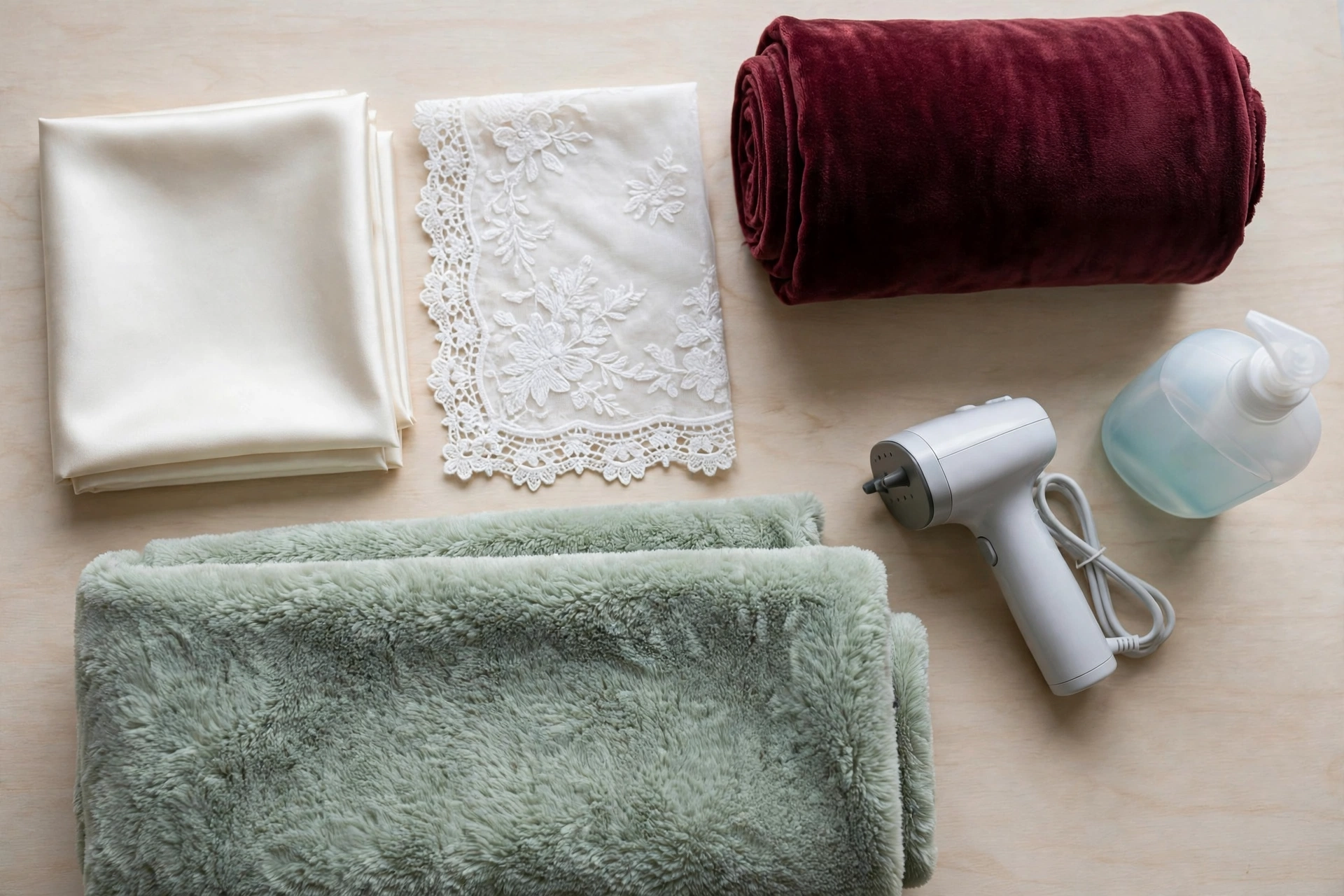
Good fabric deserves good care — and each fabric asks for something different
A beautiful dress, a set of table linens or a handmade blanket is an investment, and how you wash and store it decides how long it stays beautiful. The trouble is that the four fabrics most people sew with — velvet, satin, lace and fleece — could hardly be more different. This guide covers washing, drying and storing each one.
Velvet: treat the pile like the luxury it is
Velvet’s beauty is its pile — thousands of tiny fibres standing upright and catching the light. Crush it, flatten it or press it wrong and the fabric loses its depth. The safest rule for velvet is to dry-clean it, especially structured royal velvet and silk rayon velvet — the most delicate of the family. If the care label allows it, stretch velvet can be hand-washed in cool water with a gentle detergent — never wring it; press the water out between towels instead.
Never machine-wash velvet on a normal cycle and never tumble-dry it; the heat and agitation mat the pile flat. To remove creases, steam from a few inches away and brush the pile gently with a soft clothes brush. Never press velvet with a hot iron directly on the pile — if you must iron, use a pressing cloth on the lowest heat, or press from the back. Our Velvet Fabric collection includes soft stretch velvet in 49 colours, structured royal velvet and silk rayon velvet at 45 inches wide.
Store velvet hanging on padded hangers, never folded under weight — a fold left under a stack becomes a permanent crease line. Keep it out of direct sunlight and leave space around it so the pile is never compressed. If you must fold velvet, roll it instead — rolling spreads the pressure and leaves no crease.
Satin: keep the shine, lose the watermarks
Satin’s shine comes from its smooth, tightly woven surface, and that surface shows everything: water spots, creases and heat marks. The safest care for satin is dry cleaning, particularly for bridal and mikado satin. Many satins can be hand-washed in cool water with a mild detergent, but check the care label first — some satins should never be wet-washed at home.
If you hand-wash satin, keep the water cool and the handling gentle: no scrubbing, no wringing, no twisting. Roll the piece in a clean towel to press the water out, then lay it flat or hang it to dry away from direct sun. Never tumble-dry satin — heat dulls the shine and can set creases permanently. Iron on the lowest setting from the back, or better still, steam it. Blot spills immediately rather than rubbing them — a splash can leave a ring on a satin tablecloth or dress. Our Satin Fabrics collection covers bridal, mikado and charmeuse satins, and our satin vs charmeuse comparison explains how the shine and drape differ across the family.
Store satin rolled or hanging, never folded tightly — a sharp fold becomes a shiny crease line that is hard to remove, and a fold left for months can weaken the fibres. Roll tablecloths and runners around a cardboard tube, and hang garments on wide, padded hangers.
Lace: gentle hands, always
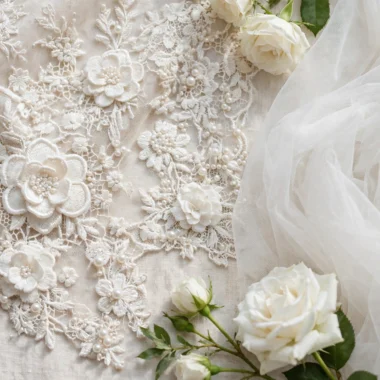
Lace is the most delicate fabric in this guide. Its open mesh and embroidery snag on jewellery, rough wood, zips and even rough skin, so every step of care is about minimising friction. Hand-wash lace in cool water with a gentle detergent, swishing it softly — never wring or scrub. Rinse in cool water, then press the water out by rolling the lace in a towel.
Never machine-wash or tumble-dry lace — the agitation tangles the mesh and can snap embroidery threads. Dry it flat on a clean towel, away from sunlight, so the water’s weight does not stretch the pattern. Steam gently or iron on the lowest heat from the back with a pressing cloth; a hot iron will scorch or flatten the embroidery. Spot-treat stains as soon as they happen — a stain left to set in an open mesh is very hard to lift. Our Lace Fabric collection includes embroidered, 3D and beaded laces, and our lace types guide explains which lace suits bodices, sleeves and veils.
Store lace rolled in acid-free tissue, never folded and never hung — hanging stretches it out of shape, and a fold becomes a weak line in the mesh. Keep it in a fabric bag or a lined drawer, away from zips, hooks and jewellery.
Fleece: the easy one — with one rule
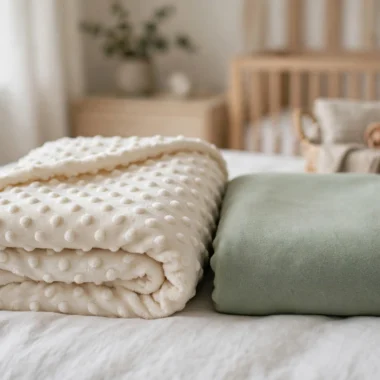
Fleece is the most forgiving fabric here, which is why it is the go-to for blankets, baby items and loungewear. Anti-pill polar fleece can be machine-washed in cold or warm water on a gentle cycle with a mild detergent, and tumble-dried on low. That is the whole routine — but there is one rule that matters: never use fabric softener or dryer sheets on fleece. Softener coats the fibres, kills the softness and wicking that make fleece comfortable, and can reduce the fabric’s flame resistance.
Wash fleece with other soft fabrics, turn printed fleece inside out to protect the print, and avoid rough items like denim, which shed lint onto it. A quick pass with a lint roller restores fleece that has picked up lint. Our Minky & Fleece collection includes anti-pill fleece and minky for blankets and baby items.
Store fleece folded — it is the one fabric here that does not mind folding. Keep it dry, and wash blankets before storing them for the summer: body oils and food residue left in the fibres attract moths and develop odours.
Storing all four: five rules that work for everything
First, always wash or clean fabric before storing it — stains and body oils set permanently over months in a drawer. Second, store it clean and completely dry; damp fabric mildews, and mildew is almost impossible to remove from velvet or lace. Third, keep everything out of direct sunlight, which fades velvet and satin fastest. Fourth, use breathable storage — cotton bags or lined drawers, not sealed plastic, which traps moisture. Fifth, check stored fabric every few months — a quick airing and a look for moths or damp saves a ruined piece.
Shop velvet, satin, lace and fleece by the yard at ValentinaTextile.com
Good care starts with good fabric. Buy velvet, satin, lace and fleece by the yard at ValentinaTextile.com, cut in one continuous piece, and look after each one as this guide describes — dry-clean or gently hand-wash velvet and satin, hand-wash lace, machine-wash fleece, and store them all clean, dry and out of the sun. Browse the Velvet, Satin, Lace and Minky & Fleece collections and order by the yard for your next dress, table setting or blanket.
Frequently asked questions
Can I machine-wash velvet?
Most velvet should be dry-cleaned. Stretch velvet can sometimes be hand-washed in cool water if the care label allows it, but machine washing and tumble drying will crush the pile. Always check the label first.
How do I remove creases from satin without ruining the shine?
Steam is the safest method — hold the steamer a few inches away and let the steam relax the fibres. If you iron, use the lowest heat and iron from the back, or use a pressing cloth between the iron and the satin.
Can fleece go in the dryer?
Yes, on low heat. The one thing to avoid is fabric softener and dryer sheets, which coat the fibres and reduce fleece’s softness. Wash fleece in cold or warm water on a gentle cycle and tumble dry low.