

Red felt, cream fleece and burgundy velvet Christmas stockings hanging on a mantelpiece

Christmas Stockings: Felt, Fleece and Velvet Compared

The stocking is the first thing a child sees on Christmas morning — make it worth looking at Before the presents are opened, the stocking is already hanging by the fireplace, full of promise. It is also one of the easiest Christmas makes: a simple shape, a little trim, and a fabric that does the talking. The three fabrics most people reach for are felt, fleece and velvet, and they make very different stockings: felt is the classic craft fabric — crisp, colourful and easy to cut; fleece is the soft, cosy choice — warm and forgiving; velvet is the luxurious one — rich, deep and unmistakably festive. Here is how they compare, and which one suits the stocking you have in mind. Felt stockings: the classic craft choice Felt is the fabric most Christmas stockings are made from, and for good reason. It is stiff enough to hold its shape, so a felt stocking hangs neatly even when it is full. It cuts cleanly with scissors and does not fray, so there are no raw edges to finish — cut a shape, glue or stitch it, and it is done. That makes felt the best choice for decorated stockings: appliqué shapes, embroidered names, sequins, buttons and pom-poms all sit neatly on a felt surface. Premium acrylic felt comes in Christmas colours — deep reds, forest greens, cream, gold and white — and it is sold by the yard, so one cut covers several stockings. A felt stocking is a craft project first and a container second: it holds small gifts well, but it is not stretchy, so do not overfill it. If you are making stockings with children, felt is the obvious pick — safe to cut, easy to glue, and the results look good even in small hands. Our Premium Acrylic Felt is the same felt used in our Christmas crafts with felt guide. Felt’s one limit is that it is not soft: a felt stocking looks wonderful on the mantel, but it is not something you would cuddle. It is also the least washable of the three — spot-clean felt stockings rather than machine-washing them, and keep them dry. Fleece stockings: soft, warm and child-proof Fleece makes the cosiest stocking of the three. Anti-pill polar fleece is soft on both sides, warm to the touch, and it stretches slightly, so a fleece stocking holds more than it looks like it should. It is also the most forgiving fabric to sew: it does not fray, it does not slip under the machine, and a wobbly seam disappears into the pile. For a first sewing project, fleece is the easiest of the three to work with. A fleece stocking is the one to make for a baby or a small child: soft enough to be held and hugged, tough enough to survive being dragged around the house, and machine-washable when it inevitably ends up sticky — wash in cold or warm water on a gentle cycle, tumble dry low, skip the fabric softener. Fleece comes in Christmas reds, greens and snowy whites, and printed patterns that do the decorating for you: a printed fleece stocking needs no appliqué at all. Our Anti-Pill Polar Fleece is sold by the yard in a 58 to 60 inch width, so a single yard makes several stockings with fabric to spare. Fleece’s only weakness is structure. It is soft and floppy, so a fleece stocking does not hold a crisp shape the way felt does — it slumps a little when it is empty. A simple fix is to add a felt cuff or a cardboard insert for display, or to line the stocking so it holds its shape better. Velvet stockings: the luxury mantelpiece Velvet makes the most beautiful stocking of the three — and the most grown-up. A deep burgundy or forest green velvet stocking with a cream faux-fur cuff is the stocking on the cover of the Christmas catalogue, and it is the one that makes a mantelpiece look finished. Velvet’s pile catches the light, so the stocking changes colour as you walk past it. Velvet is also the most demanding fabric to sew: it slips under the machine, shows every pin mark, and a seam pressed the wrong way crushes the pile. Use a walking foot, pin inside the seam allowance, and steam rather than iron. The result is worth it for a stocking used year after year: velvet ages well if it is stored properly, hung rather than folded and kept out of the sun. A velvet stocking is a keepsake — the one you embroider with a name and bring out every December. Our Premium Velvet includes soft stretch velvet in 49 colours, and our Velvet Fabric collection covers royal and silk rayon velvet too. Velvet is not the choice for a child’s everyday stocking: it is the least washable of the three — dry-clean or spot-clean it gently — and too precious to be dragged around the house. Make velvet stockings for the mantelpiece, and felt or fleece stockings for the children. Felt, fleece and velvet stockings at a glance Look: felt is crisp and colourful, fleece is soft and casual, velvet is rich and luxurious. A felt stocking looks handmade in the best way; a fleece stocking looks cosy; a velvet stocking looks expensive. Ease of making: fleece is the easiest to sew, felt is the easiest to cut and glue, and velvet is the hardest — it slips, shows pin marks and needs steaming rather than ironing. Durability: fleece survives children and the washing machine; felt holds its shape for years if kept dry; velvet lasts for years too, but only with gentle handling and proper storage. Cost per stocking: felt is cheapest, fleece is in the middle, velvet is most expensive — but a single yard of any of the three makes several stockings, so the difference per stocking is small. Which stocking should you make? Making stockings with children: felt —
CONTINUE READING ➞
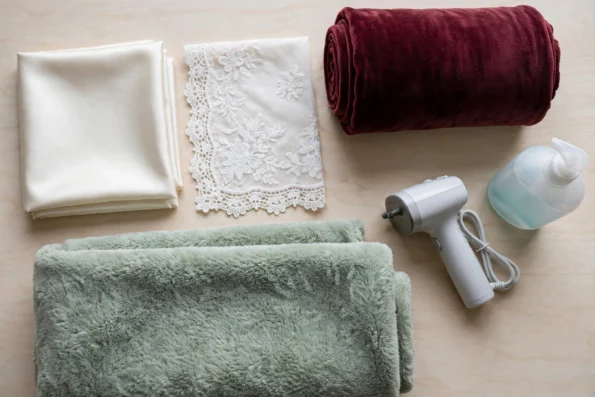
Burgundy velvet roll, ivory satin, white embroidered lace and sage fleece with a clothes steamer

Fabric Care Guide: Washing and Storing Velvet, Satin, Lace and Fleece

Good fabric deserves good care — and each fabric asks for something different A beautiful dress, a set of table linens or a handmade blanket is an investment, and how you wash and store it decides how long it stays beautiful. The trouble is that the four fabrics most people sew with — velvet, satin, lace and fleece — could hardly be more different. This guide covers washing, drying and storing each one. Velvet: treat the pile like the luxury it is Velvet’s beauty is its pile — thousands of tiny fibres standing upright and catching the light. Crush it, flatten it or press it wrong and the fabric loses its depth. The safest rule for velvet is to dry-clean it, especially structured royal velvet and silk rayon velvet — the most delicate of the family. If the care label allows it, stretch velvet can be hand-washed in cool water with a gentle detergent — never wring it; press the water out between towels instead. Never machine-wash velvet on a normal cycle and never tumble-dry it; the heat and agitation mat the pile flat. To remove creases, steam from a few inches away and brush the pile gently with a soft clothes brush. Never press velvet with a hot iron directly on the pile — if you must iron, use a pressing cloth on the lowest heat, or press from the back. Our Velvet Fabric collection includes soft stretch velvet in 49 colours, structured royal velvet and silk rayon velvet at 45 inches wide. Store velvet hanging on padded hangers, never folded under weight — a fold left under a stack becomes a permanent crease line. Keep it out of direct sunlight and leave space around it so the pile is never compressed. If you must fold velvet, roll it instead — rolling spreads the pressure and leaves no crease. Satin: keep the shine, lose the watermarks Satin’s shine comes from its smooth, tightly woven surface, and that surface shows everything: water spots, creases and heat marks. The safest care for satin is dry cleaning, particularly for bridal and mikado satin. Many satins can be hand-washed in cool water with a mild detergent, but check the care label first — some satins should never be wet-washed at home. If you hand-wash satin, keep the water cool and the handling gentle: no scrubbing, no wringing, no twisting. Roll the piece in a clean towel to press the water out, then lay it flat or hang it to dry away from direct sun. Never tumble-dry satin — heat dulls the shine and can set creases permanently. Iron on the lowest setting from the back, or better still, steam it. Blot spills immediately rather than rubbing them — a splash can leave a ring on a satin tablecloth or dress. Our Satin Fabrics collection covers bridal, mikado and charmeuse satins, and our satin vs charmeuse comparison explains how the shine and drape differ across the family. Store satin rolled or hanging, never folded tightly — a sharp fold becomes a shiny crease line that is hard to remove, and a fold left for months can weaken the fibres. Roll tablecloths and runners around a cardboard tube, and hang garments on wide, padded hangers. Lace: gentle hands, always Lace is the most delicate fabric in this guide. Its open mesh and embroidery snag on jewellery, rough wood, zips and even rough skin, so every step of care is about minimising friction. Hand-wash lace in cool water with a gentle detergent, swishing it softly — never wring or scrub. Rinse in cool water, then press the water out by rolling the lace in a towel. Never machine-wash or tumble-dry lace — the agitation tangles the mesh and can snap embroidery threads. Dry it flat on a clean towel, away from sunlight, so the water’s weight does not stretch the pattern. Steam gently or iron on the lowest heat from the back with a pressing cloth; a hot iron will scorch or flatten the embroidery. Spot-treat stains as soon as they happen — a stain left to set in an open mesh is very hard to lift. Our Lace Fabric collection includes embroidered, 3D and beaded laces, and our lace types guide explains which lace suits bodices, sleeves and veils. Store lace rolled in acid-free tissue, never folded and never hung — hanging stretches it out of shape, and a fold becomes a weak line in the mesh. Keep it in a fabric bag or a lined drawer, away from zips, hooks and jewellery. Fleece: the easy one — with one rule Fleece is the most forgiving fabric here, which is why it is the go-to for blankets, baby items and loungewear. Anti-pill polar fleece can be machine-washed in cold or warm water on a gentle cycle with a mild detergent, and tumble-dried on low. That is the whole routine — but there is one rule that matters: never use fabric softener or dryer sheets on fleece. Softener coats the fibres, kills the softness and wicking that make fleece comfortable, and can reduce the fabric’s flame resistance. Wash fleece with other soft fabrics, turn printed fleece inside out to protect the print, and avoid rough items like denim, which shed lint onto it. A quick pass with a lint roller restores fleece that has picked up lint. Our Minky & Fleece collection includes anti-pill fleece and minky for blankets and baby items. Store fleece folded — it is the one fabric here that does not mind folding. Keep it dry, and wash blankets before storing them for the summer: body oils and food residue left in the fibres attract moths and develop odours. Storing all four: five rules that work for everything First, always wash or clean fabric before storing it — stains and body oils set permanently over months in a drawer. Second, store it clean and completely dry; damp fabric mildews, and mildew is almost impossible to remove from velvet or lace. Third,

CONTINUE READING ➞
My Cart
Wishlist
Recently Viewed
Categories

SPIN TO WIN!

  • Try your luck to get a discount coupon
  • 1 spin per email
  • No cheating
Try Your Lucky
Never
Remind later
No thanks