
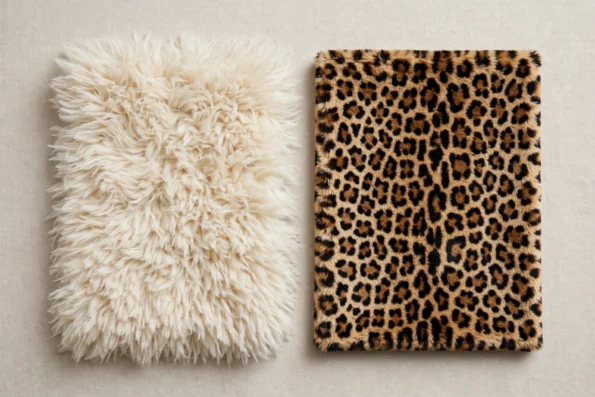
Shaggy cream faux fur beside short-pile leopard velboa fabric

Faux Fur vs Velboa: Which Plush Fabric for Costumes and Toys?

The short answer: faux fur for drama and warmth, velboa for softness and detail — and the project decides Faux fur and velboa look alike at a glance: both are soft, plush, and made for costumes, toys, and cosy projects. But they behave very differently once you start cutting and sewing, and choosing the wrong one can turn a fun project into a frustrating one. Faux fur is long, shaggy, and dramatic. Velboa is short, dense, and smooth. This guide compares the two side by side — pile, drape, sewing, care, and best uses — so you can pick the right plush fabric for your next costume or toy. What is faux fur? Faux fur is a pile fabric made to imitate animal fur: long, loose fibres that stand up from a backing and move when you touch them. It comes in solid colours and animal prints, from classic cream and black to leopard, tiger, and dalmatian patterns. Because the pile is long, faux fur has real presence — a faux fur cape, coat, or hood reads as fur from across the room, which is exactly why it is the go-to fabric for animal costumes, winter characters, and statement outerwear. Valentina Textile’s shaggy faux fur is sold by the yard as the Luxury Shaggy Faux Fur (60 inch), and the wider Faux Fur collection covers solid and animal-print options. If your project needs to look like fur, start here. What is velboa? Velboa is a short-pile plush fabric: dense, soft, and velvety to the touch, with fibres that lie close to the backing rather than standing up. It is the fabric behind many plush toys, stuffed animals, and costume pieces where a smooth, even surface matters more than a wild, shaggy look. Velboa takes printed patterns beautifully — dalmatian spots, leopard rosettes, and other animal prints stay crisp on its short pile, where the same print on long faux fur would be half-hidden by the fibres. Our What Is Velboa? guide explains the fabric in more depth, and the Dalmatian Velboa collection shows how clean a printed pattern looks on short pile. Browse the full Faux Fur & Animal Prints collection to compare both fabrics side by side. Pile and feel: the biggest difference Pile is the single biggest difference between the two fabrics, and it drives almost every other decision. Faux fur’s long pile is soft in a fluffy, hair-like way: you sink your fingers into it, and it moves and parts as you touch it. Velboa’s short pile is soft in a velvety, even way: it feels like stroking a plush toy, smooth and consistent in every direction. Drape and structure Faux fur has body. Its long pile and backing give it weight and structure, so it holds its shape in capes, hoods, coats, and costume bodies. It does not drape like a fluid fabric — it stands, fluffs, and fills out a shape, which is ideal when you want a costume to look full and generous. Velboa is lighter and more flexible. It drapes more easily, follows curves better, and suits smaller, more detailed pieces: toy bodies, ears, paws, costume trims, and soft accessories where the fabric needs to bend rather than stand up. Sewing: what to expect with each Sewing faux fur takes a little patience. The long pile sheds as you cut it, so cut from the backing side where you can, keep a vacuum or lint roller nearby, and expect fibres on your machine and your clothes. Seams need care too: pile trapped in a seam line can make it look bulky, so brush pile away from the seam before you stitch, and use a longer stitch length than you would for a flat fabric. The result is worth it — a faux fur seam, once trimmed and brushed out, disappears into the pile. Velboa is the easier sew of the two. Its short pile sheds far less, seams sit flatter, and small pieces are easier to turn and topstitch neatly. If you are making a plush toy with small parts — ears, muzzles, paws — velboa will give you cleaner edges and crisper details. Beginners making their first plush project will usually find velboa the friendlier fabric, while faux fur rewards a little more experience with a much more dramatic result. Best uses: which fabric for which project? Choose faux fur for Animal costumes where the fur needs to read from a distance, winter capes and coats, hood trims, Santa-style costumes, and statement throws or cushions where a wild, fluffy look is the point. If the project should look like fur, faux fur is the answer. Choose velboa for Plush toys and stuffed animals, costume pieces with printed animal patterns that need to stay crisp, soft baby items, costume trims and ears, and any project with small, detailed pieces where clean seams matter more than shaggy drama. If the project should feel like a plush toy, velboa is the answer. Use both together Many of the best costume projects combine the two: a velboa body with faux fur trim, a velboa toy with a faux fur mane, or a costume with a velboa base and faux fur cuffs and collar. The contrast between short and long pile adds depth that either fabric alone cannot give, and it lets you put the drama exactly where you want it. Care: keeping plush fabrics beautiful Care varies by product, so the listing for the exact fabric you buy is the final word. As general guidance, both fabrics prefer gentle handling: shake or brush them out rather than washing aggressively, blot spills quickly, and keep them away from high heat, which can damage pile fibres. Faux fur benefits from a gentle brush after washing or storage to restore its fluffy look, while velboa’s short pile usually recovers its even feel with a light shake. The verdict There is no single winner — there is a right fabric for each project. Want drama, warmth, and a look
CONTINUE READING ➞
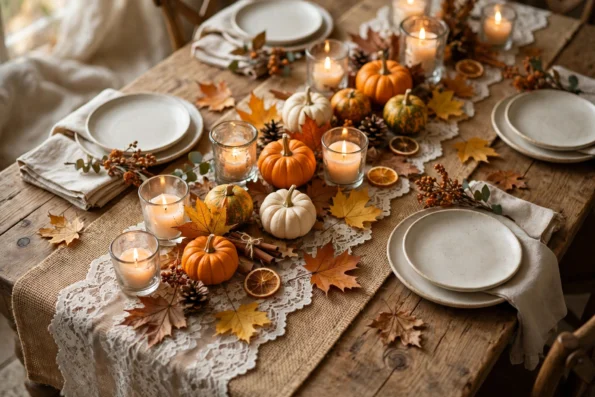
Thanksgiving table with a burlap runner layered with ivory lace, pumpkins and candles

Thanksgiving Table Décor: Warm Colours, Burlap and Lace Runners

The short answer: start with burlap, soften it with lace, and let warm autumn colour do the rest Thanksgiving is the one dinner of the year where the table matters almost as much as the food. Guests gather, linger, and photograph the table before anyone sits down — so the table deserves more than a plain cloth pulled out of a cupboard. The good news is that a beautiful Thanksgiving table does not need expensive decorations. It needs three things: a natural, textured base, a soft layer over it, and warm autumn colour in the details. Burlap and lace give you all three, and both are sold by the yard at ValentinaTextile.com, so you can cut exactly what your table needs. Why burlap works so well for Thanksgiving Burlap is Thanksgiving’s natural fabric. Its open, rustic weave and warm natural colour immediately say harvest, home, and gathering — no explanation needed. Unlike a formal satin cloth, burlap is forgiving: it hides the odd crumb, it does not show every wrinkle, and it suits a long family table far better than anything shiny. It also pairs with almost everything you already own: white plates, wooden boards, glass candle holders, and greenery all look better against burlap than against a bare table. The simplest Thanksgiving look starts with a burlap runner down the centre of the table. Browse the Jute & Burlap collection at ValentinaTextile.com for burlap sold by the yard. A runner is easier to store and wash than a full tablecloth, and it leaves the wood of your table visible at the sides, which keeps the look warm rather than covered-up. For a six-foot table, a runner of about eight to nine feet gives you a drop of twelve to eighteen inches at each end — that overhang is part of the look, so do not cut it flush with the table edge. Soften the burlap with a lace runner Burlap on its own can look a little rough for a dinner table, and that is where lace comes in. A lace runner laid over a burlap runner changes the whole table: the open lace pattern softens the coarse burlap weave, the ivory or white lace brightens the natural tan colour, and the two textures together look far more finished than either one alone. It is the same layering idea behind our Christmas table settings, but in autumn colours it reads as harvest rather than holiday sparkle. Choose a lace runner pattern that suits your table. A floral embroidered lace, such as the Floral Lace Table Runner (VT-18), gives a soft, traditional look that suits a family Thanksgiving. A beaded lace runner, such as the Beaded Lace Table Runner (VT-33), adds a little light-catching detail for an evening dinner under candles. Both are sold by the yard, so the lace runner can match the burlap runner’s length, or sit slightly shorter, ending just inside the burlap drop so the burlap frames it. Browse the full Lace Fabric collection to compare patterns side by side. Thanksgiving colour palettes that always work Warm harvest: burlap, cream, and burnt orange Natural burlap runner, ivory lace runner, burnt-orange napkins or candles, and a few small pumpkins down the centre. This is the classic Thanksgiving palette: warm, welcoming, and flattering in photographs. It works with white plates, cream candles, and wooden serving boards, and it needs almost nothing else. Rustic gold and green Burlap and ivory lace, with greenery — eucalyptus, olive branches, or simple leafy stems — and gold candle holders. The green keeps the table from looking too orange, and the gold lifts it for an evening meal. This palette suits a table that already has a lot of wooden tones. Deep cranberry for a formal Thanksgiving If your Thanksgiving is a dressier affair, add cranberry or burgundy in the napkins, candles, or a second narrow runner, over the same burlap and lace base. The deep red gives the table a formal, celebratory feel without losing the rustic warmth that makes burlap right for the occasion. Centrepieces that work with burlap and lace Once the runners are layered, keep the centrepiece low and simple. Tall arrangements block conversation across the table and fight with the lace pattern. Instead, try a low garland of greenery down the centre of the runner, with candles of varying heights tucked into it, or a row of small pumpkins and pinecones with a few dried orange slices. Keep the centrepiece narrow so the lace pattern stays visible on either side, and use candle holders with bases so wax never reaches the fabric. How much fabric do you need? Measure your table before you order. The burlap runner should run the full length of the table plus a drop of twelve to eighteen inches at each end. The lace runner can match that length, or sit slightly shorter. Because Valentina Textile sells both fabrics by the yard, you can order the exact length you need in one continuous cut, rather than buying a ready-made runner that is too short or too long. Our Table Linens Guide explains how runners and cloths pair for gatherings of every size, and the Table Linens collection brings runners and cloths together in one place. Care: keeping burlap and lace beautiful Care varies by product, so the listing for the exact fabric you buy is the final word. As general guidance, shake burlap runners out outdoors after the meal, blot spills quickly rather than rubbing them, and store runners rolled rather than folded, so creases do not set in over the year. Lace runners should be handled gently and kept away from open flames and sharp candle holders. Which fabrics should you buy for your Thanksgiving table? Start with the base: a natural burlap runner from the Jute & Burlap collection. Add the softness: an ivory lace runner, such as VT-18 for soft florals or VT-33 for a little evening sparkle, from the Lace Fabric collection. Add the colour: burnt-orange napkins, gold candles,

CONTINUE READING ➞
My Cart
Wishlist
Recently Viewed
Categories

SPIN TO WIN!

  • Try your luck to get a discount coupon
  • 1 spin per email
  • No cheating
Try Your Lucky
Never
Remind later
No thanks