Choosing a blanket fabric for a baby is different from choosing one for yourself
A baby blanket has a harder job than any other blanket in the house: washed constantly, chewed, dragged across floors and loved to pieces — and it has to stay soft through all of it. When parents ask whether minky or fleece makes the better baby blanket, they are really asking three things: which feels gentler, which survives the washing machine, and which is the right weight for a small body that overheats easily.
The short answer: both make lovely baby blankets, for different uses. Minky is the softer, plusher fabric — the one babies reach for. Fleece is the lighter, tougher, easier-care workhorse — the one parents reach for at 2 a.m. when the blanket needs washing again. Here is the full comparison.
Both are available by the yard at ValentinaTextile.com in the Minky & Fleece collection — order a yard of each and let the baby decide.
What minky actually is
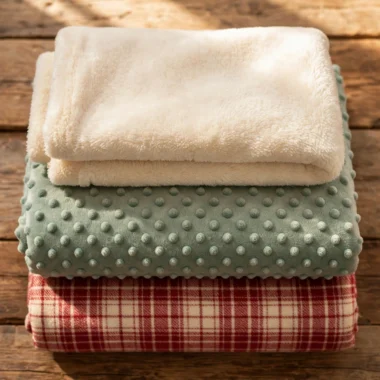
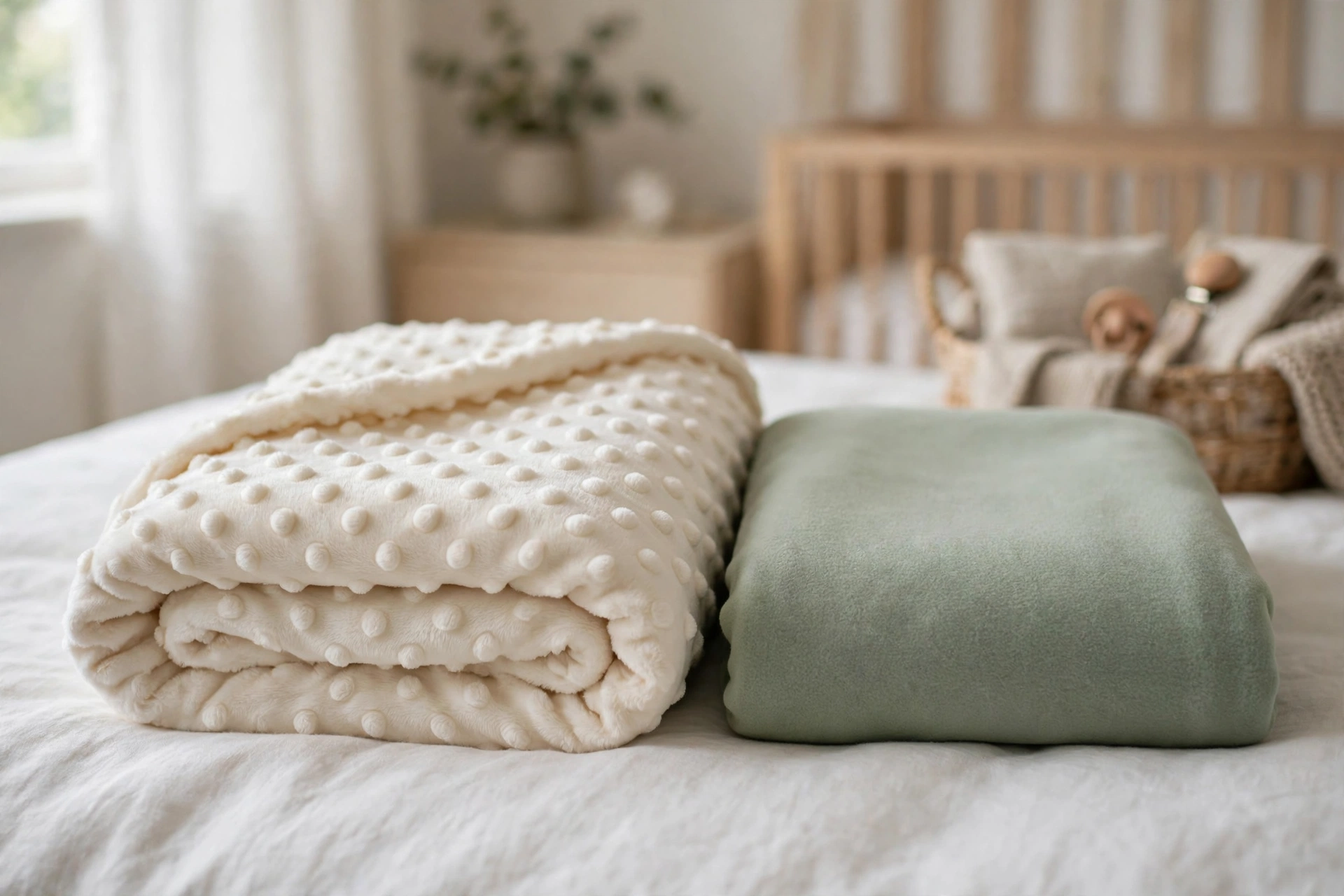
Minky is a plush polyester fabric with a short, dense pile and a famously silky hand — like stroking a stuffed animal. Our Minky Dot adds a raised dot texture babies love to touch; the rosebud range has a delicate embossed floral pattern. The texture is part of the fabric, not printed on, so it does not wash off.
That pile is minky’s greatest strength and its one trade-off: it traps air, so minky feels warmer and cosier than its weight suggests — lovely for winter naps and chilly nurseries. But it also makes minky feel heavier and need a little more care in the wash. It is the comfort fabric: the blanket that becomes the favourite.
What anti-pill fleece actually is
Fleece is a brushed polyester fabric with a soft, napped surface on both sides. The “anti-pill” part matters: ordinary fleece forms little balls of fibre — pills — after repeated washing, which roughen the surface. Anti-pill fleece resists that, so the blanket stays smooth through dozens of washes. Our Anti-Pill Fleece collection is made for this kind of hard use.
Fleece is lighter than minky for the same warmth, dries faster, and is famously forgiving: it does not fray, sews easily, and tolerates a normal wash cycle. Its matte, even surface makes it the better choice for a blanket that will be embroidered, appliquéd or printed.
Softness: minky wins, but fleece is no slouch
On pure softness, minky wins. Its dense pile is softer than any fleece — minky is the fabric most often chosen for the “lovey”, the small security blanket babies carry everywhere. If softness is your only criterion, minky is the answer.
But fleece deserves more credit than it gets. Good anti-pill fleece is genuinely soft against the skin, with a smooth, even nap that stays that way because the anti-pill finish stops the surface roughening. For sensitive skin, either fabric works well once washed; minky feels luxurious, fleece comfortably soft. Many parents make the main blanket from fleece and add a minky border — plush feel for the baby, easy care for the parent.
Weight and warmth: think about the nursery, not just the fabric
Babies overheat easily, so a blanket’s weight matters as much as its warmth. Minky feels heavier and warmer because of its dense pile — ideal for winter, air-conditioned rooms, and babies who kick covers off. In a warm nursery, though, that same warmth can be too much.
Fleece is the lighter, more breathable option, giving good warmth across a wider range of room temperatures — a single layer in mild weather, doubled up in the cold. For one blanket to use all year, fleece is the safer bet; for a special winter blanket in a cold house, minky is the cosier choice. Our Winter Blanket Fabrics guide compares fleece, minky and flannel for cold weather.
Washing and care: the part parents care about most
This is where fleece pulls ahead: a fleece baby blanket can go in the machine on a gentle or normal cycle with mild detergent, comes out soft, and dries quickly. That matters when the blanket is washed two or three times a week — which, with a baby, it will be.
Minky needs a gentler routine: wash cold on a gentle cycle with mild detergent, no fabric softener — it coats and flattens the pile — and air-dry or tumble dry on low. Line-drying keeps the pile at its best; a quick shake before drying restores the loft. Whatever fabric you choose, wash the blanket before first use — it softens the fibres and removes any finishing residue.
Sewing a baby blanket: what to expect from each fabric
Both fabrics are beginner-friendly, but they behave differently under the needle. Fleece is the easier sew: it does not fray or slip, and it presses and pins without fuss. A simple two-layer fleece blanket is a genuine first project: cut two rectangles, sew right sides together, turn, topstitch, done.
Minky needs a little more patience: its pile can shift while you sew, so pin generously — or use fabric clips, which grip the pile better — and sew slowly. The classic baby blanket pairs minky on one side with smooth cotton or fleece on the other — plush feel for the baby, a stable layer for the maker. If you are pairing minky with another plush fabric, our Minky vs Faux Fur comparison explains how the two differ.
The verdict: which fabric for which blanket?
Choose minky when softness is the priority: the favourite lovey, the special winter blanket, the gift blanket that feels luxurious the moment it is unwrapped. Pick the dot texture for a sensory blanket, and accept the gentler wash routine as the price.
Choose anti-pill fleece when practicality is the priority: the everyday blanket washed constantly, the nursery blanket for every season, the first project you want to finish in an afternoon. It is lighter, dries faster and stays smooth wash after wash.
If you cannot decide, make both: a fleece blanket for the cot and a small minky lovey for the pram — the baby will tell you quickly which is the favourite.
Shop minky and fleece by the yard at ValentinaTextile.com
A baby blanket is one of the most-loved things you will ever sew, and the fabric you choose makes it last from the first night home to the toddler years. Minky gives you unmatched softness; anti-pill fleece gives you unbeatable ease of care.
Browse the Minky & Fleece collection and the Anti-Pill Fleece collection at ValentinaTextile.com, order a yard of each to feel the difference, and start with the blanket the baby reaches for first.
Frequently asked questions
Is minky or fleece softer for a baby blanket?
Minky is softer — its dense plush pile feels like a stuffed animal, the softest option for a baby blanket. Good anti-pill fleece is also genuinely soft and stays smooth through repeated washing, so if easy care matters more than plushness, fleece is the practical choice.
Can you machine wash a minky baby blanket?
Yes. Machine wash minky cold on a gentle cycle with mild detergent, skip fabric softener because it coats and flattens the pile, and air-dry or tumble dry on low. Shake the blanket before drying to restore the loft. Fleece is simpler: a normal or gentle cycle and mild detergent, and it dries quickly.
Which fabric is better for a baby blanket in a warm room?
Anti-pill fleece is better in a warm nursery: lighter and less dense than minky, while still giving good warmth. Minky’s dense pile traps more air and feels warmer, suiting winter and air-conditioned rooms. Babies overheat easily, so match the blanket to the room temperature rather than choosing the warmest fabric by default.