Your wedding tables do more talking than you think
Guests spend most of a wedding reception sitting at a table. They notice the flowers, yes, but what they actually touch, lean on and photograph all evening is the table itself — the cloth under their plates, the runner down the middle, the way the whole setting catches the light. Get the linens wrong and even beautiful centrepieces look lost. Get them right and a plain hall suddenly looks like a wedding venue.
The good news is that wedding table linens are not complicated once you know the three pieces: the tablecloth, the runner and the overlay. Each one has a job, and you rarely need all three at once. This guide explains what each piece does, how to choose between them, and how to measure so you order the right amount the first time.
If you are still deciding on the overall look, our Table Linens Guide compares lace runners and tablecloths for events in general, while the Table Linens collection at ValentinaTextile.com carries runners and cloths sold by the yard.
Start with the table, not the fabric
Before you fall in love with a fabric, measure your tables. Round tables and rectangular banquet tables need different linen plans, and the shape decides almost everything else.
For round tables, a single tablecloth is usually the whole story. It should reach the floor or pool slightly for a formal look, or end just below the table edge for a more casual reception. For rectangular tables, runners come into their own: one long runner down the centre dresses the whole table without the cost and bulk of full cloths, and it leaves the table surface visible at the edges, which suits rustic, garden and modern weddings alike.
Tablecloths: the foundation layer
The tablecloth sets the colour of the whole room. A white or ivory cloth is the safe, classic choice because it makes everything placed on it — flowers, candles, gold cutlery — stand out. Coloured cloths make a stronger statement but demand more coordination, since they have to flatter the flowers, the bridesmaids and the room itself.
Choose the drop — how far the cloth hangs — to match the formality. Floor-length cloths hide table legs and storage underneath, which is why venues love them for formal dinners. A shorter drop, ending around chair-seat height, reads more relaxed and works well for daytime or outdoor weddings. Whatever you choose, keep it consistent across the room: mixed drops look accidental rather than designed.
Runners: the easiest upgrade in wedding décor
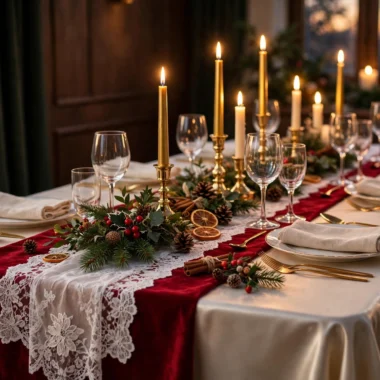
If a tablecloth is the foundation, a runner is the jewellery. A runner adds colour, texture and pattern down the centre of the table without covering the whole surface, and it is the cheapest way to transform plain tables. This is where lace earns its place at weddings.
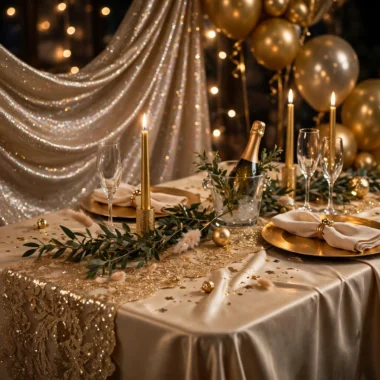
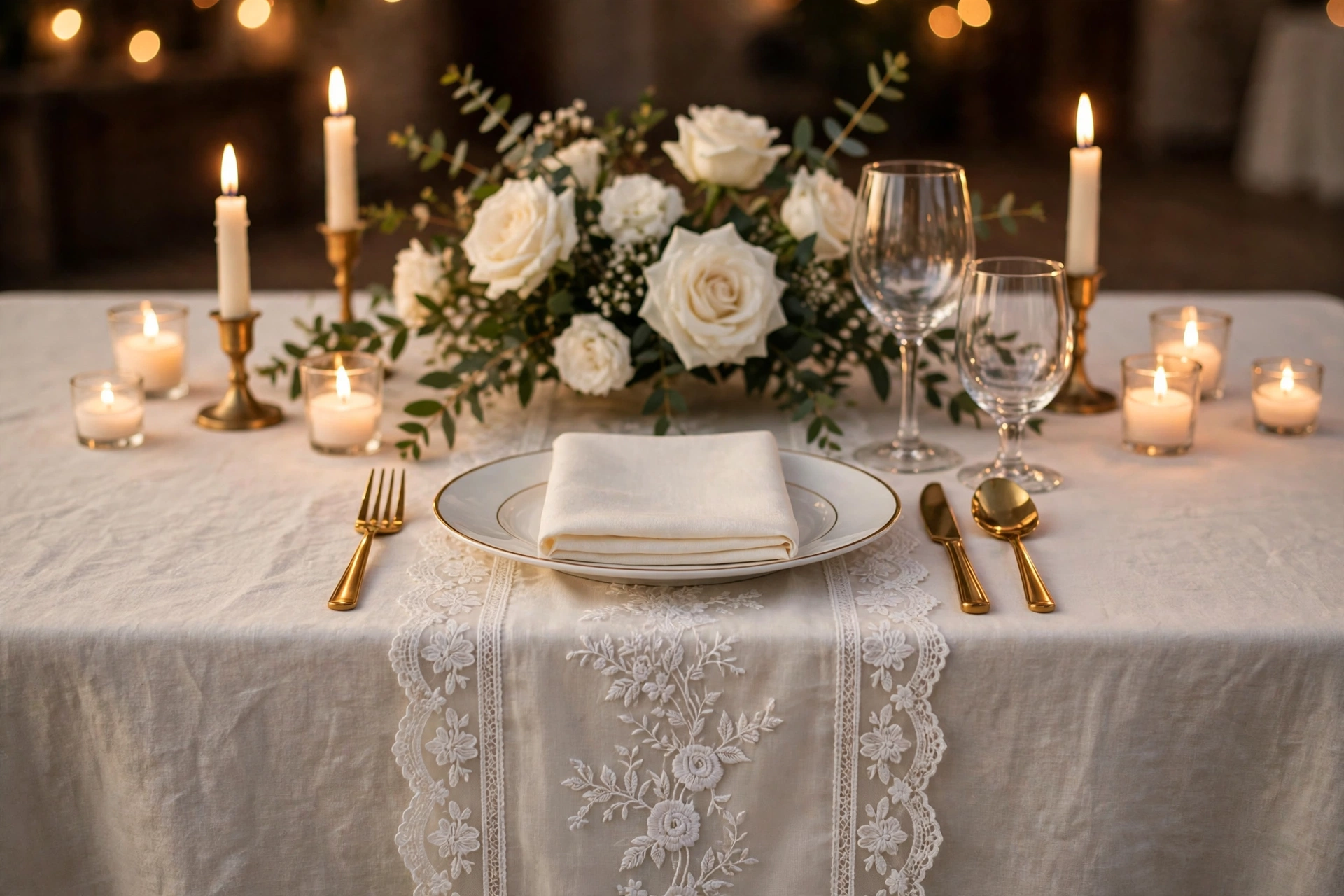
A lace runner over a plain cloth gives you two textures at once: the solid colour underneath and the open, detailed lace on top. The Floral Lace Table Runner (VT-18) is an embroidered sequin lace, 14 inches wide, sold by the yard — wide enough to read clearly from across the table, with sequins that catch candlelight. For a more beaded, formal look, the Beaded Lace Table Runner (VT-33) is a 3D embroidered lace with pearls and sequins, 13 inches wide, and its raised beading adds real dimension to photographs.
Because both runners are sold by the yard, you can cut exactly the length each table needs — a short overhang at each end for banquet tables, or a longer drape for a head table. Ordering by the yard also means every table matches, since all the runners come from the same fabric rather than from different dye lots.
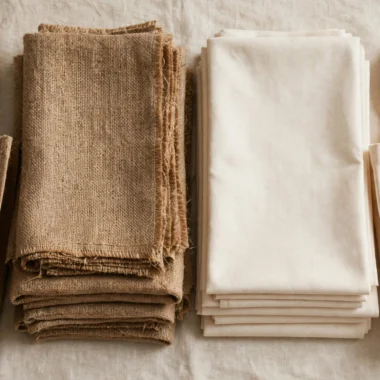
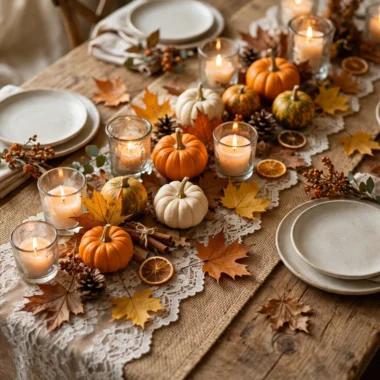
Lace runners also pair beautifully with other textures: burlap underneath for a rustic wedding, satin for a glamorous one, or plain linen for a garden party. Browse the Lace Fabric collection to compare patterns before you commit.
Overlays: the layered, formal look
An overlay is a second, smaller cloth laid over the tablecloth — often square, often in a contrasting colour or a sheer fabric, and often positioned at an angle so its corners hang between the corners of the cloth below. Overlays are the signature of formal and evening weddings: they add depth, let you introduce an accent colour cheaply, and photograph beautifully because the layers create shadow and movement.
The classic combination is a white or ivory base cloth with a coloured or sheer overlay: blush over white, gold over ivory, or a lace overlay over a solid colour. Because the overlay is smaller than the cloth, it costs less fabric per table than a second full cloth, which makes it an efficient way to add a second colour to the room.
Choosing colours and textures that photograph well
Wedding photographs are the real test of your linens, because cameras exaggerate contrast. Very dark cloths can swallow detail in evening light, and very shiny fabrics can blow out under flash. The safest combinations pair one textured fabric with one smooth one: lace over satin, sequins over matte cotton, a beaded runner over a plain cloth.
White and ivory are not identical on camera. Pure white can look blue-white under some lights, while ivory photographs warmer and is often more flattering to skin tones in the same shot. If your dress is ivory, ivory linens will harmonise better than bright white.
How much fabric do you need?
For runners bought by the yard, the maths is simple. Measure the table length, add the overhang you want at each end — typically 6 to 12 inches per end for banquet tables, more for a dramatic head-table drape — and that is your yardage per table. Multiply by the number of tables, then add one spare length for mistakes and last-minute table changes.
For tablecloths, measure the table top, add twice the drop you want, and allow for hems and seams. For overlays, measure the square you want to show on top — usually 10 to 20 inches smaller per side than the cloth below — and again add a spare.
Shop wedding table linens by the yard at ValentinaTextile.com
The formula is simple: a solid cloth for the foundation, a lace runner for the detail, and an overlay if the occasion calls for layers. Choose your tables’ shapes first, pick one textured fabric and one smooth one, and order runners by the yard so every table matches. Browse the Table Linens collection at ValentinaTextile.com, start with a single yard to test the look in your venue’s light, and build the room from there.
Frequently asked questions
Do I need a tablecloth, a runner and an overlay?
No — most weddings use one or two of the three. A tablecloth alone is enough for formal round tables, a runner alone dresses a rectangular table beautifully, and an overlay is an optional layer for a more formal or layered look. Choose based on your table shape and formality, not on using everything.
How wide should a wedding table runner be?
Most lace table runners are 13 to 14 inches wide, which suits standard banquet tables: wide enough to carry the pattern and hold centrepieces, narrow enough to leave place settings clear. The VT-18 floral lace runner is 14 inches wide and the VT-33 beaded lace runner is 13 inches wide, both sold by the yard.
Can I mix lace runners with burlap or satin?
Yes, and it is one of the most popular wedding combinations. Lace over burlap reads rustic, lace over satin reads glamorous, and lace over plain linen reads classic. Keep one texture dominant and the other as an accent so the table looks designed rather than busy.