Burlap vs Cotton Canvas for Tote Bags and Home Décor
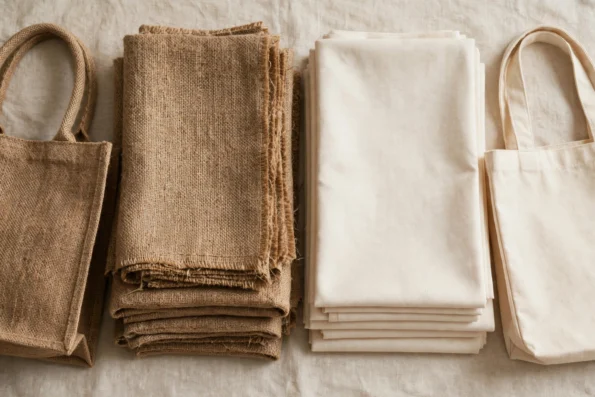
Two workhorse fabrics, two very different bags If you have ever stood in a fabric store wondering whether to buy burlap or cotton canvas for a tote bag, you are not alone. Both are sturdy, natural-looking fabrics. Both show up in home décor, market bags and craft projects. And they behave completely differently once you cut and sew them, which is why choosing the wrong one is the most common reason a tote project disappoints. The short version: burlap gives you rustic texture and a low price, but it frays, sheds and needs lining. Cotton canvas gives you a clean, durable, washable bag that holds its shape. Which one you need depends on what the bag is for, how long it must last, and how much finishing work you are willing to do. Here is the full comparison. Both fabrics are available by the yard at ValentinaTextile.com — burlap in the Jute & Burlap collection and canvas in the Cotton & Canvas collection — so you can compare them side by side before you commit. What burlap actually is Burlap is a coarse, open-weave fabric made from jute fibre. Its loose weave is the whole point: you can see the weave, feel the texture, and the fabric has a rough, organic look that no smooth fabric can imitate. That is why it dominates rustic weddings, farmhouse décor and garden projects. The trade-off comes from that same open weave. Burlap frays aggressively — cut edges unravel if you look at them wrong — and it sheds fibres, which means it is a poor choice for anything that will hold food, light-coloured clothes or a laptop. It is also not washable in any normal sense: water can shrink and stiffen it, and its loose weave distorts when wet. Our Burlap vs Jute guide explains the fibre behind the fabric if you want the background. What cotton canvas actually is Cotton canvas is a closely woven, plain-weave cotton fabric, made in weights measured in ounces per square yard. The Cotton & Canvas collection includes lighter 7 oz canvas and heavier 10 oz canvas: the lighter weight suits soft totes and linings, while the heavier weight stands up on its own and is the right pick for structured bags, aprons and upholstery-weight projects. Because the weave is tight, canvas frays far less than burlap, holds a crease and a seam cleanly, and can be machine washed. It also takes paint, stencils and iron-on transfers well, which is why it is the standard fabric for printed and personalised tote bags. Unlike burlap, canvas has a smooth, even surface that looks intentional rather than rustic. Strength and structure, compared For pure carrying strength, both fabrics handle a heavy load — burlap’s jute fibre is very strong, and heavyweight canvas is the fabric of sailcloth and work aprons. The difference is in structure. Canvas holds its shape: a 10 oz canvas tote stands upright on a table, keeps its corners, and still looks like a bag when empty. Burlap drapes and slumps: a burlap tote collapses when set down, which is fine for a market bag and wrong for a structured handbag. For home décor the same logic applies. Canvas is the better pick for cushion covers, structured storage baskets and anything that needs to keep a shape. Burlap wins for table runners, tree skirts, wall hangings and anything where drape and texture matter more than structure. Sewing each fabric: what to expect This is where most projects succeed or fail, so be honest about your patience. Burlap demands finishing: every cut edge should be overlocked, zigzagged or bound, seams should be sewn twice, and you will want a lining — both to stop shedding into the bag’s contents and to give the bag a finished interior. Skip the lining and the bag will shed fibres on everything it carries. Canvas is far more forgiving. It cuts cleanly, presses well, and sews like a heavy cotton — which it is. A standard needle and a slightly longer stitch handle 7 oz canvas easily; 10 oz canvas benefits from a heavy-duty or jeans needle and a slower sewing speed, but needs no special technique. Topstitching looks crisp on canvas, while on burlap it can disappear into the weave. Look and feel: rustic versus clean Burlap’s look is its selling point. Nothing else gives a project that rough, natural, farmhouse texture, and for autumn décor, rustic weddings and garden-themed crafts it is exactly right. Its colour range is naturally limited — tans, naturals and dyed earth tones — and its surface is uneven by design. Canvas’s look is a blank page. Natural canvas is an unbleached cream that suits minimal and modern interiors, and it dyes and paints evenly, so a canvas tote can become anything from a screen-printed shopper to a hand-painted gift bag. If your project needs a precise colour or a printed design, canvas is the only sensible choice of the two. Care and longevity Canvas wins on care by a wide margin. A canvas tote can be machine washed and air-dried, and it gets softer with washing while keeping its strength. That makes it the right fabric for everyday bags, children’s projects and anything that will be used hard. Burlap should be spot-cleaned and kept dry. It is best reserved for decorative pieces, occasional-use bags and seasonal décor that will not need washing. A burlap table runner used twice a year will last for years; a burlap tote used daily will fray and shed its way to retirement much sooner. The verdict: which fabric for which project? Choose burlap when the look is the point: rustic table runners, wedding décor, tree skirts, wreaths, garden projects and decorative market bags where texture matters more than longevity. Always line bags, finish every edge, and keep the finished piece dry. Choose cotton canvas when the bag has to work: everyday totes, book bags, beach bags, aprons, cushion covers, storage and anything you plan to wash, print or