The short answer: charmeuse is satin, but not all satin is charmeuse
If you have ever stood in front of two shiny fabrics and wondered why one drapes like water while the other holds its shape, you have met the satin and charmeuse problem. The confusion is understandable, because charmeuse is a type of satin weave, not a separate family altogether. Yet in practice the two behave very differently once you cut and sew them, and choosing the wrong one can change a whole garment. This guide explains the difference in plain terms — shine, drape, weight, best uses, sewing, and care — so you can order the right fabric the first time.
What is satin?
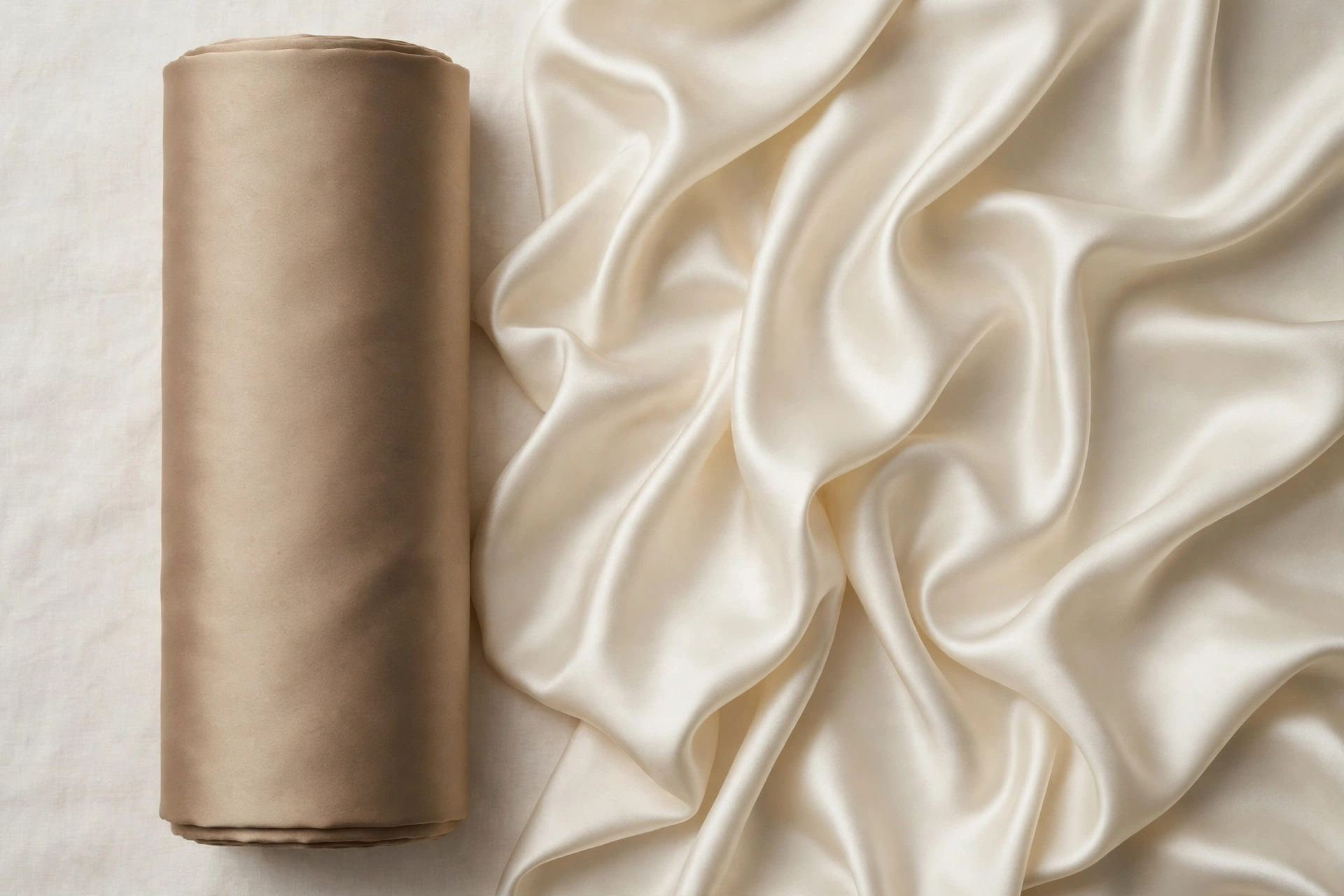
Satin is a weave, not a fibre. In a satin weave, most of the threads run across the surface of the fabric, which is what gives satin its smooth, light-catching face and its duller back. That weave can be made from many fibres, and the result varies a great deal. The satins sold at ValentinaTextile.com cover that whole range, from fluid Charmeuse Satin to the firmer, more structured finishes in the broader Satin Fabrics collection, all sold by the yard.
What is charmeuse?
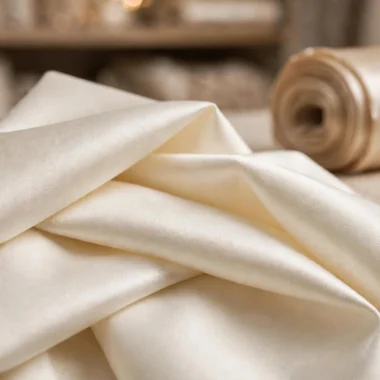
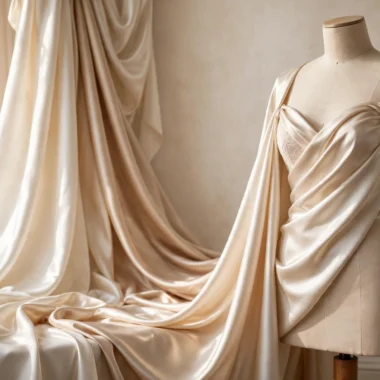
Charmeuse is a lightweight satin with a very soft hand and a liquid drape. Its face is glossy and smooth, its back is matte, and it falls in soft, flowing folds rather than holding a shape of its own. Touch it and it slips through your fingers; hold it up and it pours rather than stands. That fluid quality is what makes charmeuse the go-to choice for bias-cut dresses, flowing blouses, lingerie, and scarves — anything that should move with the body and catch the light as it moves. Browse the Charmeuse Satin collection at ValentinaTextile.com to compare colours, all sold by the yard. If you love the look of satin but want it to feel like a second skin, charmeuse is usually the version you are imagining.
Satin vs charmeuse compared
Shine and surface
Both have the smooth, light-catching face that defines satin, but charmeuse tends to show a softer, more liquid shine because its light surface moves with every fold. A heavier, more structured satin shows a broader, more even sheen across a flat surface, which reads as more formal and more deliberate. Neither is better in the abstract — the right shine depends on whether your project should glow softly as it moves or present a smooth, polished surface that stays put.
Drape and silhouette
This is the difference that matters most. Charmeuse drapes and clings: it follows curves, falls in narrow folds, and gives a soft, body-skimming silhouette. A more structured satin drapes in wider, cleaner folds and holds volume where the design puts it. For a bias-cut gown, a flowing skirt, or a draped top, charmeuse gives you the movement for free. For a structured bodice, a full skirt that needs to keep its shape, or formal drapery, a firmer satin does the structural work for you.
Best uses for charmeuse
Choose charmeuse for bias-cut dresses and gowns, flowing blouses, camisoles and lingerie, scarves, and any garment where softness and movement are the point. It is also a lovely choice for lining a flowing garment, where its smooth face lets layers slide over each other instead of catching. If the garment will be worn against the body and should feel light and fluid, charmeuse is almost always the right answer.
Best uses for other satins
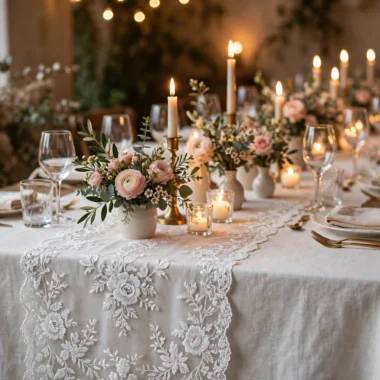
Choose a more structured satin for bridal gowns and formal wear where the silhouette comes from the cut, for structured bodices and jackets, for full skirts that need to keep their volume, and for event décor such as table runners and drapery where a smooth, polished surface matters. For bridal projects specifically, our Bridal Satin Buying Guide explains weights and finishes in more detail, and the broader comparison in Velvet vs Satin helps if you are still choosing between fabric families.
Sewing with satin and charmeuse
Cutting a slippery fabric
Both satins can shift while you cut, and charmeuse shifts the most. Cut on a surface the fabric will grip, such as a cutting mat, pin generously, and cut in a single layer when accuracy matters. A rotary cutter often gives a cleaner edge than shears on slippery satin, and pattern weights beat pins for holding charmeuse flat without distorting it. Take your time here: a slipped cut is the most common reason a satin garment ends up uneven.
Seams and hems
Use a fine, sharp needle and a slightly shorter stitch length than you would for cotton, and test on a scrap first — satin shows needle holes and puckering more readily than a textured fabric. For structured satin, a standard seam and a pressed hem work well, and the firmer cloth is more forgiving of topstitching.
Pressing without marking
Press satin from the wrong side, on a low to medium heat, with a pressing cloth between the iron and the fabric. A hot iron pressed directly onto the shiny face can leave a permanent mark or a dull patch, and that damage is hardest to hide on charmeuse, where the whole appeal is the unbroken shine. Test your iron setting on a scrap, and press seams open gently rather than forcing them flat.
Care: what to check before you buy
Care varies by product, so the listing for the exact satin you are considering is the final word. As a general rule, satin needs gentle handling and low heat to keep its smooth face looking new, and charmeuse in particular should be treated as a delicate fabric. If your project will be washed often, check the care instructions before ordering rather than after.
Which should you buy?
Ask yourself one question: should this project flow, or should it hold its shape? If it should flow — a bias dress, a draped blouse, lingerie, a scarf — buy charmeuse. If it should hold its shape — a structured gown, a formal bodice, full skirts, polished décor — buy a firmer satin. If you are still unsure, compare both side by side: the Charmeuse Satin collection and the full Satin Fabrics collection are both sold by the yard at ValentinaTextile.com.
Shop satin at ValentinaTextile.com
Shine alone will not tell you which satin to buy — drape will. Shop the full Satin Fabrics collection at ValentinaTextile.com, sold by the yard in one continuous cut, and pick charmeuse for movement or a firmer satin for structure. The right satin makes the garment fall exactly the way you pictured it.
Frequently asked questions
Is charmeuse the same as satin?
Charmeuse is a type of satin weave, made lightweight and fluid. So every charmeuse is a satin, but not every satin is charmeuse — other satins can be heavier, firmer, and more structured.
Can I use charmeuse for a wedding dress?
Yes, for a flowing, bias-cut or draped wedding dress where softness and movement are the design. For a structured ball gown or a bodice that must hold its shape, a firmer satin is usually the better choice.
Is charmeuse hard to sew?
It is more slippery than most fabrics, so it needs patience: pin generously, cut in a single layer, test your stitch on a scrap, and press from the wrong side with a pressing cloth. With those habits, it sews beautifully.