The short answer: stretch for movement, royal for structure
Both are velvet, both have that soft pile and rich colour, but they behave very differently once you start sewing. If you buy the wrong one, the dress will not fit the way you imagined, or the curtains will not hang the way you planned. Stretch velvet gives and moves with the body, which makes it the natural choice for fitted clothing. Royal velvet holds its shape, which makes it the better choice for structured garments, upholstery, and drapery that needs to keep its form. This guide compares the two side by side — stretch, drape, best uses, sewing, and care — so you can order the right velvet the first time.
What is stretch velvet?
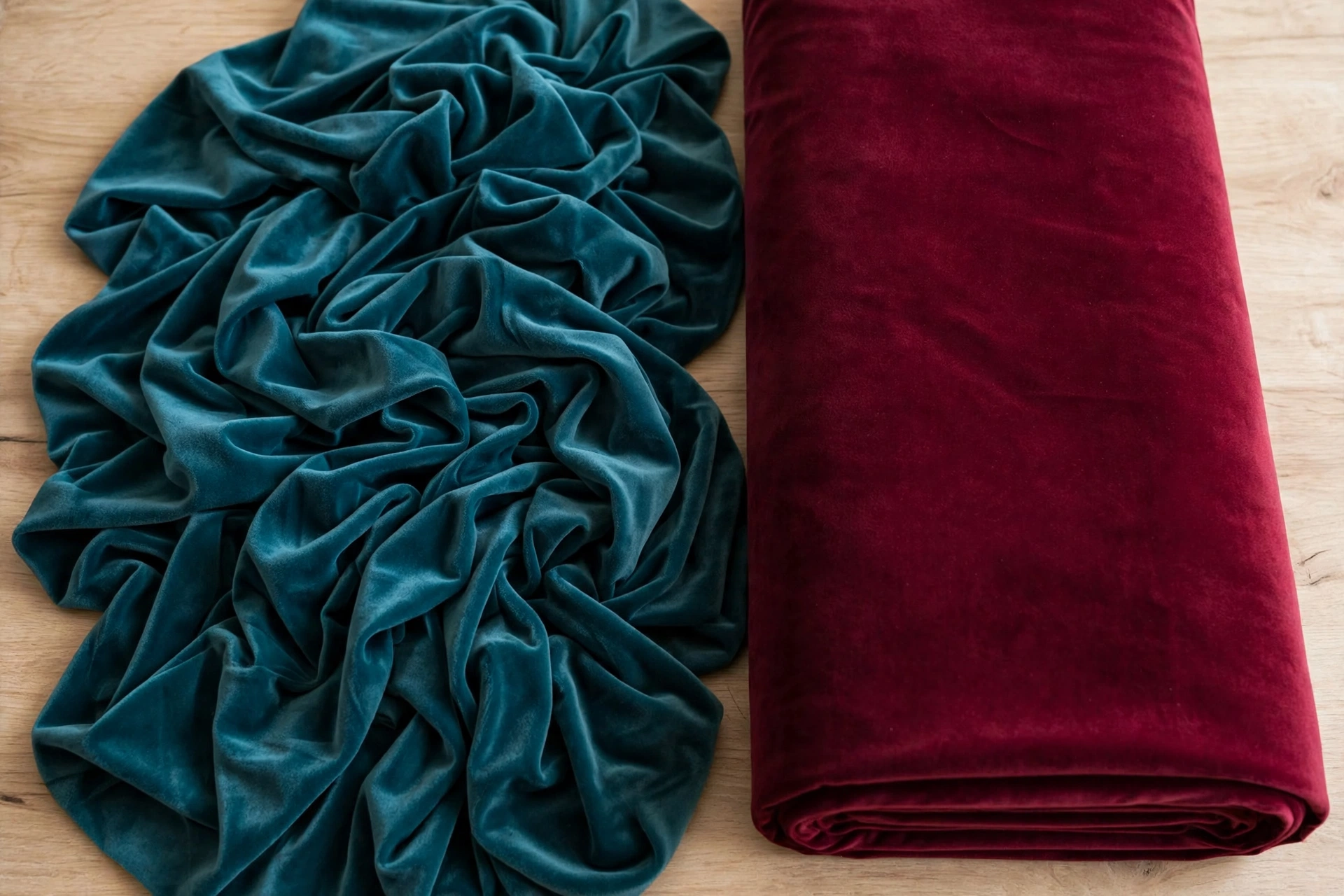
Stretch velvet is velvet with give built in, so it stretches and recovers rather than staying rigid. That elasticity is the whole point: it hugs curves, moves when you move, and forgives small fitting differences that a non-stretch fabric would punish. It still looks like velvet — soft pile, deep colour, a gentle sheen — but it feels softer and more giving in the hand. Browse the Stretch Velvet collection at ValentinaTextile.com to compare colours, all sold by the yard.
What is royal velvet?
Royal velvet is the structured side of the velvet family: a plush, non-stretch velvet with a firm hand and a dense, even pile. It holds a fold, keeps a silhouette, and gives weight and presence to anything made from it. That is why it has long been associated with formal rooms and occasion wear — it looks deliberate and luxurious, and it keeps its shape. Browse the Royal Velvet collection at ValentinaTextile.com to compare colours, all sold by the yard.
Stretch vs structure: the key difference
The difference between the two is not the pile — both are soft and plush — it is what happens when you pull the fabric. Stretch velvet extends and springs back, which suits anything worn close to the body. Royal velvet barely gives at all, which suits anything that needs to stand on its own. That single difference drives almost every other choice: fit, pattern, and project type.
Stretch velvet vs royal velvet compared
Fit and comfort
Stretch velvet is the comfortable choice for clothing. A fitted dress, a leotard, a dance costume, or a snug top in stretch velvet moves with you, needs less precise fitting, and stays comfortable through an evening of sitting, dancing, and standing. Royal velvet fits the way a tailored fabric fits: the shape comes from the cut, not from the cloth giving. That suits a structured gown or jacket, but the fit has to be right, because the fabric will not forgive a tight seam.
Drape and silhouette
Stretch velvet drapes softly and clings, following the body and falling in gentle folds. It is ideal for bias-style dresses, draped tops, and costumes where the fabric should move like a second skin. Royal velvet drapes with weight and authority: it falls in broader, cleaner folds and keeps volume where the design puts it. For full skirts, structured capes, and drapery, that weight is exactly what you want — the fabric itself helps the design hold its shape.
Best uses for stretch velvet
Choose stretch velvet for fitted dresses, dance and theatre costumes, leotards, leggings, wrap tops, and children’s costumes that need to be comfortable and easy to move in. It is also forgiving for beginners, because the give hides small fitting errors. If the garment will be worn against the body and needs to flex, stretch velvet is almost always the right answer.
Best uses for royal velvet
Choose royal velvet for structured gowns, jackets, capes, and formal wear where the silhouette matters more than the stretch. It is also the better velvet for home projects: upholstery, cushion covers, headboards, and curtains that need to hang in full, even folds.
Sewing with each velvet
Cutting and marking
Both velvets share one rule: cut with the nap running the same way on every piece, or the colour will look different from one panel to the next. With stretch velvet, lay the fabric flat and do not pull it while cutting, or the pieces will spring back smaller than you cut them. With royal velvet, the firmer cloth is easier to control, but pin generously and cut in a single layer when you can.
Seams and hems
Stretch velvet needs a stitch that stretches with it — a zigzag or a stretch stitch — or the seam will pop the first time the garment is pulled on. Royal velvet takes a normal straight stitch happily, and its stable structure makes neat, crisp seams easier to achieve. For hems, both benefit from a finish that does not flatten the pile; always test your stitch on a scrap first.
Pressing without crushing the pile
Never press velvet flat with a hot iron straight onto the pile — it will crush it and leave a shine. Use a low heat, a pressing cloth, and steam from the wrong side, or press over a thick towel so the pile has somewhere to go. This matters most for royal velvet, where a crushed patch is hard to hide.
Care: what to check before you buy
Care varies by product, so the listing for the exact velvet you are considering is the final word. As a general rule, velvet needs gentle handling and low heat to keep the pile looking new. If your project will be washed often, check the care instructions before ordering.
Which velvet should you buy?
Ask yourself one question: does this project need to move, or does it need to hold its shape? If it needs to move — a fitted dress, a costume, anything worn close to the body — buy stretch velvet. If it needs to hold its shape — a structured gown, a jacket, upholstery, or drapery — buy royal velvet. If you are still unsure, order with the project in mind and compare both collections side by side: the Stretch Velvet collection and the Royal Velvet collection are both sold by the yard at ValentinaTextile.com. For a broader comparison of velvet against another event favourite, see our guide to Velvet vs Satin.
Shop velvet at ValentinaTextile.com
Whatever you are making, the velvet you choose decides how it fits, falls, and lasts. Shop the full Velvet Fabric collection at ValentinaTextile.com, sold by the yard in one continuous cut, and pick stretch for movement or royal for structure — the right velvet makes the project.
Frequently asked questions
Can I use stretch velvet for curtains?
You can, but royal velvet usually hangs better for drapery, because its weight and structure give fuller, more even folds. Stretch velvet suits lightweight, gathered window treatments better than formal, full-length curtains.
Can I use royal velvet for a fitted dress?
Yes, for a structured fitted dress where the shape comes from tailoring, darts, and seaming rather than from the fabric stretching. For a close-fitting dress that needs to flex and move, stretch velvet is the more comfortable choice.
Do stretch and royal velvet look the same?
At a glance, yes — both have the soft pile and rich colour velvet is known for. The difference shows in use: stretch velvet clings and moves, while royal velvet holds its shape and falls in broader folds. Handling both is the quickest way to feel the difference.