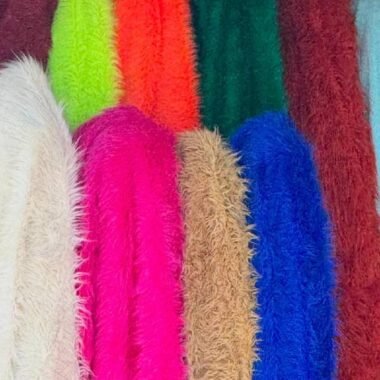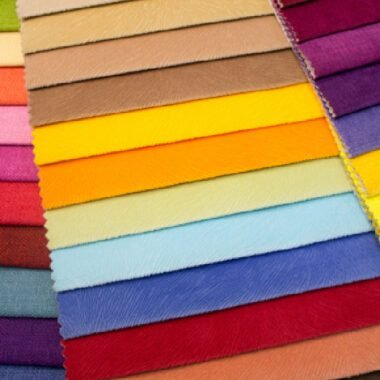
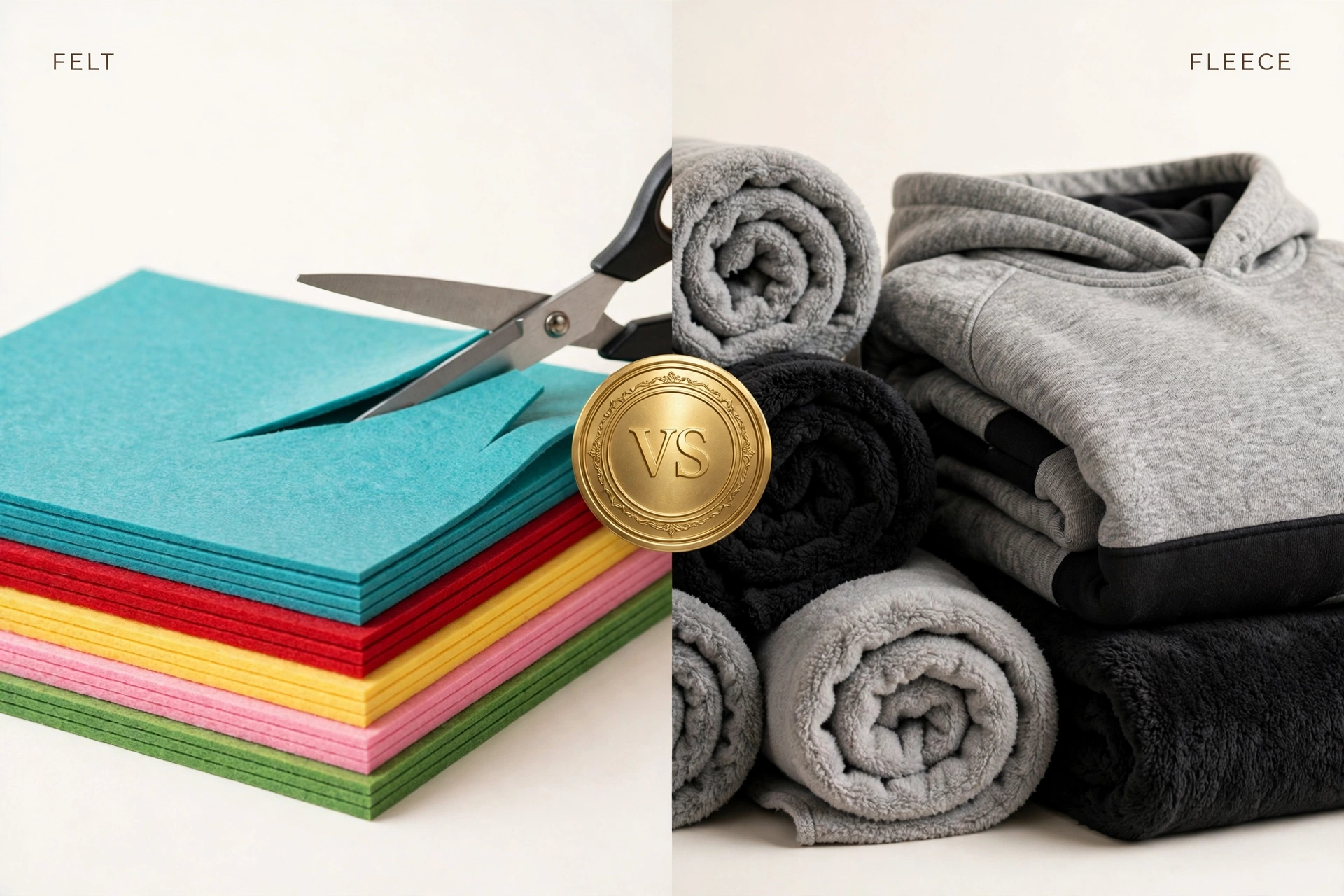
You’re planning a project — maybe a no-sew Halloween costume, a cozy baby blanket, or a stack of craft kits for a classroom — and two fabrics keep showing up in every search: felt and fleece. Both are soft, both come in a rainbow of colors, and both get recommended for “cozy projects.” But they are built completely differently, and choosing the wrong one means a floppy costume that won’t hold its shape, or a blanket that wasn’t what you pictured.
Here’s the straight answer, then the full breakdown so you buy with confidence.
The quick verdict
- Choose felt when your project needs to hold a shape: masks, appliqué, ornaments, costume armor, banners, and no-sew crafts.
- Choose fleece when your project needs warmth, drape, and stretch: blankets, hoodies, joggers, lounge sets, and stuffed-toy bodies.
If you only remember one sentence: felt is for structure, fleece is for snuggle.
What each fabric actually is
Acrylic felt: the structured crafter
Felt is non-woven — its fibers are pressed and matted together instead of being woven or knitted. That one fact explains almost everything about it: there is no warp or weft, so cut edges don’t fray, intricate shapes stay crisp, and you can skip hemming entirely. It’s the reason felt dominates classrooms, craft fairs, and Halloween DIY.
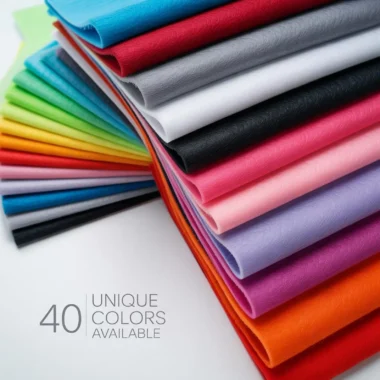
Premium Acrylic Felt at ValentinaTextile.com is 100% acrylic, an extra-wide 72 inches, and 1.6mm thick — the sweet spot between flexible and sturdy. It comes in 40 colors, cuts cleanly with scissors, and takes glue, stitching, and staples without complaint. It’s sold by the yard, and multiple yards ship as one continuous cut, so a 3-yard order is genuinely 3 yards in a single piece.
Sweatshirt fleece: the cozy knit
Fleece is a knit with a soft brushed back — two faces in one fabric. Sweatshirt Fleece pairs a smooth jersey face (the clean, ready-to-wear look) with a plush brushed fleece back (the warmth). It’s a heavyweight cotton-polyester blend knit, 60 inches wide, with a slight stretch that makes garments comfortable and forgiving to sew.
Unlike felt, fleece is made to be worn: hoodies, crewnecks, joggers, sweatpants, and lounge sets. It’s machine washable — wash cold and tumble dry low to keep the brushed back soft — and like our felt, multiple yards arrive in one continuous piece.
Felt vs fleece: head-to-head
| Felt | Fleece | |
|---|---|---|
| Construction | Non-woven, pressed fibers | Knit with brushed back |
| Stretch | None — holds its shape | Slight stretch — drapes and moves |
| Cut edges | Don’t fray, no hemming needed | Won’t unravel badly, but hems look better finished |
| Best for | Cut-out crafts, appliqué, masks, ornaments, costume details | Blankets, hoodies, joggers, wearable costumes |
| Care | Hand wash or spot clean; air dry flat | Machine wash cold, tumble dry low |
| Width | 72″ | 60″ |
| Colors | 40 colors | Black, Charcoal, Heather Grey |
For crafts: felt wins, and it’s not close
Any project that lives or dies on clean shapes belongs to felt. Think Halloween masks, costume ears and horns, appliqué letters on a banner, felt ornaments, finger puppets, classroom craft kits, and table décor. You cut it, glue it, and you’re done — no sewing machine required, no edges to finish.
The 72-inch width is a genuine advantage here: one yard gives you a huge cutting area, so a single order covers an entire classroom’s worth of ornaments or a full set of costume accessories. If you need project ideas, our 10 easy DIY Halloween crafts you can make with felt walks through ten beginner-friendly builds, all no-sew friendly.
One honest limitation: felt isn’t a “wear it all day” fabric. It has no stretch and no drape, so a full felt garment feels stiff. Use it for the details, not the whole outfit.
For blankets and wearables: fleece wins
Warmth, softness against skin, and the ability to move with the body — that’s fleece territory. A no-sew fleece blanket (two layers, tied fringe edges) is the classic beginner project for a reason, and a handmade hoodie in sweatshirt fleece looks store-bought because the smooth jersey face hides beginner seams.
The knit is forgiving: the slight stretch eases fitting, seams press flat, and the cotton-poly blend holds its shape wash after wash. If you want something even plusher for blankets and stuffed animals, browse the Minky & Fleece category too — minky is the ultra-soft, short-pile cousin that baby blankets are made of.
Fleece’s trade-off: it won’t hold a crisp shape. Don’t try to cut precise costume armor or stand-up ears from it — they’ll flop.
For costumes: use both (seriously)
The best DIY costumes are hybrids. Build the wearable base from fleece — a hoodie, joggers, or a simple tunic — then add every detail in felt: animal ears, a superhero emblem, a monster’s teeth, a robot’s control panel, a witch hat’s band and buckle. Felt glues cleanly onto fleece, so you can go fully no-sew.
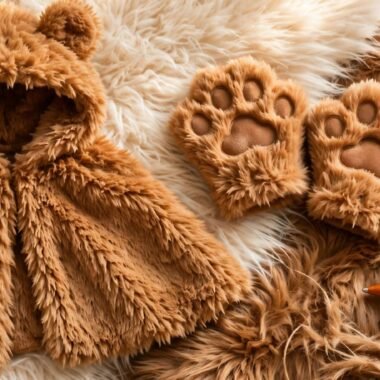
Example: an animal costume = a charcoal sweatshirt fleece hoodie and joggers for the body, plus felt ears, a felt tail, and felt paw pads glued on. Warm enough for trick-or-treating, structured enough to read as a costume in photos.
Care and longevity
Match the care to the construction. Felt’s pressed fibers prefer gentle treatment: hand wash or spot clean, and air dry flat to keep it from warping. Fleece is the easy-care one: machine wash cold and tumble dry low, which keeps the brushed back soft over time. Neither fabric needs ironing for typical projects — and both should stay away from high heat.
How much should you buy?
Because both fabrics are sold by the yard in continuous cuts, think in projects, not pieces:
- Felt crafts: 1–2 yards of the 72″-wide felt covers dozens of ornaments, a full set of costume accessories, or a classroom batch.
- Fleece blanket: 1½–2 yards of 60″-wide fleece makes a generous throw; double it for a two-layer tied blanket.
- Hoodie or joggers: plan on roughly 2½–3 yards of 60″-wide fleece for an adult size.
When in doubt, round up — both fabrics are easy to use up in future projects, and a continuous cut means no piecing scraps together.
Shop felt and fleece at ValentinaTextile.com
Whether your project needs crisp structure or cozy warmth, you’ll find both fabrics in our catalog: Premium Acrylic Felt in 40 colors at 72″ wide, Sweatshirt Fleece in Black, Charcoal, and Heather Grey, plus the full Minky & Fleece collection. Every order is cut fresh and ships fast across the US — so your Halloween costume, blanket, or craft batch starts this week, not next month.
Frequently asked questions
Can you sew felt and fleece together?
Yes — it’s one of the best combinations in DIY. Glue or stitch felt appliqué (letters, shapes, costume details) directly onto a fleece base like a blanket or hoodie. Use fabric glue for no-sew projects or a simple straight stitch if you’re sewing.
Which is warmer, felt or fleece?
Fleece, by a wide margin. Its brushed back traps air for insulation, which is why it’s the standard for blankets and winter wear. Felt insulates poorly by comparison — it’s a craft fabric first.
Which is better for a no-sew project?
Felt, for anything shape-based: masks, ornaments, banners, and costume accessories need no sewing at all since the edges don’t fray. Fleece also has a classic no-sew project — the tied-fringe blanket — but anything fitted or garment-like needs at least basic seams.