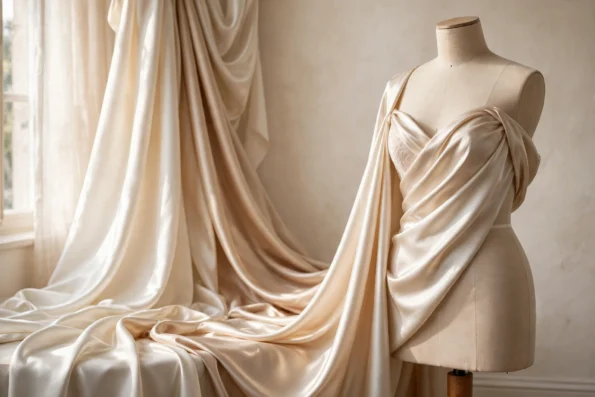
Bridal satin fabric in ivory for wedding gowns — smooth lustrous finish

Bridal Satin Buying Guide: Weights, Finishes and What It’s Used For

Shopping for wedding-dress fabric is overwhelming. Search “satin” and you’re hit with dozens of options — bridal satin, charmeuse, mikado, duchess — all shiny, all smooth-looking in photos, all claiming to be “perfect for gowns.” Buy the wrong one and your dress either drapes like a bedsheet or stands up like cardboard. This guide fixes that. You’ll learn what bridal satin actually is, how weights and finishes change the way a gown looks and moves, and exactly what to use each satin for — so the fabric you order is the fabric your project needs. What “bridal satin” actually means “Bridal satin” isn’t a fiber — it’s a finish and hand-feel category: a smooth, lustrous satin with a soft drape, traditionally chosen for wedding gowns and formal wear. Bridal Satin at ValentinaTextile.com is a stretch bridal satin — it has a slight stretch built in, which makes fitting far more forgiving than a rigid satin. It’s 60 inches wide, sold by the yard, and multiple yards ship as one continuous cut. The color range is the other reason it’s a bridal staple: over 50 shades, from Ivory, White, and Off White through Champagne, Blush, and Dusty Rose to deep tones like Burgundy, Navy, and Hunter Green. That means the same fabric can dress the bride, the bridesmaids, and the reception tables. Weights: why they matter more than the name Two satins can both be called “bridal” and behave like different fabrics. Weight decides whether a gown flows or sculpts: Lighter satins (like charmeuse) drape fluidly and cling softly — beautiful for bias-cut gowns, slip dresses, and flowing skirts. Medium satins — where our Bridal Satin sits — balance drape with enough body for structured bodices, A-line skirts, and overlays that still move. Structured satins hold sculpted shapes on their own. Mikado Satin, for example, is a dense twill weave at 153 g/sqm — medium-heavy, with a crisp body made for architectural gowns, pleated details, and couture tailoring. Rule of thumb: flowing silhouette → lighter/medium satin; sculpted silhouette → structured satin. If your pattern has boning, dramatic pleats, or a stand-away skirt, you want the structure of something like mikado. If it has a bias drape or soft gathers, bridal satin is the safer pick. Finishes: lustrous, subtle sheen, or matte Not all shine is the same. Satins differ in how they reflect light, and the finish changes the whole mood of a garment: Lustrous finish — our Bridal Satin has a smooth, lustrous face. This is the classic “wedding” look: luminous in photos, elegant under event lighting. Subtle sheen — Mikado Satin has a refined, understated sheen rather than a high gloss. It reads expensive and modern, and it photographs without hot spots. Matte — the Satin Fabrics collection also includes Duchess (matte/peau de soie) satin for brides who want richness without shine. When choosing, think about your venue lighting. High-shine satins glow under ballroom lights; matte and subtle-sheen satins are more forgiving in bright daylight ceremonies. What to use bridal satin for Bridal satin earns its name across the whole wedding: Wedding gowns — bodices, skirts, and overlays; the slight stretch makes fitting more forgiving. Bridesmaid and evening dresses — one fabric, many colors, cohesive wedding party. Special-occasion attire — prom, evening wear, and formal separates. Event décor — table runners, draping, chair sashes, and backdrops that catch the light. For gowns that need to hold a sculpted shape — think structured bodices, dramatic trains, architectural pleats — step up to Mikado Satin instead. And if you’re weighing satin against velvet for an event look, our velvet vs satin comparison breaks down when each one wins. Stretch vs. non-stretch: does it matter? Yes — more than most buyers expect. The slight stretch in our Bridal Satin means easier fitting around bodices, more comfort through a long event, and less precision needed in cutting. Rigid satins demand exact measurements and often need more tailoring to sit right. If you’re sewing your own gown or working without a professional fitting, stretch is your friend. How much bridal satin do you need? Because it’s 60 inches wide and sold in continuous cuts, bridal satin goes further than you’d think: Simple A-line gown: roughly 4–5 yards. Full-skirted or trained gown: roughly 5–7 yards. Bridesmaid dress: roughly 3–4 yards. Table runner: 1 yard makes several runners; event draping: measure your span and add 20% for swags. These are planning estimates — always check your pattern’s yardage chart first. And order a swatch or a half yard first if you’re matching colors: screen colors shift, and wedding palettes deserve certainty. Care: treat it like the investment it is Formal satins reward gentle care. Structured satins like mikado do best with dry cleaning to preserve their body and sheen. For bridal satin garments, follow the care guidance on the product page and your pattern — and always test-press on a scrap first, using low heat and a pressing cloth. Satin shows every scorch mark, so patience at the ironing board pays off. Shop bridal satin at ValentinaTextile.com Your gown deserves fabric you can trust. Shop Bridal Satin — 60” wide, slight stretch, smooth lustrous finish, 50+ colors, sold by the yard in continuous cuts — or explore the full Satin Fabrics collection, including structured Mikado Satin for sculpted silhouettes. Cut fresh from the roll and shipped fast across the US, so your wedding sewing starts on schedule. Frequently asked questions Is bridal satin stretchy? Ours is — Valentina’s Bridal Satin has a slight stretch that makes fitting easier and wearing more comfortable. Not all bridal satins stretch, so always check the product description before you buy. What’s the difference between bridal satin and mikado satin? Bridal satin is the softer-draping option with a smooth, lustrous finish — best for flowing gowns and overlays. Mikado satin is a denser twill weave (153 g/sqm) with a subtle sheen and crisp body — best for structured, sculpted silhouettes. How wide is bridal satin, and is it sold by
CONTINUE READING ➞
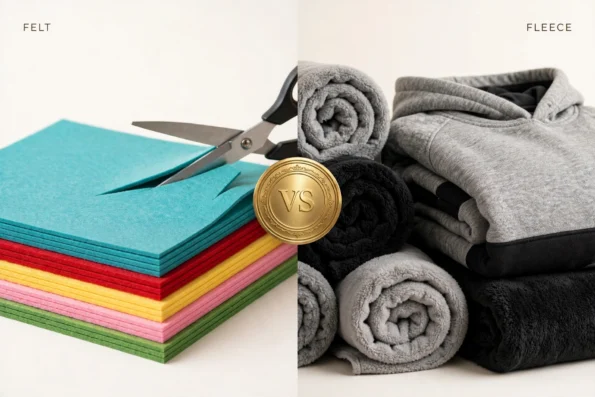
Felt vs fleece fabric comparison — colorful acrylic felt sheets and soft fleece fabric rolls

Felt vs Fleece: Which Is Better for Crafts, Blankets and Costumes?

You’re planning a project — maybe a no-sew Halloween costume, a cozy baby blanket, or a stack of craft kits for a classroom — and two fabrics keep showing up in every search: felt and fleece. Both are soft, both come in a rainbow of colors, and both get recommended for “cozy projects.” But they are built completely differently, and choosing the wrong one means a floppy costume that won’t hold its shape, or a blanket that wasn’t what you pictured. Here’s the straight answer, then the full breakdown so you buy with confidence. The quick verdict Choose felt when your project needs to hold a shape: masks, appliqué, ornaments, costume armor, banners, and no-sew crafts. Choose fleece when your project needs warmth, drape, and stretch: blankets, hoodies, joggers, lounge sets, and stuffed-toy bodies. If you only remember one sentence: felt is for structure, fleece is for snuggle. What each fabric actually is Acrylic felt: the structured crafter Felt is non-woven — its fibers are pressed and matted together instead of being woven or knitted. That one fact explains almost everything about it: there is no warp or weft, so cut edges don’t fray, intricate shapes stay crisp, and you can skip hemming entirely. It’s the reason felt dominates classrooms, craft fairs, and Halloween DIY. Premium Acrylic Felt at ValentinaTextile.com is 100% acrylic, an extra-wide 72 inches, and 1.6mm thick — the sweet spot between flexible and sturdy. It comes in 40 colors, cuts cleanly with scissors, and takes glue, stitching, and staples without complaint. It’s sold by the yard, and multiple yards ship as one continuous cut, so a 3-yard order is genuinely 3 yards in a single piece. Sweatshirt fleece: the cozy knit Fleece is a knit with a soft brushed back — two faces in one fabric. Sweatshirt Fleece pairs a smooth jersey face (the clean, ready-to-wear look) with a plush brushed fleece back (the warmth). It’s a heavyweight cotton-polyester blend knit, 60 inches wide, with a slight stretch that makes garments comfortable and forgiving to sew. Unlike felt, fleece is made to be worn: hoodies, crewnecks, joggers, sweatpants, and lounge sets. It’s machine washable — wash cold and tumble dry low to keep the brushed back soft — and like our felt, multiple yards arrive in one continuous piece. Felt vs fleece: head-to-head Felt Fleece Construction Non-woven, pressed fibers Knit with brushed back Stretch None — holds its shape Slight stretch — drapes and moves Cut edges Don’t fray, no hemming needed Won’t unravel badly, but hems look better finished Best for Cut-out crafts, appliqué, masks, ornaments, costume details Blankets, hoodies, joggers, wearable costumes Care Hand wash or spot clean; air dry flat Machine wash cold, tumble dry low Width 72″ 60″ Colors 40 colors Black, Charcoal, Heather Grey For crafts: felt wins, and it’s not close Any project that lives or dies on clean shapes belongs to felt. Think Halloween masks, costume ears and horns, appliqué letters on a banner, felt ornaments, finger puppets, classroom craft kits, and table décor. You cut it, glue it, and you’re done — no sewing machine required, no edges to finish. The 72-inch width is a genuine advantage here: one yard gives you a huge cutting area, so a single order covers an entire classroom’s worth of ornaments or a full set of costume accessories. If you need project ideas, our 10 easy DIY Halloween crafts you can make with felt walks through ten beginner-friendly builds, all no-sew friendly. One honest limitation: felt isn’t a “wear it all day” fabric. It has no stretch and no drape, so a full felt garment feels stiff. Use it for the details, not the whole outfit. For blankets and wearables: fleece wins Warmth, softness against skin, and the ability to move with the body — that’s fleece territory. A no-sew fleece blanket (two layers, tied fringe edges) is the classic beginner project for a reason, and a handmade hoodie in sweatshirt fleece looks store-bought because the smooth jersey face hides beginner seams. The knit is forgiving: the slight stretch eases fitting, seams press flat, and the cotton-poly blend holds its shape wash after wash. If you want something even plusher for blankets and stuffed animals, browse the Minky & Fleece category too — minky is the ultra-soft, short-pile cousin that baby blankets are made of. Fleece’s trade-off: it won’t hold a crisp shape. Don’t try to cut precise costume armor or stand-up ears from it — they’ll flop. For costumes: use both (seriously) The best DIY costumes are hybrids. Build the wearable base from fleece — a hoodie, joggers, or a simple tunic — then add every detail in felt: animal ears, a superhero emblem, a monster’s teeth, a robot’s control panel, a witch hat’s band and buckle. Felt glues cleanly onto fleece, so you can go fully no-sew. Example: an animal costume = a charcoal sweatshirt fleece hoodie and joggers for the body, plus felt ears, a felt tail, and felt paw pads glued on. Warm enough for trick-or-treating, structured enough to read as a costume in photos. Care and longevity Match the care to the construction. Felt’s pressed fibers prefer gentle treatment: hand wash or spot clean, and air dry flat to keep it from warping. Fleece is the easy-care one: machine wash cold and tumble dry low, which keeps the brushed back soft over time. Neither fabric needs ironing for typical projects — and both should stay away from high heat. How much should you buy? Because both fabrics are sold by the yard in continuous cuts, think in projects, not pieces: Felt crafts: 1–2 yards of the 72″-wide felt covers dozens of ornaments, a full set of costume accessories, or a classroom batch. Fleece blanket: 1½–2 yards of 60″-wide fleece makes a generous throw; double it for a two-layer tied blanket. Hoodie or joggers: plan on roughly 2½–3 yards of 60″-wide fleece for an adult size. When in doubt, round up — both fabrics are easy to

CONTINUE READING ➞
My Cart
Wishlist
Recently Viewed
Categories