The Satin Designers Reach For When the Dress Has to Stand Up — Literally
Not all satins are created equal. If you’ve ever bought a “satin” for a wedding gown or evening dress and found it too floppy to hold a silhouette, you bought the wrong satin. Designers with structured gowns, dramatic skirts, and sculpted bodices on their mood boards reach for one specific weave: mikado satin.
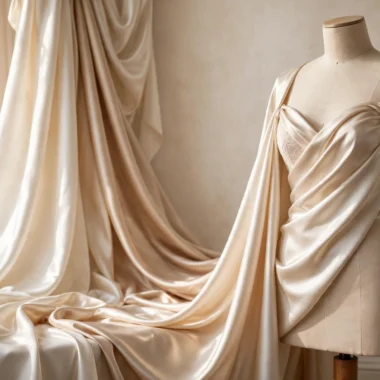
Mikado satin is the heavier, more architectural member of the satin family — a dense twill-weave fabric with a subtle sheen and a crisp body that holds its shape instead of collapsing into it. In this guide, we’ll cover what mikado satin actually is, how it compares to other satins, and why it has become the go-to fabric for bridal and couture work.
What Is Mikado Satin?
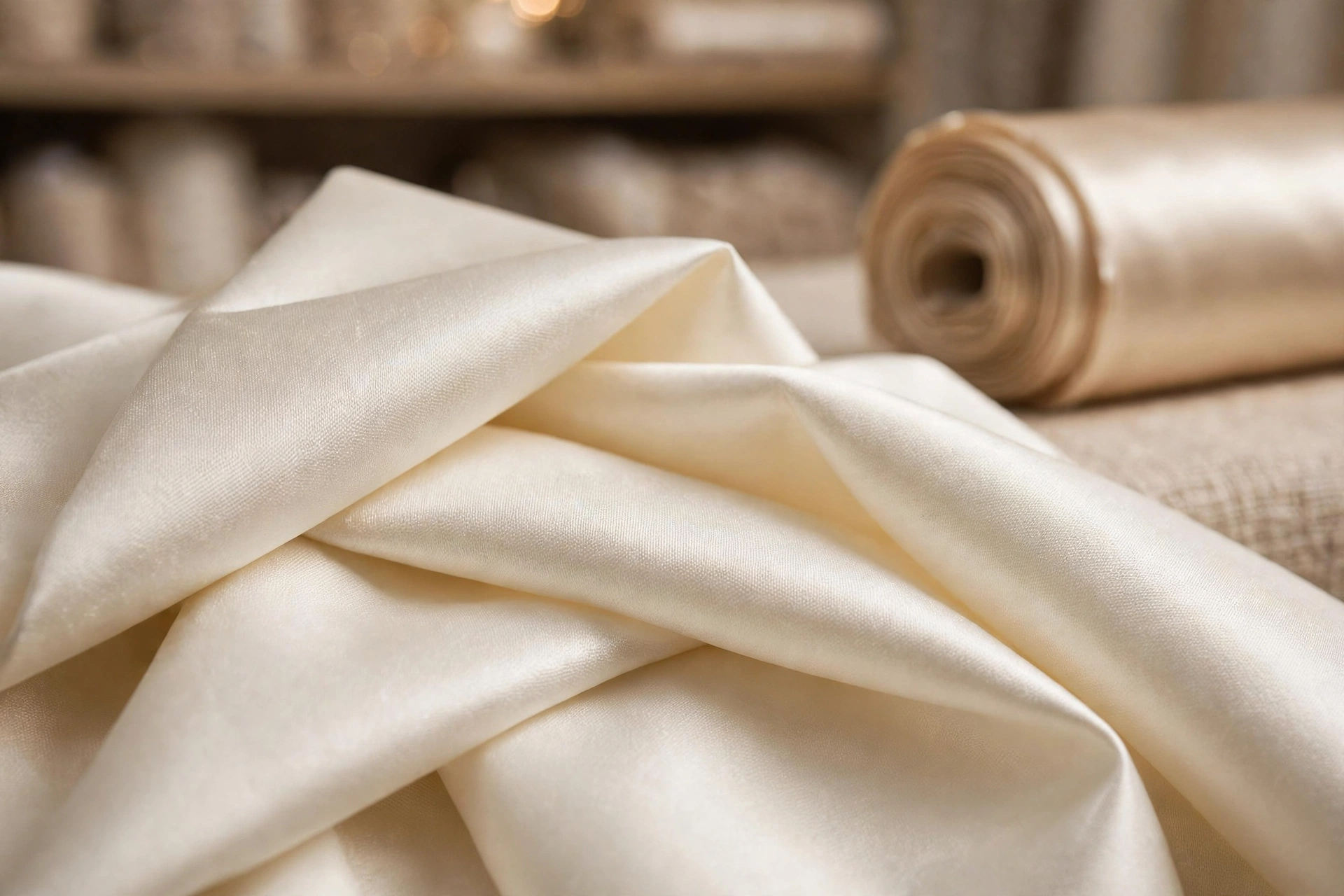
Mikado satin is a woven satin defined by its dense twill weave — the diagonal rib structure of a twill, packed tight enough to give the fabric real body. Where charmeuse satin is soft and slinky and dull satin is lightweight and matte, mikado sits at the structured end of the scale: medium-heavy, smooth to the touch, and crisp without being stiff.
The Mikado Satin at ValentinaTextile.com is woven from 100% polyester at 153 g/sqm — a medium-heavy weight that drapes in clean, elegant folds rather than puddling. Key specs from the product page:
- Fiber: 100% polyester
- Weave: dense twill weave
- Weight: 153 g/sqm (medium-heavy, structured)
- Width: 58/60 inches — generous for gowns and décor
- Finish: subtle satin sheen, smooth surface with a crisp body
- Stretch: slight stretch for comfort, without losing structure
That combination — structure plus a refined sheen — is exactly what makes mikado so prized. It has the formality of a bridal fabric and the workability of something much less precious.
Mikado Satin vs Other Satins
Mikado vs Charmeuse
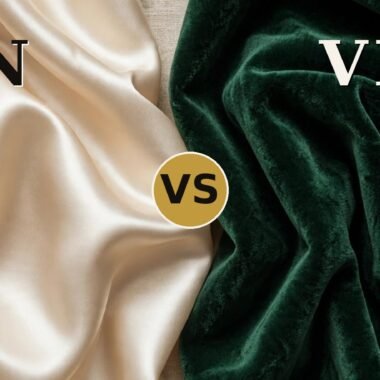
Charmeuse is the liquid one: ultra-soft, high-shine, and fluid. It falls against the body and shows every line. Mikado does the opposite — it stands away from the body and sculpts. Choose charmeuse for bias-cut slip dresses; choose mikado for gowns with architecture. (We compare fluid satins and velvet in our Velvet vs Satin guide.)
Mikado vs Dull Satin
Dull satin is lighter and more matte — lovely for bridesmaid dresses and simple evening wear. Mikado is noticeably thicker and heavier, with more body and a slightly more formal sheen. If your design has pleats, a structured bodice, or a skirt that needs to hold volume, mikado is the upgrade.
Mikado vs Bridal Satin
The two overlap — both are formal satins used for wedding gowns — but bridal satin is typically softer with a higher-shine finish, while mikado offers more crispness and structure. Some designers use both in one gown: mikado for the structured skirt, bridal satin for a softer bodice or sash. Read our Bridal Satin Buying Guide for the full breakdown of satin weights and finishes.
For the whole family — liquid satin, duchess satin, charmeuse, and more — browse the Satin Fabrics collection.
Why Designers Love Mikado for Gowns
- It holds a silhouette. A-line skirts, ballgowns, and sculpted bodices keep their intended shape instead of collapsing.
- It photographs beautifully. The subtle sheen catches light in folds and pleats — dramatic in wedding and event photography.
- It tailors well. The stable twill weave takes pressing, topstitching, and structured seaming without puckering.
- It’s forgiving. Heavier satins show fewer wrinkles and less cling than charmeuse, which matters on a long event day.
- It goes beyond gowns. Mikado works for tailored suits, cocktail dresses, stage costumes, linings, and even décor accents like cushion covers and table runners.
Choosing Your Mikado Satin Color
ValentinaTextile.com’s Mikado Satin comes in 21 colors, so the palette decision is yours: classic White, Off White, Ivory-adjacent Blush, and Champagne for bridal; Navy Blue, Hunter Green, Burgundy, Black, and Red for evening drama; Baby Blue, Lilac, Sage, Dusty Rose, and Mauve for softer events and bridesmaid looks. All colors are sold by the yard and cut in one continuous piece, so large gown projects arrive as a single uninterrupted length.
Care & Sewing Tips for Mikado Satin
- Dry clean recommended — machine washing can dull mikado’s sheen and soften its structure.
- Steam or press on low heat with a protective cloth between the iron and the fabric.
- Use sharp microtex or universal needles and test stitch length on a swatch — dense weaves reward a slightly longer stitch.
- Clip and grade seams to manage bulk at waistlines and bodice seams.
- Pre-plan yardage — a structured gown typically needs 4–6 yards at 58/60″ width; order continuous yardage for pattern matching.
Shop Mikado Satin by the Yard
Ready to cut your next gown? Get Mikado Satin by the yard at ValentinaTextile.com — 100% polyester, 153 g/sqm, 58/60 inches wide, in 21 designer colors, sold in continuous cuts. And if you’re comparing formal fabrics, explore the full Satin Fabrics collection or revisit our Velvet vs Satin comparison before you decide.
Frequently Asked Questions
What is mikado satin made of?
Traditionally a silk blend, but most modern mikado — including the Mikado Satin sold at ValentinaTextile.com — is 100% polyester with a dense twill weave. You get the structured drape and subtle sheen without silk’s price or delicate care.
Is mikado satin good for wedding dresses?
Yes — it’s one of the most popular bridal fabrics precisely because its medium-heavy body (153 g/sqm) holds structured silhouettes like A-line and ballgown skirts, while its subtle sheen photographs beautifully.
How do you care for mikado satin?
Dry clean is recommended. If you must press it, use low heat with a protective cloth, and avoid machine washing to preserve the structure and sheen.