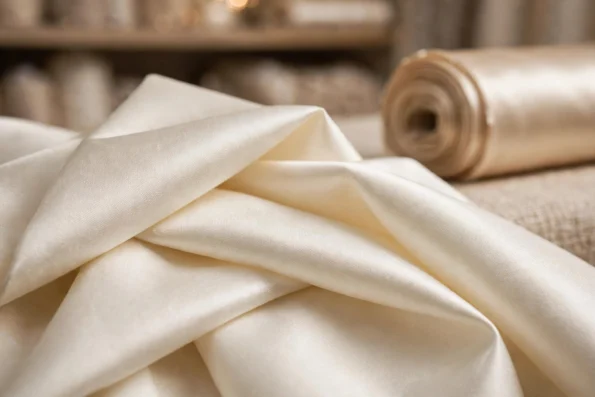
Mikado satin fabric for structured wedding gowns — subtle sheen twill weave

Mikado Satin: What It Is and Why Designers Love It for Gowns

The Satin Designers Reach For When the Dress Has to Stand Up — Literally Not all satins are created equal. If you’ve ever bought a “satin” for a wedding gown or evening dress and found it too floppy to hold a silhouette, you bought the wrong satin. Designers with structured gowns, dramatic skirts, and sculpted bodices on their mood boards reach for one specific weave: mikado satin. Mikado satin is the heavier, more architectural member of the satin family — a dense twill-weave fabric with a subtle sheen and a crisp body that holds its shape instead of collapsing into it. In this guide, we’ll cover what mikado satin actually is, how it compares to other satins, and why it has become the go-to fabric for bridal and couture work. What Is Mikado Satin? Mikado satin is a woven satin defined by its dense twill weave — the diagonal rib structure of a twill, packed tight enough to give the fabric real body. Where charmeuse satin is soft and slinky and dull satin is lightweight and matte, mikado sits at the structured end of the scale: medium-heavy, smooth to the touch, and crisp without being stiff. The Mikado Satin at ValentinaTextile.com is woven from 100% polyester at 153 g/sqm — a medium-heavy weight that drapes in clean, elegant folds rather than puddling. Key specs from the product page: Fiber: 100% polyester Weave: dense twill weave Weight: 153 g/sqm (medium-heavy, structured) Width: 58/60 inches — generous for gowns and décor Finish: subtle satin sheen, smooth surface with a crisp body Stretch: slight stretch for comfort, without losing structure That combination — structure plus a refined sheen — is exactly what makes mikado so prized. It has the formality of a bridal fabric and the workability of something much less precious. Mikado Satin vs Other Satins Mikado vs Charmeuse Charmeuse is the liquid one: ultra-soft, high-shine, and fluid. It falls against the body and shows every line. Mikado does the opposite — it stands away from the body and sculpts. Choose charmeuse for bias-cut slip dresses; choose mikado for gowns with architecture. (We compare fluid satins and velvet in our Velvet vs Satin guide.) Mikado vs Dull Satin Dull satin is lighter and more matte — lovely for bridesmaid dresses and simple evening wear. Mikado is noticeably thicker and heavier, with more body and a slightly more formal sheen. If your design has pleats, a structured bodice, or a skirt that needs to hold volume, mikado is the upgrade. Mikado vs Bridal Satin The two overlap — both are formal satins used for wedding gowns — but bridal satin is typically softer with a higher-shine finish, while mikado offers more crispness and structure. Some designers use both in one gown: mikado for the structured skirt, bridal satin for a softer bodice or sash. Read our Bridal Satin Buying Guide for the full breakdown of satin weights and finishes. For the whole family — liquid satin, duchess satin, charmeuse, and more — browse the Satin Fabrics collection. Why Designers Love Mikado for Gowns It holds a silhouette. A-line skirts, ballgowns, and sculpted bodices keep their intended shape instead of collapsing. It photographs beautifully. The subtle sheen catches light in folds and pleats — dramatic in wedding and event photography. It tailors well. The stable twill weave takes pressing, topstitching, and structured seaming without puckering. It’s forgiving. Heavier satins show fewer wrinkles and less cling than charmeuse, which matters on a long event day. It goes beyond gowns. Mikado works for tailored suits, cocktail dresses, stage costumes, linings, and even décor accents like cushion covers and table runners. Choosing Your Mikado Satin Color ValentinaTextile.com’s Mikado Satin comes in 21 colors, so the palette decision is yours: classic White, Off White, Ivory-adjacent Blush, and Champagne for bridal; Navy Blue, Hunter Green, Burgundy, Black, and Red for evening drama; Baby Blue, Lilac, Sage, Dusty Rose, and Mauve for softer events and bridesmaid looks. All colors are sold by the yard and cut in one continuous piece, so large gown projects arrive as a single uninterrupted length. Care & Sewing Tips for Mikado Satin Dry clean recommended — machine washing can dull mikado’s sheen and soften its structure. Steam or press on low heat with a protective cloth between the iron and the fabric. Use sharp microtex or universal needles and test stitch length on a swatch — dense weaves reward a slightly longer stitch. Clip and grade seams to manage bulk at waistlines and bodice seams. Pre-plan yardage — a structured gown typically needs 4–6 yards at 58/60″ width; order continuous yardage for pattern matching. Shop Mikado Satin by the Yard Ready to cut your next gown? Get Mikado Satin by the yard at ValentinaTextile.com — 100% polyester, 153 g/sqm, 58/60 inches wide, in 21 designer colors, sold in continuous cuts. And if you’re comparing formal fabrics, explore the full Satin Fabrics collection or revisit our Velvet vs Satin comparison before you decide. Frequently Asked Questions What is mikado satin made of? Traditionally a silk blend, but most modern mikado — including the Mikado Satin sold at ValentinaTextile.com — is 100% polyester with a dense twill weave. You get the structured drape and subtle sheen without silk’s price or delicate care. Is mikado satin good for wedding dresses? Yes — it’s one of the most popular bridal fabrics precisely because its medium-heavy body (153 g/sqm) holds structured silhouettes like A-line and ballgown skirts, while its subtle sheen photographs beautifully. How do you care for mikado satin? Dry clean is recommended. If you must press it, use low heat with a protective cloth, and avoid machine washing to preserve the structure and sheen.
CONTINUE READING ➞
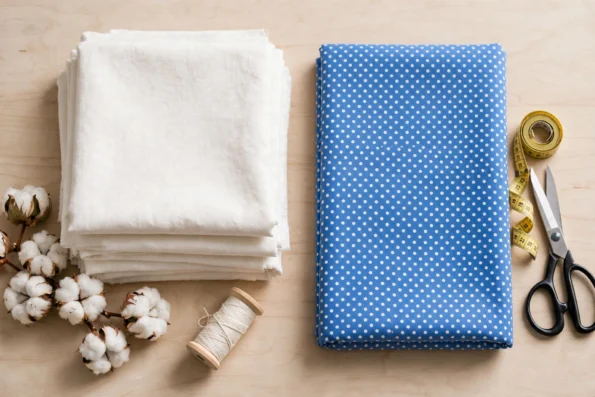
Cotton vs poly cotton fabric comparison — natural cotton and poly cotton fabrics side by side

Cotton vs Poly Cotton: Which Fabric Should You Sew With?

The Everyday Fabric Question Every Sewer Faces Standing in front of a wall of fabric — or scrolling through an online store — you’ll eventually face a choice that looks trivial but isn’t: cotton or poly cotton? They look similar on the screen, both sew like a dream for most projects, and both come in a rainbow of solids and prints. But pick the wrong one for your project and you’ll feel it every time you wash, wear, or press it. The short answer: 100% cotton is the natural, breathable classic — soft, absorbent, and perfect for quilts, summer clothing, and crafts. Poly cotton (a polyester-cotton blend) is the practical workhorse — more wrinkle-resistant, more durable, and easier to care for. The right choice depends on what you’re making. Let’s break it down so you can buy with confidence. What Is 100% Cotton Fabric? 100% cotton is exactly what it sounds like: fabric woven entirely from natural cotton fibers. It’s the fabric most of us start sewing with, and for good reason. It’s breathable, soft against the skin, and absorbent, which makes it comfortable for clothing that touches the body all day. At ValentinaTextile.com, you’ll find pure cotton options in the Cotton & Canvas collection, including 100% cotton fabrics in solid colors. These are the natural choice for: Quilting — cotton presses crisp seams and holds a quilt’s shape beautifully Summer shirts, dresses, and skirts — breathability matters in warm weather Baby clothes and bedding — soft, natural fibers are gentle on sensitive skin Home décor — curtains, cushion covers, and tablecloths with a natural matte look The trade-off? Cotton wrinkles more easily, can shrink on the first wash, and lighter colors may fade a little faster than blends. Pre-washing your cotton before cutting solves most of these issues — more on that in the care tips below. What Is Poly Cotton Fabric? Poly cotton (also written polycotton) blends cotton with polyester fibers, giving you a fabric that keeps cotton’s soft, natural hand feel while adding polyester’s strength and easy-care behavior. It’s the behind-the-scenes hero of everyday clothing — much of the bedding, shirting, and kids’ clothing you already own is probably a poly cotton blend. ValentinaTextile.com stocks a full Poly Cotton Fabric collection, including printed polycotton styles like polka dots and novelty prints. Poly cotton shines when you need: Everyday garments — shirts, dresses, and pajamas that get washed constantly Kids’ clothing — durability and stain resistance matter more than a perfectly natural hand Crafts and costumes — holds printed patterns crisply and resists wrinkling Uniforms and workwear — tough, holds color wash after wash Thanks to the polyester content, poly cotton resists wrinkles far better than pure cotton, shrinks less, and keeps printed colors looking bright through many washes. It can feel slightly less breathable in hot weather, but for most everyday sewing it’s the low-maintenance winner. Cotton vs Poly Cotton: Side-by-Side Comparison 100% Cotton Poly Cotton Fiber content Natural cotton fibers only Blend of cotton + polyester Feel Soft, natural, breathable Soft with a slightly smoother hand Wrinkles Wrinkles more easily Resists wrinkles much better Shrinkage Can shrink on first wash Minimal shrinkage Care Machine wash, may need ironing Machine wash, easy care, less ironing Prints & color Lovely matte prints Bright prints that stay bright longer Best for Quilts, summer clothes, baby items, décor Everyday garments, kids’ wear, crafts When to Choose Cotton Reach for 100% cotton when comfort and a natural feel are the priority. A summer dress, a baby quilt, or cushion covers for a cozy living room all benefit from cotton’s breathability and softness. If you’re a quilter, cotton is almost always the right call — it presses into sharp seams, and its slight give makes piecing forgiving. Cotton also takes dye beautifully, so solid-color cottons have a rich, matte depth that looks expensive in home décor projects. Browse the Cotton & Canvas collection and the 100% cotton selection to see the available colors. When to Choose Poly Cotton Choose poly cotton when durability and easy care win. School uniforms, kids’ play clothes, everyday shirts, and anything that will be washed weekly (or by someone who won’t iron) are poly cotton territory. Crafters love it too: printed polycottons hold crisp lines for costumes, bunting, aprons, and tote bags without looking creased. If you’re sewing for resale — children’s clothes, handmade goods at craft fairs — poly cotton’s durability and colorfastness mean your products look new longer. The Poly Cotton Fabric collection has printed options that make quick-sew projects look professionally finished. Care Tips for Both Always pre-wash cotton before cutting — wash and dry it the way you’ll wash the finished item so any shrinkage happens now, not later. Iron cotton while slightly damp (or use steam) for crisp results; poly cotton usually needs little to no ironing — use medium heat if you do. Wash in cool to warm water and tumble dry low to keep colors bright on both fabrics. Test a swatch first for garments — a 10-minute test wash tells you everything about shrinkage and feel. Still deciding between other fabric pairs? Our comparison of Felt vs Fleece covers soft crafts and blankets, and Chiffon vs Organza helps with sheer fabrics. Shop Cotton & Poly Cotton by the Yard Whether you’re team natural fiber or team easy care, ValentinaTextile.com has you covered. Browse the Cotton & Canvas collection for pure cottons and canvas, the 100% cotton fabrics for solids, and the Poly Cotton Fabric collection for durable printed blends. All fabrics are sold by the yard and cut in one continuous piece — order today and start your next project this week. Frequently Asked Questions Is poly cotton better than 100% cotton? Neither is universally better — it depends on the project. Poly cotton wins for durability, wrinkle resistance, and easy care (kids’ clothes, everyday garments). 100% cotton wins for breathability, natural softness, and quilting. Does poly cotton shrink? Very little. The polyester content makes poly cotton far

CONTINUE READING ➞
My Cart
Wishlist
Recently Viewed
Categories