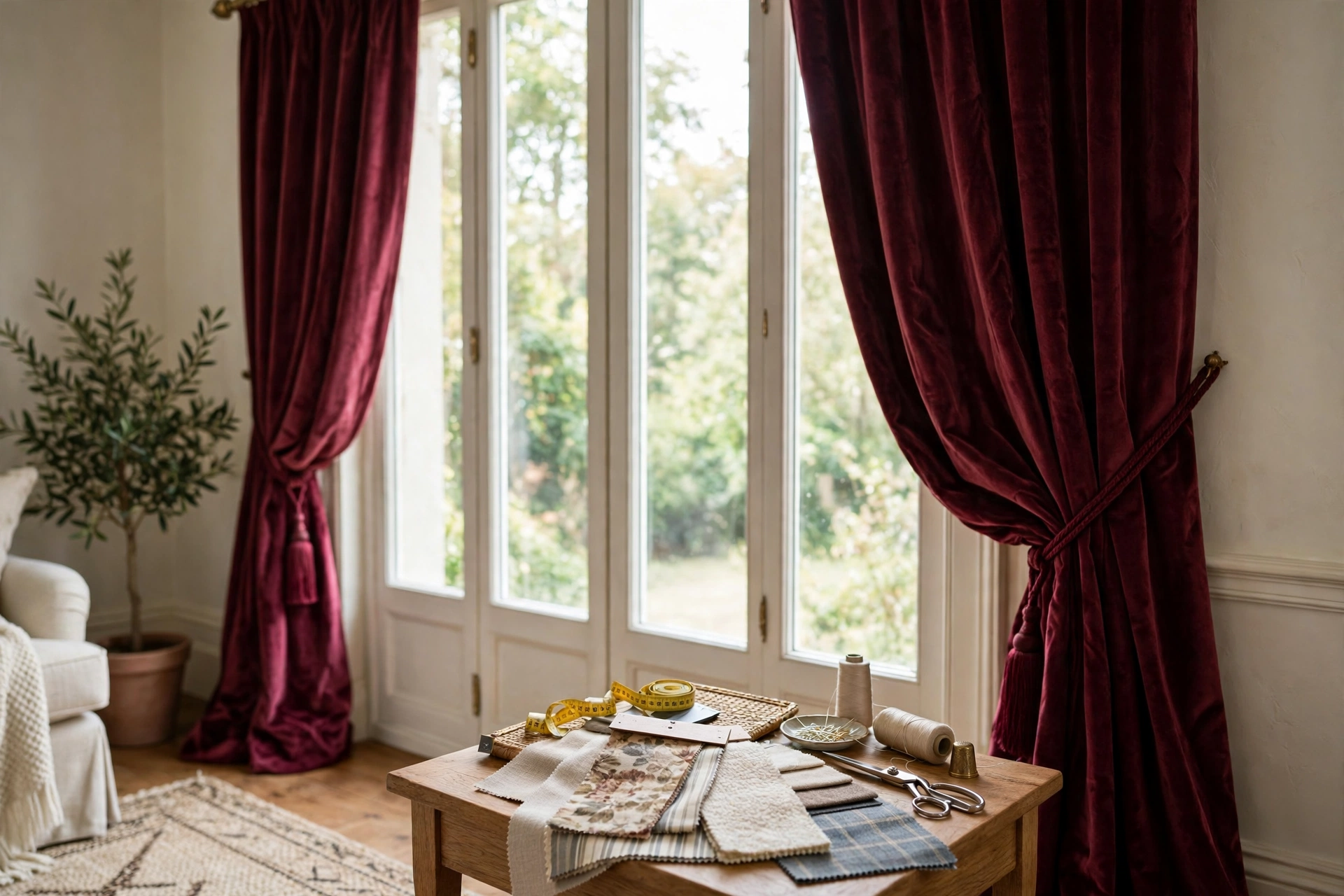
Velvet curtains are the fastest way to make a room feel warm, quiet and finished — but velvet is heavy, directional and unforgiving of measuring mistakes. If you have ever bought a beautiful roll of velvet and then stalled at the cutting table, this guide walks you through measuring, lining and hanging so your curtains look tailored, not homemade. If you are still deciding between curtain fabrics, start with our guide on how to choose fabric for curtains, then come back here to sew.
Why Velvet Works So Well for Curtains
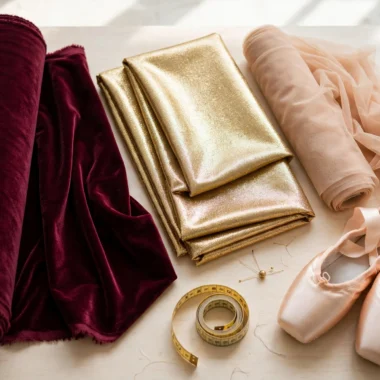
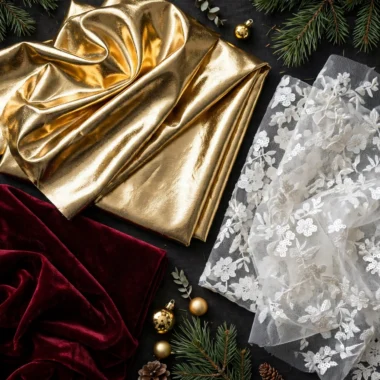
Velvet has a dense pile that absorbs light and sound, drapes in deep, soft folds and instantly adds colour depth to a room. Our Premium Velvet fabric by the yard is a soft stretch velvet sold by the yard, which makes it forgiving to sew and easy to order in one continuous piece for tall windows. Browse the full range in our Velvet Fabric collection to compare colours before you measure.
Step 1: Measure Your Window Properly
Measure the width of your curtain rod or track, not just the window, and add fullness: velvet looks best at 1.5 to 2 times the rod width. Measure the drop from the rod to where you want the hem to finish — floor-length panels usually end about half an inch above the floor. Add 8 inches for hems and heading. Our yardage guide shows how to convert those measurements into yards so you order enough in a single cut.
Step 2: Cut Velvet Without Shifting the Pile
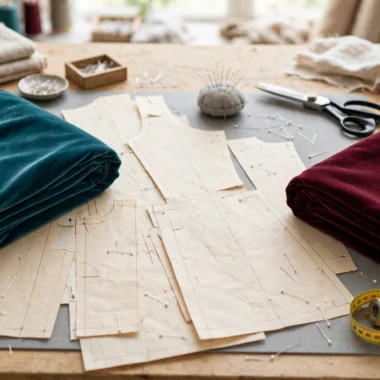
Velvet pile runs in one direction, so cut every panel with the pile running the same way or the colour will look different from panel to panel. Cut from the back of the fabric with sharp shears, one layer at a time, and mark with chalk rather than pins on the pile side. Let cut panels rest flat overnight before hemming — velvet relaxes, and hemming too early is the most common cause of uneven curtain lengths.
Step 3: Add a Lining for Light Control and Body
A lining protects velvet from sun fade, adds weight so the curtains hang in clean folds, and improves insulation. For bedrooms, pair velvet with a blackout lining; for living rooms, a standard cotton lining is enough. Sew the lining slightly narrower than the velvet panel so it never peeks out at the edges, and attach it at the heading only, letting both layers hang freely at the hem.
Step 4: Sew the Heading and Hang
Rod-pocket headings are the simplest for home sewing; pinch pleats look more tailored but need more fabric. Whatever heading you choose, hang the curtains for a week before final hemming — velvet stretches slightly under its own weight, and a hem pinned on day one often creeps up by day seven. Steam, never iron, the finished panels to lift the pile.
Care Tips So Your Curtains Last
Dust velvet curtains regularly with a soft brush attachment, spot-clean marks gently, and keep them out of harsh direct sun where possible. Our fabric care guide covers washing and storing velvet in detail.
Choosing the Right Velvet for Curtains
Not every velvet behaves the same way at a window. Stretch velvet, like our Premium Velvet, has a slight give that makes long seams easier to sew flat and helps panels drape in soft, even folds. Heavier, non-stretch velvets hang straighter and look more formal, but they are less forgiving if a seam wanders. Colour matters too: deep jewel tones such as burgundy, emerald and navy hide dust between cleanings and make a room feel warmer in winter, while pale velvets brighten a room but show marks sooner. If the room faces strong afternoon sun, choose a mid-tone colour and always add the lining — sun fades unlined velvet unevenly, and the fade line shows exactly where the folds fall.
Common Mistakes That Ruin Velvet Curtains
The first mistake is cutting panels with the pile running in different directions. Velvet reflects light differently up-pile and down-pile, so one panel can look a full shade lighter than its neighbour even though they came from the same roll. Mark an arrow on the back of every cut piece before you move it. The second mistake is ironing the pile flat. Press only from the back, on a low setting, with a pressing cloth, and steam the face afterwards to lift the pile. The third mistake is hemming on day one. Velvet relaxes and lengthens slightly under its own weight, so hang the curtains, wait a week, then pin and sew the final hem. The fourth mistake is skipping the lining to save money: unlined velvet curtains fade faster, hang less evenly and block far less light.
How Much Will Velvet Curtains Cost to Make?
Your main costs are the velvet itself, lining fabric, heading tape or rings, and thread. Because velvet is sold by the yard in one continuous piece, tall windows do not need joins, which keeps both cost and sewing time down. Measure carefully, add the fullness allowance from Step 1, and order a half-yard extra for matching pile direction and test seams — velvet offcuts also make excellent cushion covers, so nothing is wasted. Lining fabric is inexpensive compared with velvet, and it extends the life of the curtains by years, which makes it the best-value part of the whole project.
Finishing Touches: Tiebacks, Trims and Layering
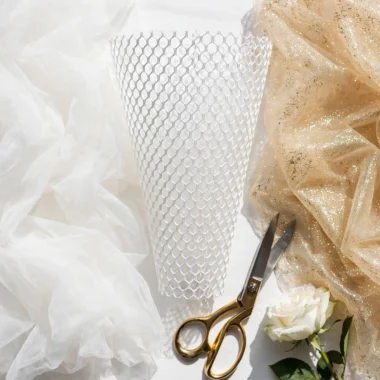
Simple fabric tiebacks sewn from offcuts finish the look without extra hardware. For a layered window, hang sheer curtains behind the velvet panels: the sheers give daytime privacy while the velvet provides darkness and warmth at night. A pelmet or a simple valance in matching velvet hides the heading and makes standard windows look taller. Whatever you add, keep the pile direction consistent across every piece so the whole window reads as one colour in daylight.
Shop Velvet Curtain Fabric
Ready to sew? Shop our Velvet Fabric collection and order by the yard in one continuous piece, so tall windows need no joins. Choose your colour, check the yardage guide, and cut with confidence.
Frequently Asked Questions
How much velvet do I need for curtains?
Allow 1.5–2 times your rod width for fullness, plus 8 inches for hems and heading. The yardage guide linked above converts window sizes into yards.
Do velvet curtains need a lining?
A lining is strongly recommended: it protects the pile from sunlight, adds body for better folds and improves light blocking and insulation.
Can I wash velvet curtains at home?
Spot-clean and steam for routine care; follow the washing advice in our fabric care guide before machine washing any velvet.