
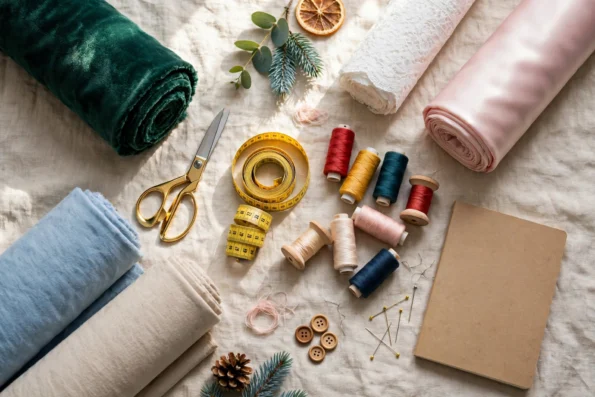
Colourful fabric rolls in velvet, satin and lace with scissors, measuring tape and thread on a sewing table

New Year Resolutions for Sewists: 10 Projects to Start in January

Every January, sewists promise themselves the same thing: sew more, stash less, finish the projects sitting in the corner. The trick is to start with projects that are quick to cut, satisfying to finish and made from fabrics that behave. Here are ten January projects — one for every skill level — with the fabrics that make each one easy. Browse everything by the yard in our shop, and check yardage for each project in our yardage guide before you order. 1. Velvet Cushion Covers Two squares, one zip, instant living-room upgrade. Velvet fabric hides beginner stitching beautifully because the pile swallows small wobbles. 2. A Satin Table Runner Straight seams only, and satin makes a plain table look dressed for an event. Choose from our Satin Fabrics collection and hem the long edges first for a clean finish. 3. Lace Overlay Skirt or Top Lace over a simple lining turns a basic pattern into occasion wear. Explore the Lace Fabric collection for embroidered and beaded options. 4. Tulle Party Skirt Gathered tulle on an elastic waistband is the classic one-evening project. Find soft and stiff options in our Tulle & Organza collection. 5. Fleece Throw Blanket Cut, hem, done — a fleece throw is the fastest finish of the year and a perfect first project for new sewists. 6. Cotton Tote Bag A lined tote teaches straight seams, boxing corners and attaching straps in one small project you will actually use daily. 7. Velvet Curtains for One Room Pick the smallest window in the house and sew one pair of lined velvet curtains. It is a bigger project, but January is exactly when you have the motivation for it. 8. Organza Gift Bags Sheer organza bags use up remnants, sew in minutes and replace disposable wrapping all year. 9. A Simple Satin Dress or Slip A bias-cut slip dress in satin is a gentle introduction to garment sewing with slippery fabrics — pin generously and sew slowly. 10. Lace Table Runners for Spring Events Sew now, use all spring: lace runners dress up weddings, showers and holiday tables with almost no fitting risk. How to Actually Keep Your Sewing Resolution Resolutions fail when the first project is too big. The fix is sequencing: finish something small in week one, something slightly bigger in week two, and save the curtain project for when your confidence is up. Keep the machine threaded and the cutting mat clear — most abandoned projects die at the setup stage, not the sewing stage. Buy fabric for one project at a time rather than a whole stash at once; a short queue you can see the end of beats a mountain of good intentions. And photograph every finish. A visible record of ten completed projects by spring is the best motivation to start the eleventh. What to Buy First: A Starter Fabric List If you are building a January fabric order from scratch, start with versatile basics: one velvet colour you love for cushions and curtains, one satin for runners and occasion pieces, one lace for overlays and table dressing, and one tulle for skirts and décor. Add a fleece for the fastest blanket of your life and a cotton for totes and everyday sewing. Ordering by the yard in continuous pieces means every project on this list can be cut without joins, and offcuts roll straight into the next project — velvet offcuts become tiebacks, satin offcuts become gift bags, lace offcuts become trims. That is how a small, deliberate order turns into ten finished projects instead of ten half-started ones. Skill Ladder: Which Project Teaches What Each project on this list teaches one new skill. The fleece throw teaches cutting straight and hemming. The tote teaches lining and boxing corners. Cushion covers teach zips. The satin runner teaches hemming slippery fabric. The tulle skirt teaches gathering. The lace overlay teaches sewing two layers as one. The satin slip teaches bias handling. Velvet curtains teach measuring, pile direction and patience. Work through them in roughly that order and by the time you reach the curtains, every technique in them is one you have already practised on something smaller. That is the whole secret of a sewing year that actually happens: no single project asks for more than one new skill at a time. Make January the Month You Finish Things Pick the project that excites you most, order the fabric today, and put the first sewing session in your diary like an appointment. Ten projects is not a race — one finish a week puts you at ten by mid-March, with a home full of things you made yourself. Start small, finish fast, and let each completed piece argue for the next one. Shop Fabrics for Your January Projects Pick your first project, order fabric by the yard in one continuous piece from our shop, and finish something in week one — momentum beats ambition every January. Frequently Asked Questions What is the easiest sewing project to start the year with? A fleece throw blanket or velvet cushion cover: straight seams, forgiving fabric and a finish you can complete in one sitting. How much fabric should I buy for small projects? Most cushion covers, runners and tote bags need 1–2 yards. The yardage guide linked above gives per-project estimates. Which fabrics are best for beginners? Cotton, fleece and velvet are the most forgiving; satin and chiffon are slippery and better as a second or third project.
CONTINUE READING ➞
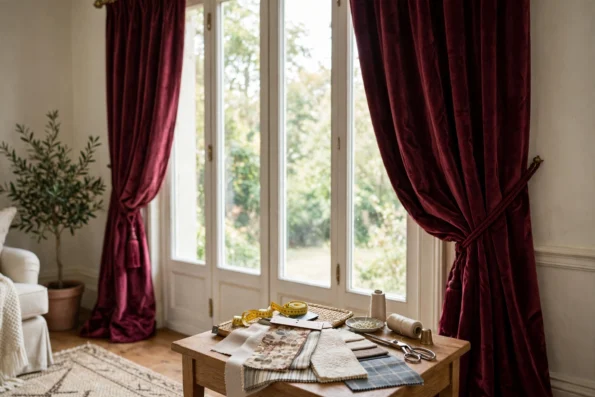
Floor-length burgundy velvet curtains beside a window with measuring tape and fabric swatches

How to Make Curtains from Velvet: Measuring, Lining and Hanging

Velvet curtains are the fastest way to make a room feel warm, quiet and finished — but velvet is heavy, directional and unforgiving of measuring mistakes. If you have ever bought a beautiful roll of velvet and then stalled at the cutting table, this guide walks you through measuring, lining and hanging so your curtains look tailored, not homemade. If you are still deciding between curtain fabrics, start with our guide on how to choose fabric for curtains, then come back here to sew. Why Velvet Works So Well for Curtains Velvet has a dense pile that absorbs light and sound, drapes in deep, soft folds and instantly adds colour depth to a room. Our Premium Velvet fabric by the yard is a soft stretch velvet sold by the yard, which makes it forgiving to sew and easy to order in one continuous piece for tall windows. Browse the full range in our Velvet Fabric collection to compare colours before you measure. Step 1: Measure Your Window Properly Measure the width of your curtain rod or track, not just the window, and add fullness: velvet looks best at 1.5 to 2 times the rod width. Measure the drop from the rod to where you want the hem to finish — floor-length panels usually end about half an inch above the floor. Add 8 inches for hems and heading. Our yardage guide shows how to convert those measurements into yards so you order enough in a single cut. Step 2: Cut Velvet Without Shifting the Pile Velvet pile runs in one direction, so cut every panel with the pile running the same way or the colour will look different from panel to panel. Cut from the back of the fabric with sharp shears, one layer at a time, and mark with chalk rather than pins on the pile side. Let cut panels rest flat overnight before hemming — velvet relaxes, and hemming too early is the most common cause of uneven curtain lengths. Step 3: Add a Lining for Light Control and Body A lining protects velvet from sun fade, adds weight so the curtains hang in clean folds, and improves insulation. For bedrooms, pair velvet with a blackout lining; for living rooms, a standard cotton lining is enough. Sew the lining slightly narrower than the velvet panel so it never peeks out at the edges, and attach it at the heading only, letting both layers hang freely at the hem. Step 4: Sew the Heading and Hang Rod-pocket headings are the simplest for home sewing; pinch pleats look more tailored but need more fabric. Whatever heading you choose, hang the curtains for a week before final hemming — velvet stretches slightly under its own weight, and a hem pinned on day one often creeps up by day seven. Steam, never iron, the finished panels to lift the pile. Care Tips So Your Curtains Last Dust velvet curtains regularly with a soft brush attachment, spot-clean marks gently, and keep them out of harsh direct sun where possible. Our fabric care guide covers washing and storing velvet in detail. Choosing the Right Velvet for Curtains Not every velvet behaves the same way at a window. Stretch velvet, like our Premium Velvet, has a slight give that makes long seams easier to sew flat and helps panels drape in soft, even folds. Heavier, non-stretch velvets hang straighter and look more formal, but they are less forgiving if a seam wanders. Colour matters too: deep jewel tones such as burgundy, emerald and navy hide dust between cleanings and make a room feel warmer in winter, while pale velvets brighten a room but show marks sooner. If the room faces strong afternoon sun, choose a mid-tone colour and always add the lining — sun fades unlined velvet unevenly, and the fade line shows exactly where the folds fall. Common Mistakes That Ruin Velvet Curtains The first mistake is cutting panels with the pile running in different directions. Velvet reflects light differently up-pile and down-pile, so one panel can look a full shade lighter than its neighbour even though they came from the same roll. Mark an arrow on the back of every cut piece before you move it. The second mistake is ironing the pile flat. Press only from the back, on a low setting, with a pressing cloth, and steam the face afterwards to lift the pile. The third mistake is hemming on day one. Velvet relaxes and lengthens slightly under its own weight, so hang the curtains, wait a week, then pin and sew the final hem. The fourth mistake is skipping the lining to save money: unlined velvet curtains fade faster, hang less evenly and block far less light. How Much Will Velvet Curtains Cost to Make? Your main costs are the velvet itself, lining fabric, heading tape or rings, and thread. Because velvet is sold by the yard in one continuous piece, tall windows do not need joins, which keeps both cost and sewing time down. Measure carefully, add the fullness allowance from Step 1, and order a half-yard extra for matching pile direction and test seams — velvet offcuts also make excellent cushion covers, so nothing is wasted. Lining fabric is inexpensive compared with velvet, and it extends the life of the curtains by years, which makes it the best-value part of the whole project. Finishing Touches: Tiebacks, Trims and Layering Simple fabric tiebacks sewn from offcuts finish the look without extra hardware. For a layered window, hang sheer curtains behind the velvet panels: the sheers give daytime privacy while the velvet provides darkness and warmth at night. A pelmet or a simple valance in matching velvet hides the heading and makes standard windows look taller. Whatever you add, keep the pile direction consistent across every piece so the whole window reads as one colour in daylight. Shop Velvet Curtain Fabric Ready to sew? Shop our Velvet Fabric collection and order by the yard in one continuous piece, so

CONTINUE READING ➞
My Cart
Wishlist
Recently Viewed
Categories

SPIN TO WIN!

  • Try your luck to get a discount coupon
  • 1 spin per email
  • No cheating
Try Your Lucky
Never
Remind later
No thanks