If you are sewing a plush toy — a teddy bear, a bunny, a cushion character or a soft toy for a baby — the fabric you choose decides how it feels in the hand, how well it holds its shape, and how it survives washing and cuddling. Two fabrics come up again and again for plush toys: minky and velboa. Both are soft, both are synthetic plush fabrics, and both are sold by the yard for home sewing. But they feel different, sew differently, and suit different toys. This guide compares minky vs velboa for plush toys so you can pick the right one first time.
What Is Minky?
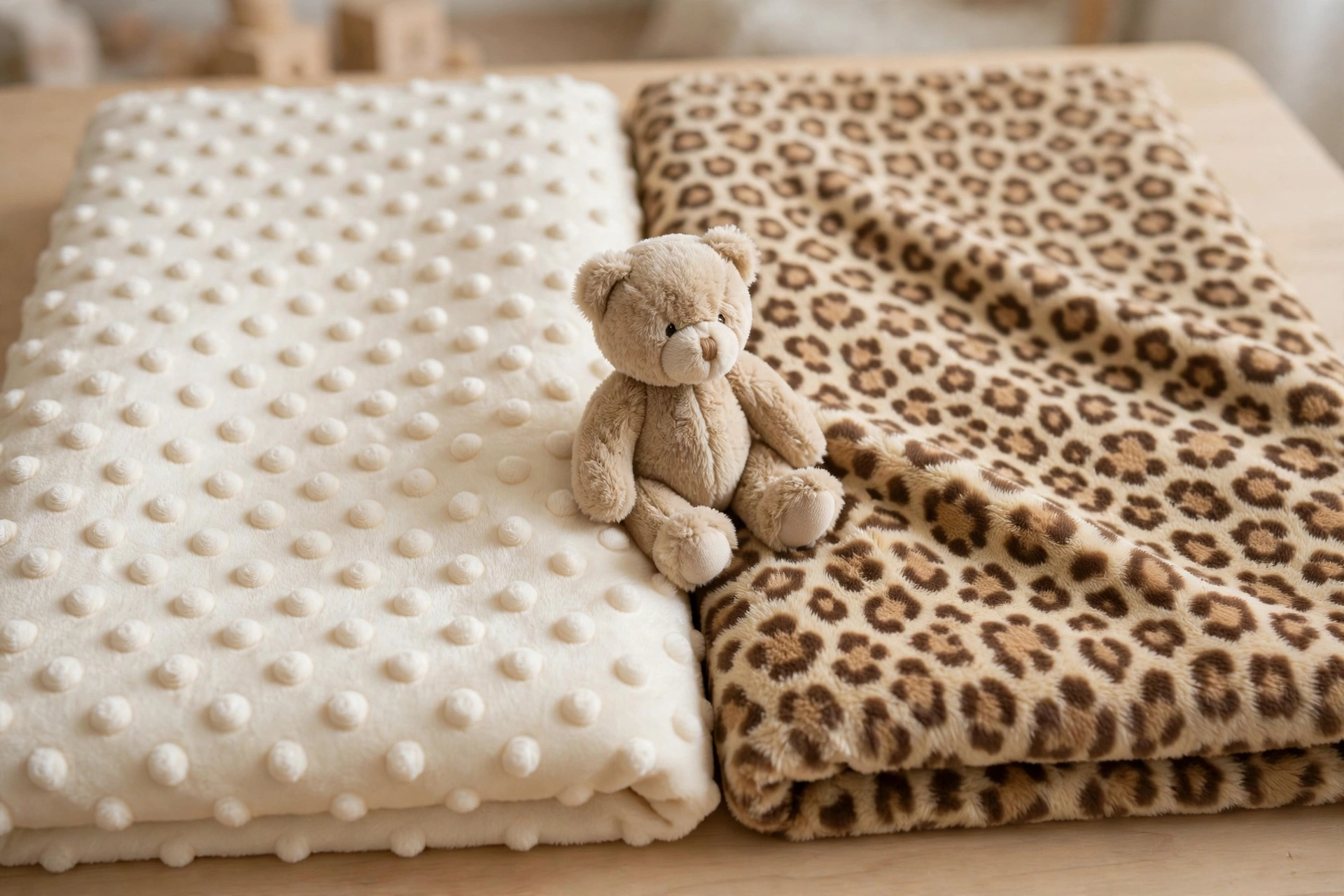
Minky is a very soft plush fabric with a short, dense pile. It is best known in its dotted form, where small raised dots are embossed into the surface, and in smooth and rosebud forms. Minky has a slight stretch, which helps it hug curves and stuffing without puckering. It is widely used for baby blankets, and that same softness makes it a favourite for baby-safe plush toys, loveys and comforters. If softness against skin is your top priority, minky is hard to beat.
What Is Velboa?
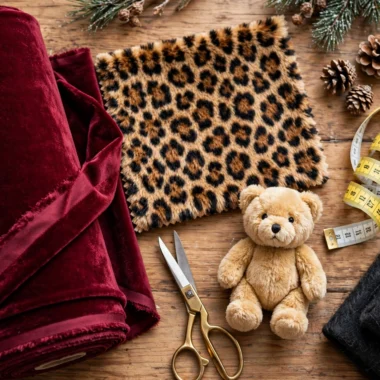
Velboa is a short-pile plush fabric with a smooth, velvety surface. It is most often seen in animal prints — leopard, tiger, dalmatian and similar patterns — and in solid colours. Velboa has little to no stretch, so it holds a printed pattern crisply and keeps seams stable. It is the fabric behind many costume ears, tails and animal-print plush toys, because the print does the work of suggesting the animal before you add a single detail. Our earlier guide, What Is Velboa?, explains the fabric in more detail.
Softness: How They Feel in the Hand
Minky is the softer of the two. The pile is finer and the fabric drapes more fluidly, so a minky toy feels squishy and cuddly straight away. Dotted minky adds a gentle texture that babies often find soothing. Velboa is soft too, but its pile is slightly firmer and the fabric feels more structured. A velboa toy holds its silhouette better and feels a little more like a traditional stuffed animal. Neither fabric is rough — the difference is between cloud-soft and firm-soft. For a newborn gift or a comfort toy, most makers choose minky. For a toy that needs to look like a specific animal, most makers choose velboa.
Durability and Washing
Both fabrics are polyester plush, so both handle regular washing well when you follow gentle care: cool wash, mild detergent, and air dry or low tumble. Minky keeps its softness through many washes, though the raised dots on dotted minky can flatten slightly if the fabric is ironed or dried on high heat — avoid both. Velboa’s printed surface is very durable, and because the fabric has little stretch, seams are less likely to distort over time. For a toy that will be washed often, either fabric works; for a toy that will be dragged, chewed and loved hard, velboa’s stable base gives it a small edge in keeping its shape.
Sewing: Stretch, Seams and Stuffing
This is where the two fabrics behave most differently. Minky’s slight stretch is helpful around curves but can shift under the presser foot, so pin generously, use a walking foot if you have one, and sew with a slightly longer stitch. Take care not to stretch the fabric as you feed it, or seams can wave. Velboa feeds more predictably because it barely stretches, which makes it a friendly choice for beginners and for patterns with lots of small pieces. Both fabrics shed a little when cut, so cut with sharp scissors, shake off loose fibres outdoors, and consider a mask if you are sensitive to fluff. For either fabric, sew with the pile direction running the same way on every piece so the finished toy looks even in the light.
Appearance: Solids, Dots and Animal Prints
Minky comes in soft solid colours, dotted textures and gentle prints that suit nurseries and baby gifts. It reads calm and modern. Velboa comes in bold animal prints and rich solids that read playful and characterful. A leopard-print velboa bear or a dalmatian-print puppy needs almost no extra decoration — the fabric tells the story. If your pattern includes ears, muzzles and tails in contrasting colours, velboa’s crisp prints make those details pop. If your toy is a simple, minimalist shape where the feel matters more than the look, minky’s texture carries the design on its own. For a closer look at minky textures, see our comparison of Minky Dot vs Minky Rosebud.
Which Fabric for Which Toy?
Choose Minky For
Baby comfort toys, loveys and first teddies where softness matters most. Minky also suits simple, rounded shapes — bears, bunnies, blobs and cushions — where a little stretch helps the fabric sit smoothly over stuffing. If the toy will be slept with, choose minky.
Choose Velboa For
Animal toys, costume-style plushies and any design where the print is part of the character. Velboa also suits toys with lots of small, precise pieces, because the stable fabric keeps edges where you put them. If the toy will be played with, dressed up and carried everywhere, choose velboa.
Using Both Together
Many makers combine the two: a velboa body in an animal print with a minky belly, muzzle or inner ears for contrast in both colour and feel. The combination looks deliberate and feels lovely. Just remember to stabilise the minky pieces with extra pins so the stretch does not pull against the stable velboa.
How Much Fabric Do You Need?
A small plush toy, roughly ten to twelve inches tall, typically needs half a yard of fabric with room for mistakes. A larger toy or a set of matching toys needs a full yard. Buying a little extra is wise for plush fabrics because pile direction matters — you cannot always rotate pieces to save fabric the way you can with flat cotton. Our yardage guide helps you plan quantities for any sewing project before you order.
The Verdict: Minky vs Velboa for Plush Toys
There is no single winner — there is the right fabric for your toy. Minky wins on softness and baby-friendly feel. Velboa wins on prints, structure and easy, stable sewing. If you are making a gift for a baby, start with minky. If you are making an animal character or a toy for an older child, start with velboa. And if you cannot decide, buy a small amount of each and make one toy in both — plush toys are quick, and the comparison in your hands will tell you more than any guide can.
Shop Minky and Velboa for Your Next Plush Toy
Browse our Minky & Fleece collection for dotted and smooth minky in nursery-ready colours, and our Animal Print Velboa for leopard, tiger and dalmatian prints that bring plush characters to life. Every fabric at Valentina Textile is cut in one continuous piece and shipped fast, so your next plush toy is closer than you think.
Frequently Asked Questions
Is minky safe for baby toys?
Minky is widely used for baby blankets and comfort toys because it is soft, washable and does not shed long fibres. As with any handmade toy for a baby, use securely attached features and avoid small detachable parts.
Does velboa stretch?
Velboa has little to no stretch, which makes it stable and easy to sew. Patterns designed for non-stretch fabrics work well in velboa without adjustment.
Can I wash a minky or velboa plush toy?
Yes. Wash gently in cool water with mild detergent and air dry. Avoid high heat and ironing, which can flatten minky’s dots and dull velboa’s pile.