The short answer: polyester lamé stretches and shines, nylon lamé is light and crisp
Lamé is the fabric that makes a room look twice: a metallic foil finish over a lightweight base, giving a liquid, mirror-like shine in gold, silver or a jewel tone. But buy the wrong lamé and your project will fight you — a dress that needs stretch made from a crisp tissue lamé will not move, and a backdrop that needs to hold a fold made from stretch lamé will not sit still.
Two lamés cover almost every project: polyester lamé and nylon lamé. Each one shines in a different way and behaves differently under the needle. This guide compares them using real products from ValentinaTextile.com, so you can match the fabric to the outfit, costume or décor you actually want.
What is lamé?
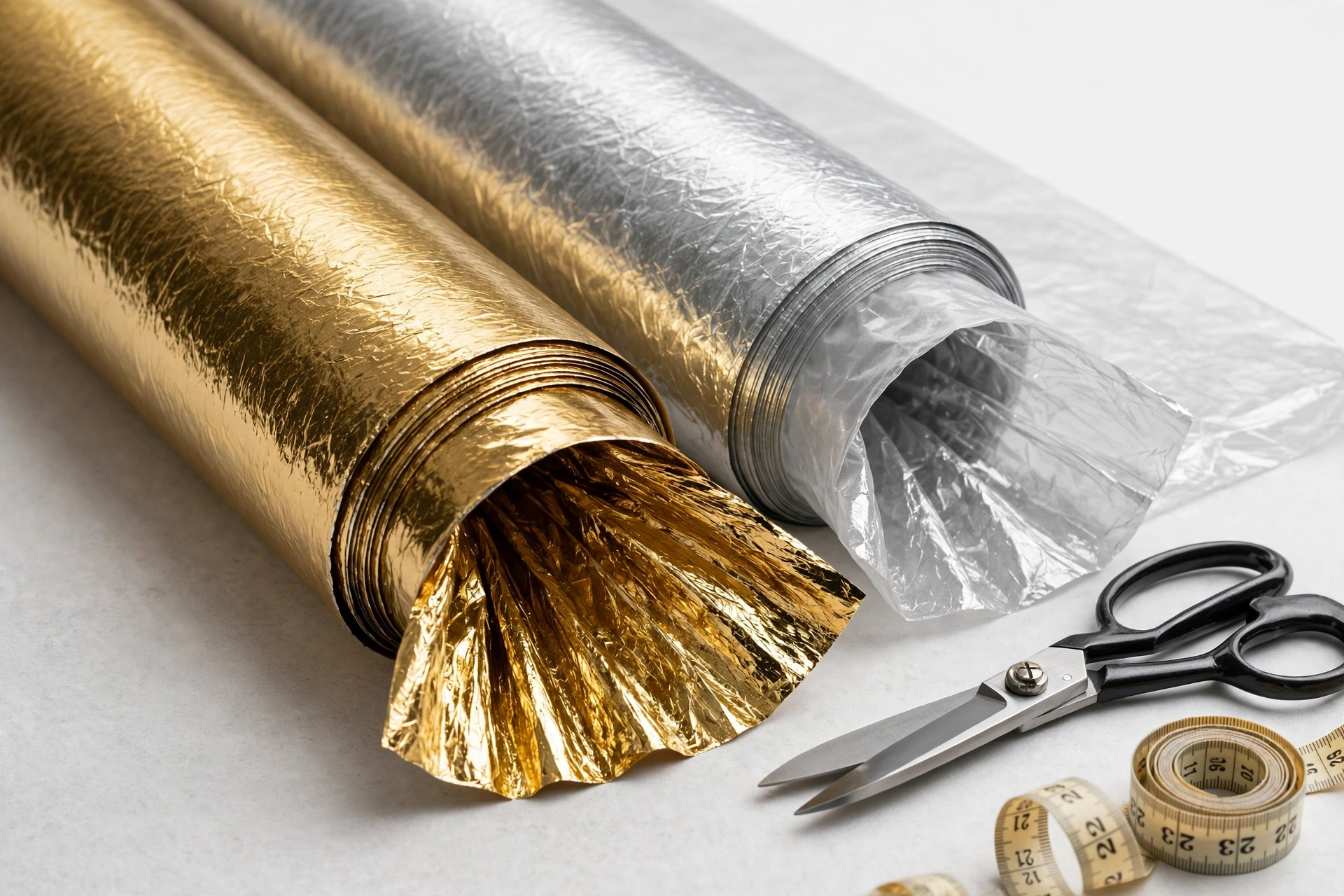
Lamé is a metallic fabric made by coating or bonding a metallic foil to a lightweight base fabric. The foil gives the shine; the base gives the behaviour. A stretch base makes a wearable, forgiving lamé for dresses and dancewear. A tissue base makes a light, crisp lamé for costumes, backdrops and décor. The foil finish is what makes lamé lamé — and what makes it delicate: heat, friction and rough handling can dull or crack it.
Polyester lamé: stretch, shine and wearability
Polyester lamé is the wearable one. A foil finish over a stretch spandex blend gives it a liquid shine with two-way to four-way stretch, so a lamé dress moves with the body, does not restrict dancing, and forgives a slightly imperfect fit. It is the lamé for outfits that will actually be worn: party dresses, dance costumes, jumpsuits, fitted tops.
Our Metallic Foil Fabric is a stretch spandex blend with an all-over foil finish, 58/60 inches wide, with two-way to four-way stretch. The stretch is what makes it wearable — a dress in this fabric moves, dances and sits comfortably, where a stiff foil fabric would not. The 58/60-inch width gives generous cutting room for dresses and wide-leg trousers.
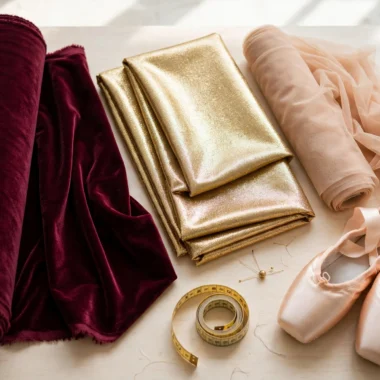
Polyester lamé suits simple, confident silhouettes: a slip dress, a wrap dress, a fitted top, wide-leg trousers, a jumpsuit. The shine is the whole design, so the cut should stay clean. Pair it with a matte fabric — velvet or a plain satin — to balance the shine, and keep accessories quiet. Our costume fabrics guide covers lamé alongside faux fur and velboa, and our dancewear fabrics guide explains how stretch velvet, lamé and mesh work together.
Sewing polyester lamé needs care: use a fine needle, a stretch stitch or a serger, and never iron directly on the foil — heat dulls the finish. Press from the wrong side on low heat with a pressing cloth, or steam from a distance. Keep the foil face clean, because the finish shows every fingerprint and crease.
Nylon lamé: light, crisp and economical
Nylon lamé — also called tissue lamé — is the light, crisp one. A metallic finish over a lightweight nylon base gives it a bright shine with a papery hand that holds a fold and catches light in a different way: less liquid, more glittering. It is the lamé for costumes, backdrops, table décor, bows and crafts — anywhere the fabric needs to be seen rather than worn for hours.
Our Nylon Metallic Tissue Lamé is the tissue lamé in our range — lightweight, bright, and economical by the yard. It is the fabric for a gold backdrop, a silver table runner, a costume cape, a dance prop. Because it is light, a lot of it goes a long way: a backdrop or a table drape needs yardage, and tissue lamé covers it without weight or cost.
Nylon lamé is less forgiving to sew than polyester lamé: it has no stretch, it frays, and the foil can crack if it is creased sharply or ironed hot. Sew it with a fine needle, finish the edges, and press from the wrong side on low heat. For costumes that will be worn briefly — a school play, a Halloween costume, a dance recital prop — tissue lamé is the practical choice: bright, light, and inexpensive enough to use generously.
Polyester vs nylon lamé: a quick comparison
Polyester lamé stretches and shines; use it for dresses, dancewear, jumpsuits and outfits that will be worn and moved in. Nylon lamé is light and crisp; use it for costumes, backdrops, table décor, bows and crafts. Polyester lamé is 58/60 inches wide with two-way to four-way stretch. Nylon tissue lamé is lightweight and economical for large-area décor. Both need the same care: fine needle, no direct iron on the foil, press from the wrong side.
If you are choosing lamé for a party outfit, our winter party outfits guide compares sequin lace, lamé and velvet for evening wear.
Care: keeping the shine
Both lamés need gentle care. Hand-wash cold or dry-clean; never iron directly on the foil side — heat dulls and can melt the finish. Press from the wrong side on low heat with a pressing cloth, or steam from a distance. Store lamé hung or rolled, never folded sharply, because sharp creases can crack the foil. Our fabric care guide covers washing and storing velvet, satin, lace and fleece.
Shop lamé by the yard
Whether you need stretch lamé for a dress or tissue lamé for a backdrop, you will find it at ValentinaTextile.com — sold by the yard, cut fresh from the roll, and shipped as one continuous piece. Start with the Metallic Foil Fabric (stretch spandex, 58/60 inches) for wearable shine, or the Nylon Metallic Tissue Lamé for light, economical sparkle.
Frequently asked questions
What is the difference between polyester lamé and nylon lamé?
Polyester lamé is a foil finish over a stretch spandex blend — it stretches, moves with the body, and suits dresses and dancewear. Nylon lamé is a metallic finish over a lightweight tissue base — it is crisp, light, and suits costumes, backdrops and décor.
Can I iron lamé?
Never iron directly on the foil side — heat dulls and can melt the finish. Press from the wrong side on low heat with a pressing cloth, or steam from a distance.
Which lamé is best for a dance costume?
Polyester stretch lamé — it moves with the dancer, does not restrict movement, and forgives fit. Tissue lamé suits props, capes and brief-wear costumes.