Two fabrics, two very different gowns
An evening gown lives or dies by its fabric. The silhouette can be perfect and the fit flawless, but if the fabric does not move and shine the way the occasion demands, the gown falls flat. Two fabrics dominate evening wear: satin, the smooth, light-catching classic, and silk rayon velvet, the soft, deep-piled luxury for gowns that need warmth and depth.
They look nothing alike and behave very differently under the needle. This guide compares them on shine, drape, warmth, sewing and care.
Satin at a glance
Satin is a weave, not a fibre: a smooth face with a matte back, made to catch light and throw it back across the room. A satin gown photographs beautifully because the fabric itself does the work — every fold shows as a line of light. It drapes in fluid folds and reads as glamour from across a ballroom.
Our Mikado Satin is the structured end of the satin family: a heavier satin with body, the one designers reach for when a gown needs to hold its shape — a fitted bodice, a full skirt, a train that keeps its line. Explore the full satin fabrics collection to compare weights and finishes.
Satin’s strengths are shine, drape and versatility. It suits almost any evening silhouette and pairs with everything — lace overlays, sequin trims, beaded bodices. Its weaknesses are that it shows every mark, it slips under the machine, and it creases: a satin gown needs careful handling, a good lining, and a steamer before the event. Our satin vs charmeuse guide explains the different finishes.
Silk rayon velvet at a glance
Silk rayon velvet is velvet at its softest and most luxurious. The pile is short, dense and smooth, and it catches light very differently from satin. Where satin throws light back in bright lines, velvet absorbs it and gives it back as depth: the colour looks richer, and the gown glows from within rather than shining on the surface.
Our Premium Silk Rayon Velvet is 45 inches wide, ultra-soft, and made for high-end apparel as well as upholstery. The 45-inch width matters when you plan yardage: it is narrower than most satins, so a full gown needs more yards. Browse the silk rayon velvet collection and the wider velvet fabric collection to see the colours available.
Silk rayon velvet’s strengths are softness, depth of colour and warmth. It is the most comfortable evening fabric to wear, it flatters every figure because the pile hides small imperfections, and it is genuinely warm — a velvet gown with long sleeves is the right choice for a winter ball. It is the most delicate velvet in the family and must be dry-cleaned: never iron directly on the pile.
Shine: bright reflection or deep glow?
This is the biggest difference between the two fabrics. Satin shines: it reflects light in bright, moving highlights, and a satin gown under ballroom lights is impossible to miss. Silk rayon velvet glows: it holds light in the pile and returns it as rich, saturated colour.
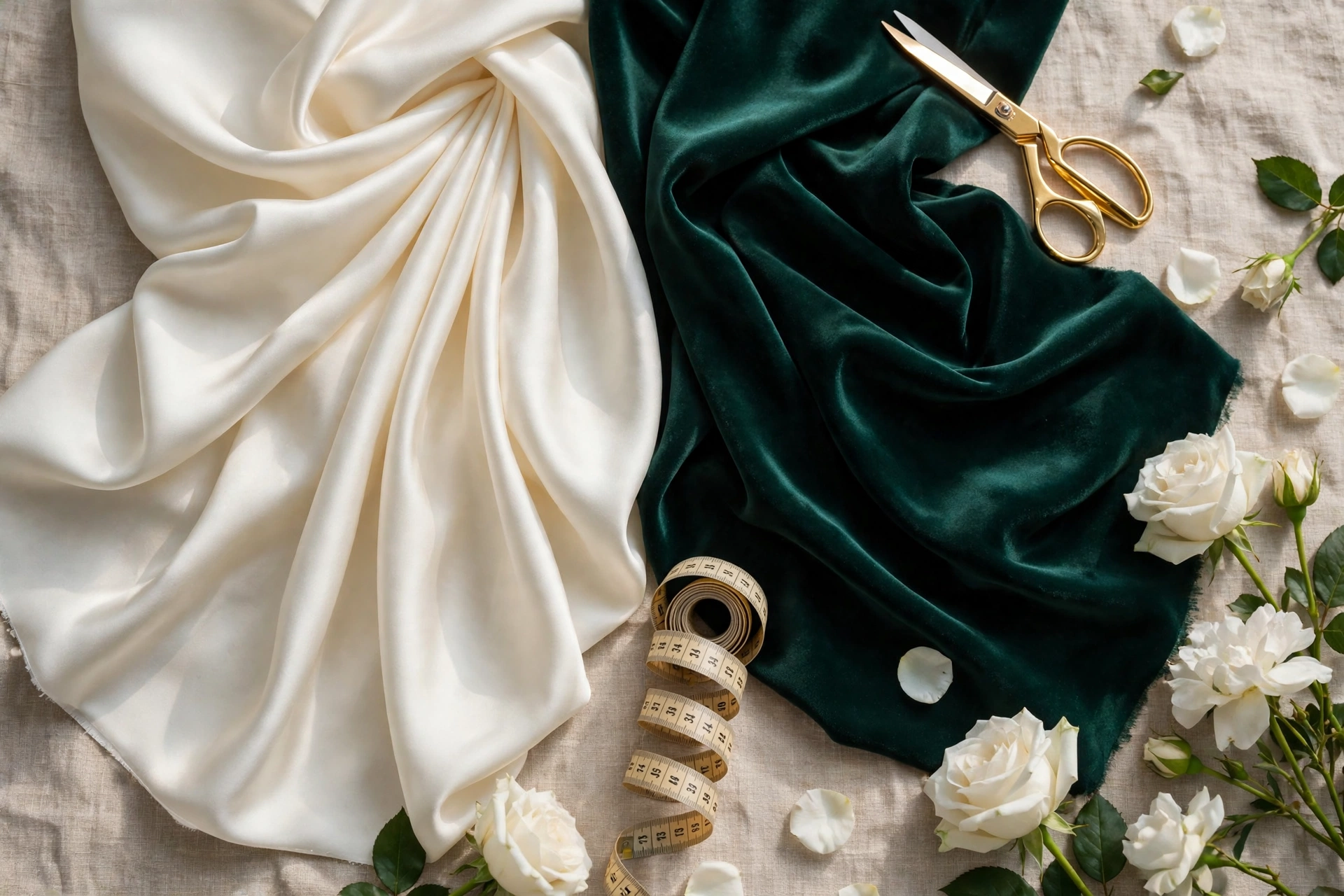
Choose satin when the gown should sparkle — a New Year party, a red-carpet moment. Choose silk rayon velvet when the gown should look rich rather than shiny — a winter wedding, a formal dinner, a deep jewel colour like emerald, burgundy or navy. They can also be combined: a velvet bodice with a satin skirt is one of the most striking evening combinations there is.
Drape and silhouette: fluid or structured?
Satin drapes. It falls in soft, fluid folds, it swings when the wearer turns, and it suits bias-cut gowns and flowing skirts. Mikado satin is the exception: its heavier body holds a shape, so it suits structured gowns — a fitted bodice, an A-line skirt, a train that keeps its line.
Silk rayon velvet does not drape the way satin does. It has body and presence, it holds a soft, rounded shape, and it suits structured silhouettes — a fitted bodice, a sheath gown, a wrap gown. Flowing and bias-cut means satin; fitted and structured means velvet.
Warmth and comfort: which gown will you enjoy wearing?
An evening gown is worn for hours, and comfort decides whether the evening is enjoyable. Silk rayon velvet wins here: it is soft against the skin, it insulates, and a velvet gown with long sleeves is genuinely cosy at a winter event. Satin is cool and light, which is wonderful in summer but leaves the wearer cold at a winter ball unless the gown is lined and paired with a wrap.
Many satins have no stretch at all, so the fit must be exact — a satin gown that is a fraction too tight will pull and gape. Velvet has a little natural give in the pile, and it forgives a slightly imperfect fit in a way satin never will.
Sewing satin vs sewing silk rayon velvet
Satin is the harder fabric to sew. It slips under the machine, it shows every pin mark, and a seam pressed the wrong way leaves a permanent shine mark. Use a fine needle, pin inside the seam allowance, baste before stitching, and press from the wrong side on low heat with a pressing cloth. A walking foot helps, and a lining is almost essential.
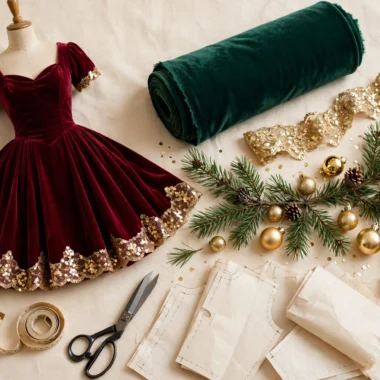
Silk rayon velvet demands different care: cut a single layer at a time, keep the nap running the same way on every piece, and never press directly on the pile. The pile hides stitches and small mistakes, which makes velvet more forgiving than satin once you respect the nap. Our guide to sewing a velvet dress covers nap, cutting and pressing, and our yardage guide helps you calculate yardage — remember the 45-inch width when you measure.
Care: what happens after the event?
Silk rayon velvet should always be dry-cleaned — water and heat mat the pile flat and the fabric never recovers. For an evening gown, dry cleaning is the safe choice for satin too. Store either gown hung, never folded. Our fabric care guide covers washing and storing velvet, satin, lace and fleece.
Which should you choose?
Choose satin when the gown should shine and flow — a summer evening, a party, a flowing skirt or a bias cut. Choose Mikado satin when the gown needs structure as well as shine. Choose silk rayon velvet when the gown should look rich and feel luxurious — a winter event, a deep jewel colour, a fitted silhouette.
Many of the best evening gowns use both: a velvet bodice with a satin skirt, or a satin sash on a velvet dress. One gives the light, the other gives the depth.
Shop satin and silk rayon velvet for evening gowns
Shop Mikado Satin for structured shine and the satin fabrics collection for the full range, and Premium Silk Rayon Velvet — 45 inches wide, ultra-soft — for depth, warmth and luxury. Both are sold by the yard and cut as one continuous piece at ValentinaTextile.com, so one order covers the whole gown with no colour mismatch.
Frequently asked questions
Is silk rayon velvet warmer than satin for a winter evening gown?
Yes, by a long way. Velvet’s dense pile traps air and insulates, so a velvet gown with long sleeves is genuinely warm at a winter event. Satin is cool and light, which suits summer evenings.
Can I combine satin and silk rayon velvet in one gown?
Yes — a velvet bodice with a satin skirt, or a satin sash on a velvet gown, pairs the two kinds of light: satin’s bright shine against velvet’s deep glow.
How much silk rayon velvet do I need for a gown?
More than in satin, because silk rayon velvet is 45 inches wide while most satins are wider. Measure your pattern pieces against the 45-inch width, allow extra for nap matching, and order the full length in one continuous piece.