The short answer: start from your pattern, then add a little extra
Running out of fabric halfway through a project is one of the most frustrating sewing mistakes, and it is almost always avoidable. The fix is simple: work out your yardage before you order, using your pattern or your measurements, not a guess. This guide explains how fabric is sold by the yard, how width changes everything, and how much to allow for dresses, curtains, and common crafts — with a simple method for any project.
How fabric by the yard actually works
When you buy fabric by the yard, you are buying a length of cloth cut from a bolt: one yard is a length of 36 inches, and the width is the width of the bolt itself. That width matters as much as the length, because a wider bolt fits more pattern pieces side by side, so you may need fewer yards. Always check the width on the exact product page before ordering — widths vary by product, and a yardage estimate made for one width will be wrong for another. At ValentinaTextile.com, fabric is sold by the yard in one continuous cut, so a multi-yard order arrives as one piece. Browse the Shop to see the full range.
The yardage method: four steps for any project
Step 1: Start with your pattern
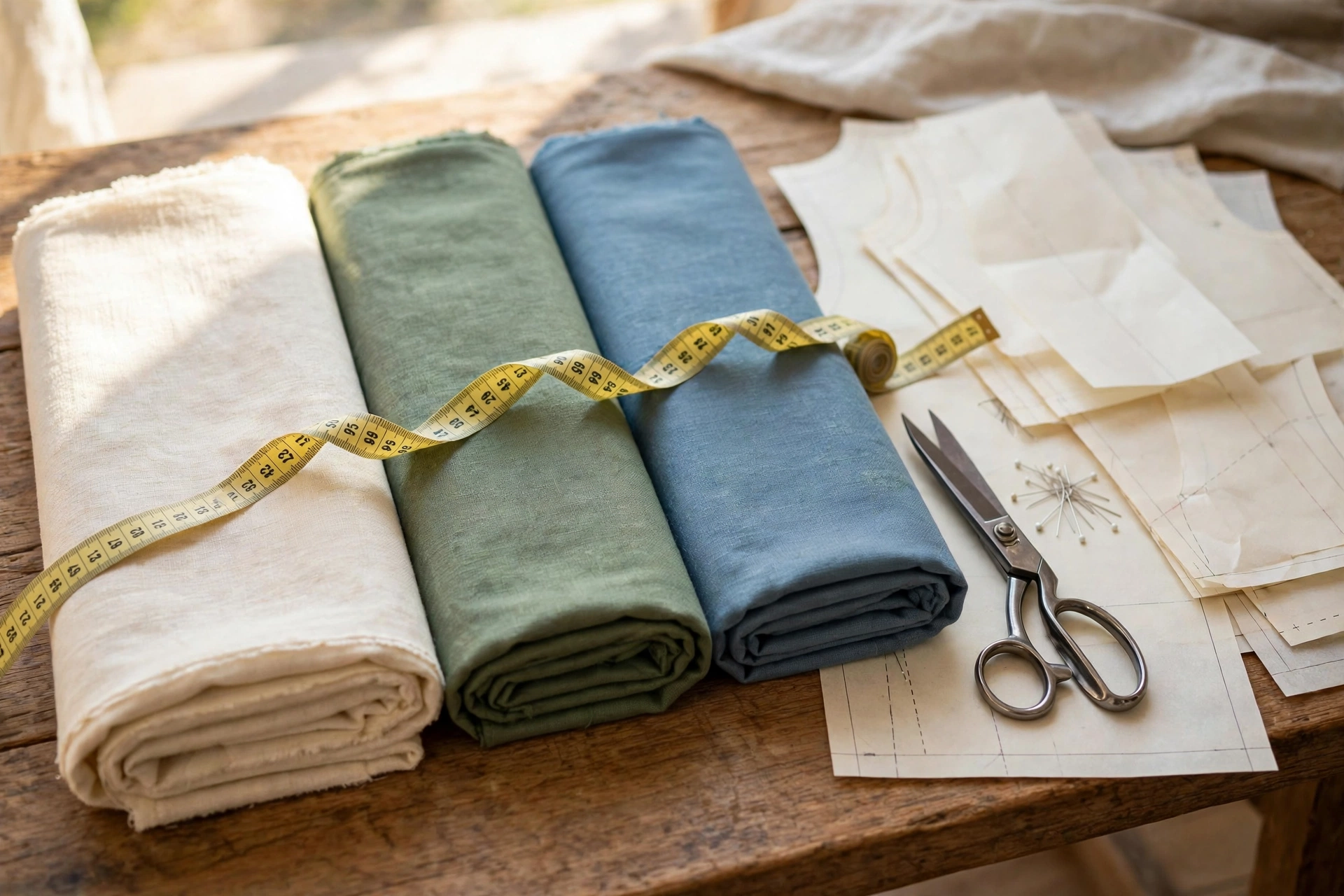
If you are using a commercial pattern, it will list yardage by size and fabric width — that chart is your best starting point, because it accounts for every piece. Trust it over any general guide, including this one. If you are sewing without a pattern, measure the finished length you need, then add seam and hem allowances, and plan the layout across the width.
Step 2: Measure twice, in the right places
For a dress, the key measurements are the length from shoulder to hem, sleeve length, and the widest point the pattern must fit around. For curtains, measure the finished drop from rod to hem and the total width to be covered, then decide how full you want them — flat panels need less fabric than gathered ones. Write the numbers down.
Step 3: Allow for pattern, nap, and direction
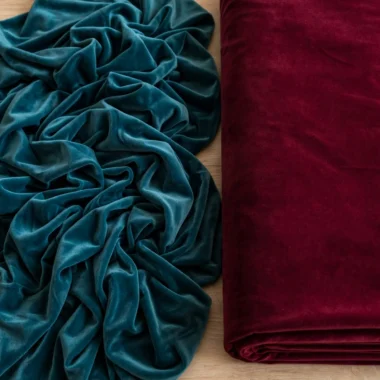
Some fabrics need extra yardage. Large prints and stripes need matching at the seams, which can use extra length. Fabrics with a nap or pile, such as velvet, must be cut with the nap running the same way on every piece — see the Velvet Fabric collection for a nap-fabric example — and that one-way layout can need more cloth. Directional prints work the same way.
Step 4: Add a safety margin
For most projects, adding a little extra is cheap insurance. A quarter to half a yard extra covers cutting mistakes or a longer hem, and is far cheaper than reordering — especially if the dye lot has changed by then. For matching pieces, buy all the yardage in one order so the colour matches throughout.
How much fabric for a dress?
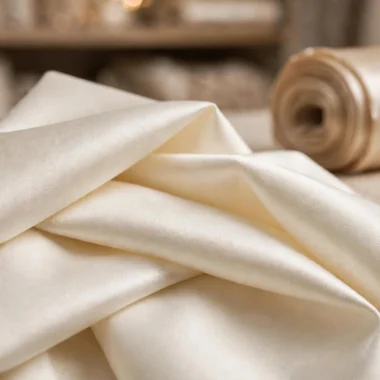
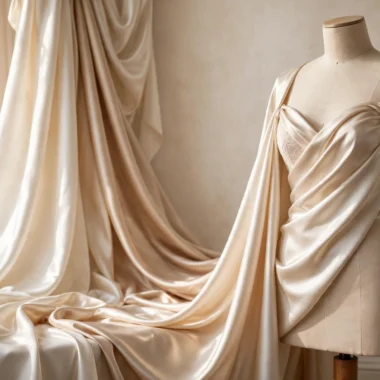
As a starting estimate only, a simple knee-length dress for an adult often takes around 2 to 3 yards, while a full-length or full-skirted dress can take 4 yards or more, depending on the width of the fabric, the size, and how full the skirt is. Sleeves, a lining, and a wide skirt all add yardage. These are rough starting points, not a substitute for your pattern’s chart: a narrow fabric calls for more yards than a wide one, and a larger size needs more than a smaller one. The Satin Fabrics collection shows a fluid dress fabric.
How much fabric for curtains?
Curtains are measured by drop and by fullness. First measure the finished drop and add hem allowances. Then decide the finished width: a flat look needs about the window width; a soft gather, one and a half to two times it; a full gather, two to three times. Multiply the widths needed by the drop for a starting length — then round up and add a margin for hems and pattern matching. Always measure your own window.
How much fabric for crafts and home projects?
Table runners and tablecloths
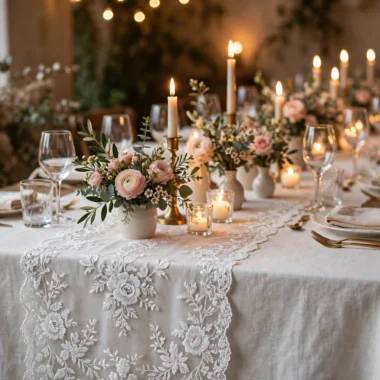
A table runner needs the length of the table plus the drop you want at each end, plus hem allowances — measure your own table. A tablecloth needs the table length and width plus twice the drop on each side, plus hems.
Cushions, bags, and small crafts
One yard goes furthest on small projects: usually plenty for a pair of cushion covers, a tote bag, or several small craft pieces. For cushions, measure the form and add seam allowances; for bags, allow for body, lining, pockets, and straps.
Blankets and throws
A throw needs at least its finished length plus hem or binding allowances, and a double-layer blanket needs twice that if both layers come from the same fabric. Width matters here: a wide fabric may cover a throw in one width, while a narrower one may need two joined. Measure the bed or sofa it is for; a slightly generous blanket is far more useful than a slightly short one.
Five yardage mistakes to avoid
First, ordering by length alone, ignoring width — the same project can need very different yardage on different widths. Second, forgetting seam and hem allowances. Third, buying exactly the pattern’s minimum with no margin. Fourth, reordering later and finding the dye lot has changed. Fifth, ordering matching pieces in separate orders. Avoid those five, and most yardage problems disappear.
Shop fabric by the yard at ValentinaTextile.com
Once you know your yardage, ordering is the easy part. Shop the Shop at ValentinaTextile.com, check the width and care details on the exact product page, and order your full yardage in one continuous cut — with a small margin for mistakes, so the project you planned is the project you finish.
Frequently asked questions
Is one yard enough for a dress?
Usually not for an adult dress, though one yard can be enough for a child’s dress, a top, or a skirt, depending on the size and style. For an adult dress, use your pattern’s yardage chart for your size and fabric width as the starting point.
Does fabric width really change how many yards I need?
Yes, often by a yard or more. A wider fabric fits more pattern pieces side by side, so you need fewer lengths. Always check the width on the exact product page and use the yardage figure for that width.
Should I wash fabric before cutting, and does that affect yardage?
Many sewists pre-wash so shrinkage happens before cutting, not after. If you plan to pre-wash, check the care instructions on the product page first, and allow a small extra margin — another reason the safety margin in this guide is worth having.