The short answer: tulle for softness, organza for structure, lace for detail
A wedding veil looks simple — a piece of sheer fabric gathered onto a comb — but the fabric you choose decides everything about how it looks and moves. Choose a fabric that is too stiff and the veil stands out from the head like a lampshade; choose one that is too soft and it collapses against the dress; choose one without detail and it can look unfinished in photographs.
Three fabrics cover almost every veil: tulle, organza and lace. Each one does a different job. Tulle is the classic veil fabric — soft, floaty, romantic. Organza is the structured veil fabric — crisp, sculptural, polished. Lace is the detail fabric — usually an edging or appliqué that turns a plain veil into a statement piece. This guide compares all three using real products from ValentinaTextile.com, so you can match the fabric to the veil you actually want.
What makes a good veil fabric?
A veil fabric needs to be sheer, lightweight, and able to hold a shape without looking stiff. It should drape softly over the face and shoulders, gather neatly onto a comb or headband, and photograph well in both natural light and flash. The best veil fabrics are also easy to cut and finish: a raw edge, a rolled hem, or a lace trim.
Tulle: the classic veil fabric
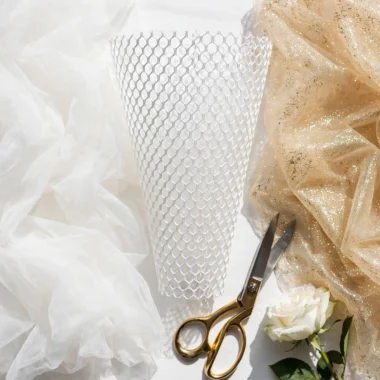
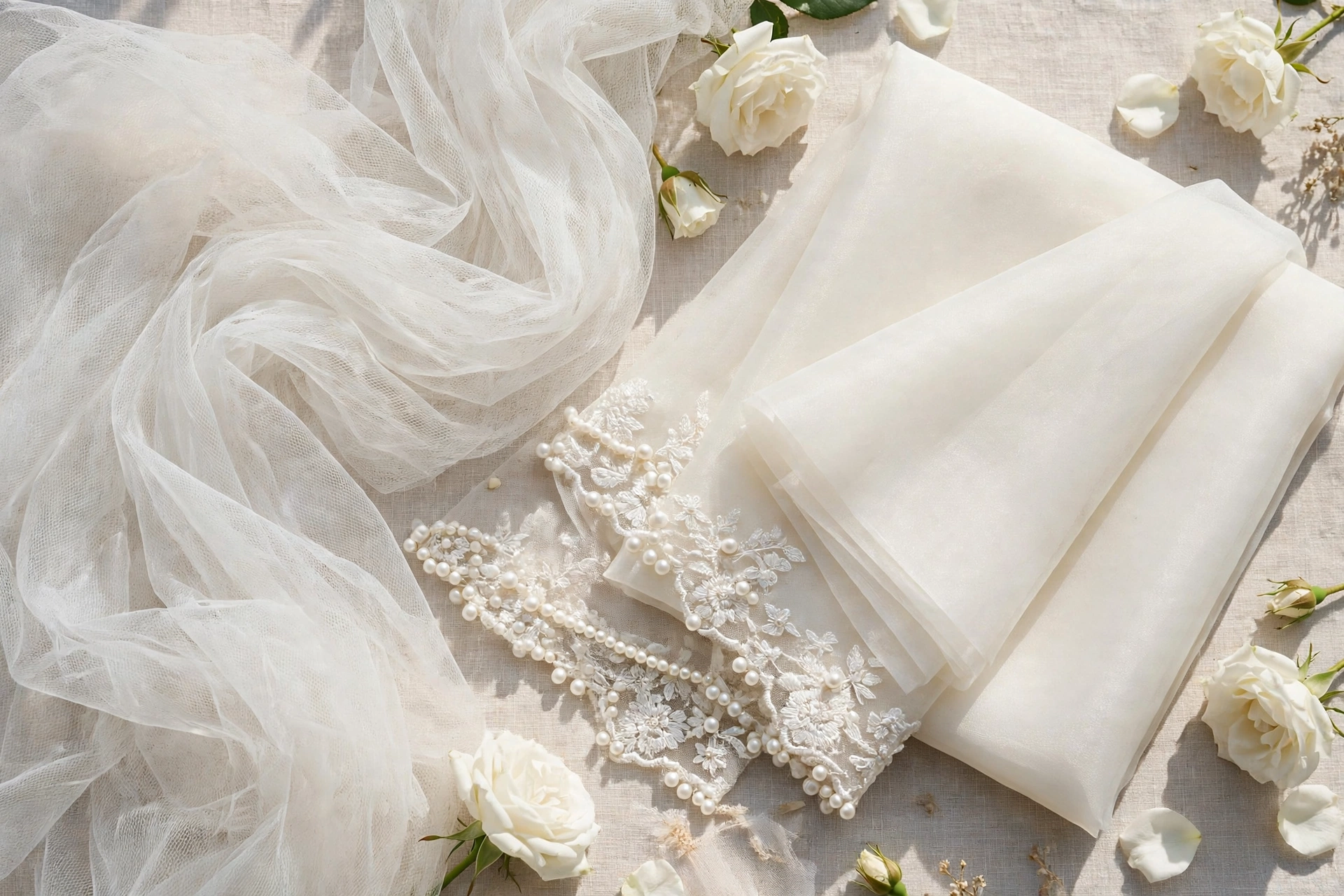
Tulle is a fine net fabric made from very fine yarns woven into a small hexagonal mesh. It is feather-light, softly transparent, and famously used for bridal veils, tutus and wedding skirts. Because tulle is a net rather than a woven cloth, it does not fray the way woven fabrics do, and layers of it build up a cloud-like fullness without weight.
Our Soft Bridal Tulle is made for veils: 63 inches wide, sold by the yard, soft enough to drape over the face and shoulders without standing out. The extra width matters — a 63-inch veil can be cut in one piece without a centre seam, even for a cathedral length. Our Tulle Bolt is the economical alternative: a 54-inch-wide, 40-yard bolt of 100% soft polyester diamond netting, lightweight and easy to drape. The bolt is ideal if you are making several veils, or a veil plus matching décor — one bolt covers a whole wedding party.
Tulle veils are forgiving to make. Cut with a rotary cutter on a flat surface, gather the top edge onto a comb, and finish the edge with a rolled hem, a narrow serged edge, or leave it raw — soft tulle does not fray. Layer it to build fullness: a single layer reads as a whisper of fabric, two layers read as a classic veil, three layers give the full, floating look of a cathedral veil. Our guide to tulle vs chiffon for veils covers veil lengths and yardage in detail.
Organza: the structured veil fabric
Organza is a sheer, plain-weave fabric with a crisp, slightly stiff hand. Where tulle is a net, organza is a tightly woven cloth, which is why it holds its shape, catches the light with a subtle sheen, and gives a more structured, polished look. An organza veil does not collapse — it holds a soft bell shape away from the face and shoulders.
Our Sheer Crystal Organza is 60 inches wide, sold by the yard, with the crisp hand and subtle sheen that make organza veils photograph so well. The 60-inch width gives generous cutting room for a blusher veil or a short, sculptural veil with a crisp edge.
Organza suits shorter veils best: a blusher that sits over the face, a birdcage veil, a shoulder-length veil with body. It is also the fabric for veils with a defined edge — the crispness holds a rolled hem or a ribbon trim in a clean line. The trade-off is that organza does not drape as softly as tulle: a long cathedral veil in organza will stand out from the body rather than float behind it. Many makers combine the two — a tulle veil with an organza bow or trim — to get softness and structure in one piece. Our tulle vs organza for weddings guide compares the two sheers side by side.
Lace: the detail that finishes a veil
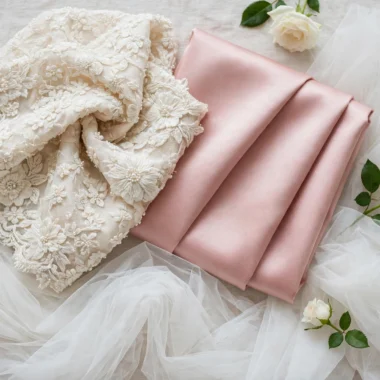
Lace is rarely the whole veil — it is the detail that finishes it. A lace-edged veil, a veil with lace appliqué scattered over tulle, a mantilla veil edged all around with lace: these are the veils guests remember. Lace brings texture, pattern and romance, and it photographs beautifully because its pattern catches light in a way plain sheer fabric cannot.
Our Premium 3D Beaded Lace (VT-32) — floral appliqué lace with beading, approximately 54–55 inches wide — is the kind of lace used for veil appliqué and mantilla edging. The three-dimensional flowers give the veil depth and sparkle without extra embellishment. Explore the full tulle and organza collection to compare veil bases, and pair them with lace for the finish.
A lace-trimmed tulle veil is the most-loved combination: soft tulle for the drape, lace for the detail. A lace-edged organza veil is more structured and formal. A full lace mantilla — lace edging all around, worn flat over the hair — is the most traditional and the most dramatic. Lace veils need careful handling: the appliqué can snag, and beaded lace adds weight, so a lace veil should be supported by a sturdy comb.
Tulle vs organza vs lace: a quick comparison
Tulle drapes and floats; use it for classic veils of any length, especially fingertip and cathedral veils. Organza holds shape; use it for short, sculptural veils, blushers and veils with a crisp edge. Lace adds detail; use it as edging, appliqué or a mantilla border over a tulle or organza base. Widths differ too: soft bridal tulle is 63 inches, the tulle bolt is 54 inches, and sheer crystal organza is 60 inches — check the width before you calculate yardage.
How much fabric do you need for a veil?
A fingertip veil takes about 2–3 yards of 54–63 inch tulle; a cathedral veil takes 3–4 yards. An organza blusher takes about 1 yard. Lace for edging takes the length of the veil edge plus a little extra for pattern matching. Our yardage guide walks through the maths for dresses, curtains and crafts.
Shop veil fabrics by the yard
Whether you need soft tulle for a classic veil, crisp organza for a structured veil, or lace for a mantilla finish, you will find it at ValentinaTextile.com — sold by the yard, cut fresh from the roll, and shipped as one continuous piece. Start with the Soft Bridal Tulle (63 inches) for a classic veil, the Sheer Crystal Organza (60 inches) for a structured veil, or the Premium 3D Beaded Lace (VT-32) for the detail — or browse the full Tulle & Organza collection.
Frequently asked questions
What is the best fabric for a wedding veil?
Soft tulle is the classic choice — it drapes softly, gathers neatly onto a comb, and suits every veil length. Organza suits short, structured veils. Lace is best used as edging or appliqué over a tulle or organza base.
How much tulle do I need for a cathedral veil?
About 3–4 yards of 54–63 inch tulle. The 63-inch soft bridal tulle lets you cut a cathedral veil in one piece without a centre seam.
Can I combine tulle, organza and lace in one veil?
Yes — a tulle veil with a lace edge and an organza bow is a classic combination. Use tulle for the drape, lace for the detail, and organza for structure where you need it.