A once-in-a-lifetime dress starts with the right fabric
A quinceañera dress is the centrepiece of the whole celebration — the photographs, the entrance, the first dance. The fabric decides almost everything about how that dress looks and moves: the volume of the skirt, the shine under the lights, the way the bodice holds its shape all evening.
Three fabrics carry almost every quinceañera gown: lace, satin and tulle. Most dresses use all three at once, each doing a different job. This guide explains what each one does and how to combine them into a gown that looks spectacular and feels comfortable all night.
The three fabrics at a glance
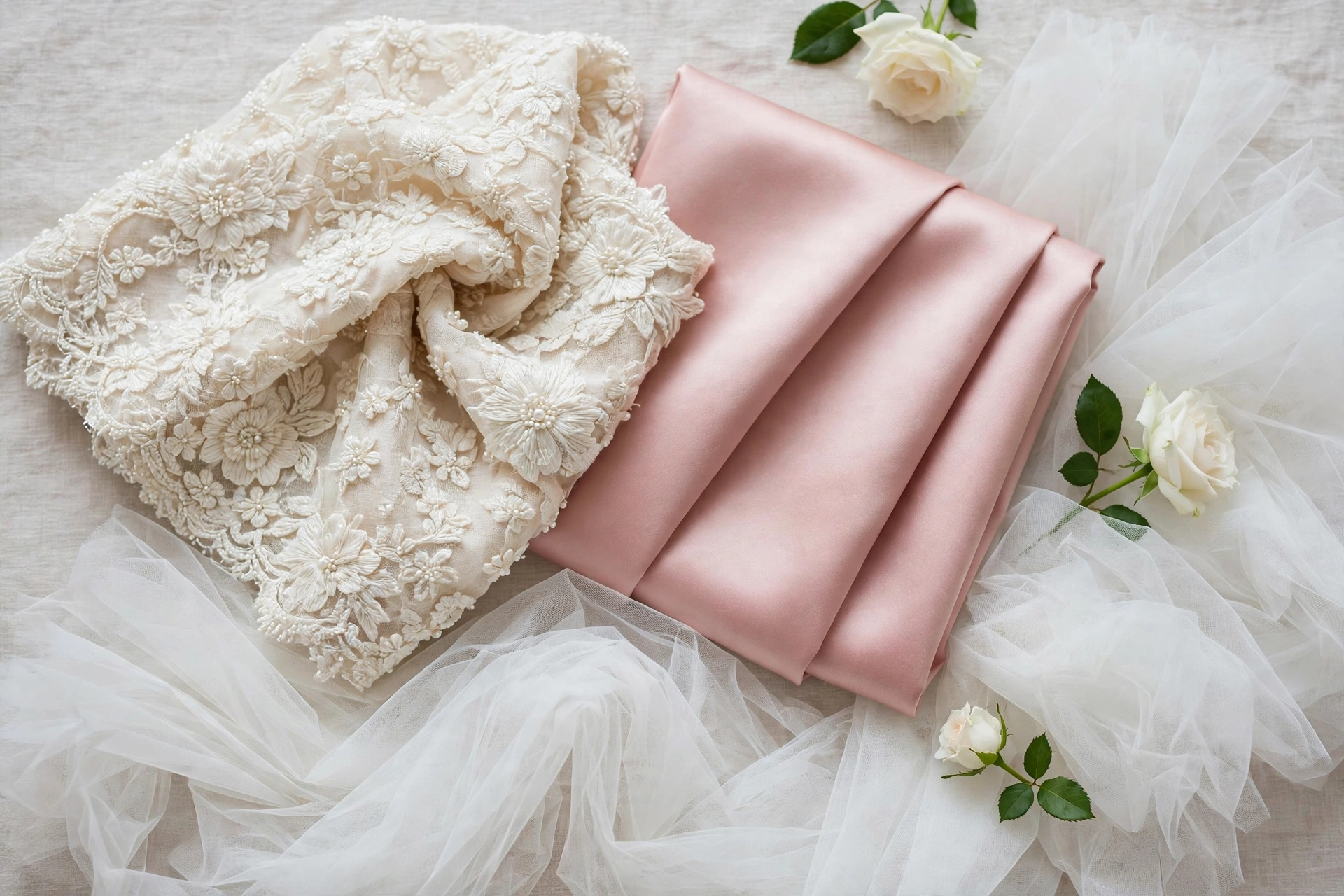
Lace is the detail fabric. It brings texture, pattern and romance — floral appliqués, beading, sequins — and it is usually the fabric guests notice first. Satin is the structure fabric: it gives the bodice its shape, the skirt its shine and the gown its formal finish. Tulle is the volume fabric, layered under or over the skirt to create the full ball-gown silhouette.
Lace: the showpiece of the gown
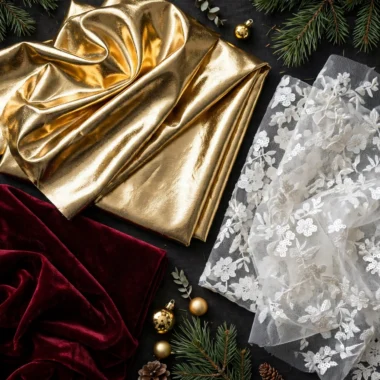
Lace is where a quinceañera dress gets its personality. A beaded lace bodice, a lace overlay on the skirt, a lace-trimmed neckline — these details make one gown different from every other. Lace photographs beautifully because its texture catches light in a way flat fabric cannot.
Our Premium 3D Beaded Lace (VT-32) is a natural choice for a bodice or overlay: floral appliqué lace with beading, approximately 54–55 inches wide. The three-dimensional flowers give the bodice depth and sparkle without extra embellishment. Explore the full lace fabric collection to compare beaded, sequin and embroidered options.
A lace bodice with a satin skirt is the classic combination — the bodice carries the detail, the skirt carries the shine. A lace overlay over the whole skirt gives a softer, more romantic look, but it needs a solid satin layer underneath so the colour stays rich. Our lace fabric types guide explains 3D, beaded and embroidered lace, and our wedding-dress lace guide covers the same bodice and sleeve decisions.
Lace needs a lining: it is open and textured, and looks and feels best over a smooth satin layer, so the pattern stays crisp. Budget for lining fabric as well as the lace itself.
Satin: the structure and the shine
Satin is the backbone of the gown: the bodice is usually satin, the skirt’s main layer is usually satin, and the shine that makes the dress glow in photographs comes mostly from satin. It is a weave, not a fibre — a smooth face with a matte back, made to catch light.
Our Mikado Satin is a heavier satin with body, the structured choice when a gown needs to hold its shape. For a ball gown, that structure matters: a light satin can collapse under tulle, while Mikado holds the silhouette all evening. Our Mikado satin guide explains why designers love it for gowns; browse the full satin fabrics collection to compare weights and finishes.
Satin suits every quinceañera colour — blush, lavender, royal blue, emerald, classic white — and pairs with everything: lace overlays, sequin trims, beaded bodices. Its weaknesses are that it shows every mark, it slips under the machine, and it creases — so a satin gown needs careful handling, a good lining, and a steamer on the day. A tulle overskirt guards the satin skirt from scuffs while dancing.
Tulle: the volume that makes the silhouette
Tulle is the fabric that turns a dress into a ball gown. Layered in the skirt, it creates the full, floating silhouette that every quinceañera photograph depends on. It is light, sheer and inexpensive by the yard, so you can afford the many layers a full skirt needs.
The classic skirt uses tulle in two places: as an underskirt over a petticoat to build volume, and as an overskirt that softens the satin beneath and catches the light as the wearer moves. Three to five layers give a full ball-gown shape; more layers add drama but also weight and warmth, so balance volume against comfort.
Browse the tulle and organza collection, including our tulle bolt, 54 inches wide. Tulle comes soft or stiff: soft tulle drapes and floats for the outer layers, stiff tulle holds a shape for the inner layers. Our tulle vs organza guide explains when each sheer fabric suits a skirt, a veil or décor.
How the three fabrics work together
The most-loved combination is simple: a lace bodice, a satin skirt, and tulle layers above and below. The lace carries the detail and the sparkle, the satin the colour and the shine, the tulle the volume and the movement. Together they photograph as one gown, each fabric doing the job it does best.
Other combinations work too. A satin bodice with a lace overlay skirt reads more formal and structured; a tulle overskirt over a lace skirt reads softer and more romantic. If the budget is tight, put the lace where guests look first — the bodice and the neckline — and let satin and tulle carry the skirt.
Choosing by silhouette and season
A ball gown silhouette — fitted bodice, full skirt — is the traditional choice, and it needs all three fabrics: structured Mikado satin for the bodice and skirt base, tulle for the volume, lace for the bodice detail. An A-line silhouette needs less tulle and suits a lighter satin. A mermaid silhouette needs the most structure: a heavier satin, a firm lining, and lace only on the bodice and the flared skirt.
Yardage and buying tips
Buy the full length of each fabric in one continuous piece. A quinceañera gown uses a lot of fabric — a full ball-gown skirt can take many yards of tulle alone — and a second order later may come from a different dye lot, with a visible colour difference. Our yardage guide helps you calculate how much you need — remember to measure your pattern pieces against the actual fabric width first.
Order a little extra of each fabric — ten percent is a safe rule. Lace needs extra for pattern matching, tulle because layers are cut generously and trimmed, satin because a slipped cut cannot be hidden.
Care: keep the gown beautiful after the party
After the celebration, the gown deserves proper care. Lace and satin gowns should be dry-cleaned — water and heat can mat beading and flatten a lace appliqué, and satin shows water marks. Store the gown hung in a breathable garment bag, never folded, so the tulle keeps its volume and the satin stays smooth. Our fabric care guide covers washing and storing velvet, satin, lace and fleece.
Shop lace, satin and tulle for a quinceañera dress
Shop Premium 3D Beaded Lace (VT-32) for the bodice and overlay, Mikado Satin for structure and shine, and the tulle and organza collection for the volume — all sold by the yard and cut as one continuous piece at ValentinaTextile.com, so one order covers the whole gown with no colour mismatch.
Frequently asked questions
Which fabric should lead in a quinceañera dress — lace, satin or tulle?
All three, each in its place: lace on the bodice for detail, satin for the skirt’s structure and shine, tulle layered for volume. A lace bodice with a satin skirt and tulle layers is the classic combination.
How many layers of tulle does a quinceañera skirt need?
Three to five layers give a full ball-gown shape. More layers add drama but also weight and warmth, so balance volume against comfort.
Should I order lace, satin and tulle in one order?
Yes. Ordering together keeps the dye lots close and the colours consistent, and the whole gown comes from one continuous cut of each fabric.