A fleece blanket is the easiest first sewing project there is
A fleece blanket is the project most sewists start with, and for good reason. Fleece does not fray, so there are no raw edges to finish before you begin. It is forgiving under the machine, it stretches just enough to hide a wobbly seam, and a finished blanket is useful from the moment it comes off the table. If you can sew a straight line, you can sew a fleece blanket in an afternoon. Here is the whole process: choosing the fleece, cutting it square, seaming it, and finishing the edges so it looks shop-bought.
Choose the right fleece first
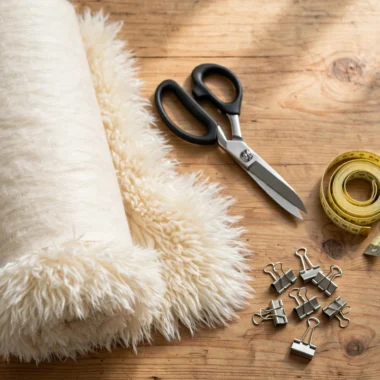
Not all fleece behaves the same, and the choice you make at the cutting table decides how the blanket looks after twenty washes. For a blanket that will be washed week after week, start with Anti-Pill Polar Fleece. Anti-pill fleece is treated to resist the little bobbles that form on ordinary fleece, so the blanket stays smooth and new-looking far longer. It washes well, dries quickly, and comes in solid colours that suit a calm, grown-up throw as well as a child’s blanket.
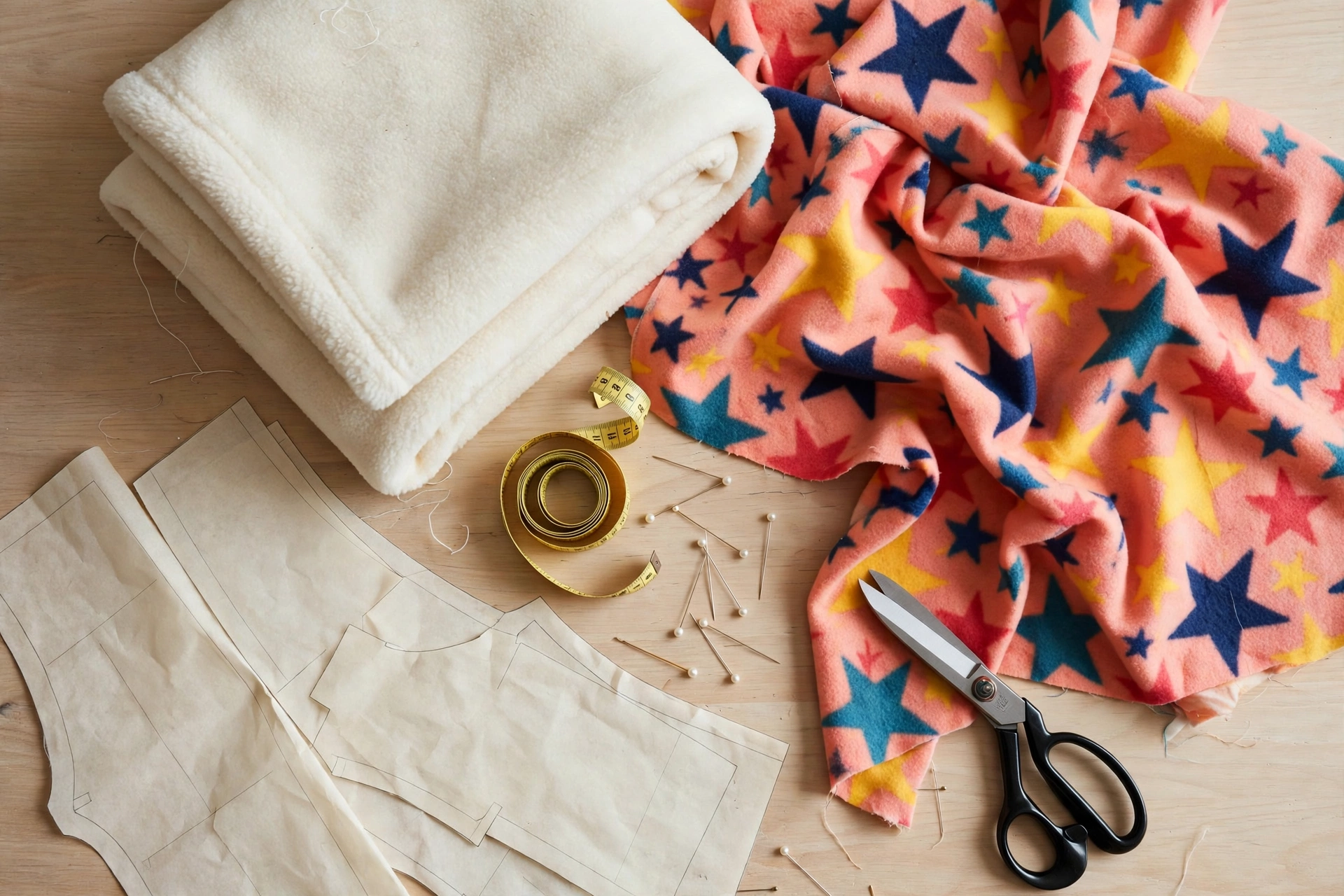
If the blanket is meant to make someone smile, Printed Polar Fleece is the fun option: 100% polyester fleece, 60 inches wide, in 101 prints — dinosaurs, stars, florals, camo, hearts and novelty designs. The prints stay bright wash after wash, and a single yard already covers a good-sized throw panel. Both fleeces are sold by the yard and cut in one continuous piece, so a long blanket arrives without joins. You can browse the whole Anti-Pill Fleece collection to compare solid colours before you decide.
How much fabric do you need?
Fleece blankets are cut to the size of the person, not the size of the pattern. A baby blanket needs about 1 yard. A child’s blanket or a lap throw takes 1.5 to 2 yards. A full throw for an adult on the sofa takes 2 to 3 yards, and the printed fleece listing itself notes that two to three yards is plenty for a child-sized blanket. Because fleece is 60 inches wide, one width is usually enough — you rarely need to join two panels the way you would with narrower fabric. Our yardage guide has the full table if you are cutting for a bed rather than a sofa.
Cutting: square it up before you cut anything else
Fleece stretches, and a blanket cut on the skew will never lie flat. Lay the fabric out on a clean floor or a large table, smooth it flat without pulling, and square the ends first: fold the fabric in half lengthwise, match the selvedges, and trim the cut ends straight across with a rotary cutter and a long ruler. A rotary cutter is worth using here — scissors drag fleece and leave a wavy edge, while a sharp rotary blade glides through both layers at once.
Cut with the nap running the same way on every piece. Fleece has a slight direction to its pile, and two pieces cut in opposite directions will look like two different colours in the light. If you are making a double-layer blanket, cut both layers together so they match exactly.
Seaming: three ways to build a blanket
There are three good ways to build a fleece blanket, and the right one depends on how much sewing you want to do. A single-layer blanket is the fastest: one piece of fleece, hemmed all round. A double-layer blanket — two pieces sewn wrong sides together and turned — is warmer, heavier and looks finished on both sides; use it for winter throws and gifts. A no-sew tie blanket, where the two layers are knotted together through a fringe, needs no machine at all and is the classic classroom and charity project.
Whichever you choose, use a ballpoint or stretch needle and a slightly longer stitch than you would for cotton — around 3 to 3.5 mm. A universal needle can skip stitches on fleece, and a short stitch length puckers the seam. Sew with a straight stitch for the main seams. Pin generously, or use wonder clips — pins disappear into fleece pile and are easy to sew over by accident.
The double-layer method, step by step
Place the two pieces right sides together and pin all round, leaving a gap of about 15 cm on one side for turning. Sew around the edge with a 1 cm seam allowance, backstitching at the start and the end of the gap. Trim the corners at an angle, turn the blanket right side out through the gap, and push the corners out with a blunt tool — a chopstick works well. Finger-press the edge, then topstitch all round about 5 mm from the edge. The topstitching closes the turning gap and stops the layers shifting in the wash.
Finishing the edges so it looks shop-bought
The edge is what separates a homemade blanket from a handmade one. The simplest good finish is a folded hem: fold the edge under by 1 cm, then again by 2 cm, pin, and topstitch. The double fold hides the cut edge completely and gives the blanket a little weight at the border.
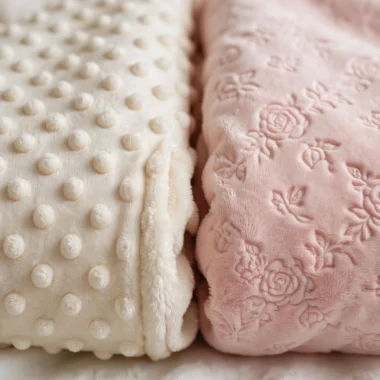
For the most polished result, bind the edge. Fold a strip of contrast fleece, satin or cotton over the raw edge and stitch it down on both sides. Binding is the finish to choose for a gift blanket: it frames the print, it covers any uneven cutting, and it wears better than a plain hem. Our winter blanket fabrics guide compares fleece with minky and flannel if you are still deciding which fabric your blanket should be made from.
Care: keeping a fleece blanket soft
Fleece is one of the easiest fabrics to care for, which is half the reason it makes such a good blanket. Wash it in cool or warm water on a gentle cycle, and skip the fabric softener — softener coats the fibres and reduces the very softness you chose fleece for. Dry it on low heat or hang it to dry; high heat can melt the fine polyester fibres and leave the blanket feeling stiff. Anti-pill fleece holds its looks longest through repeated washing, which is why it is the right choice for a blanket that will be washed every week.
Shop fleece for your next blanket
Start with the fabric and the blanket almost sews itself. Choose solid Anti-Pill Polar Fleece for an everyday blanket that stays smooth wash after wash, or pick a print from the 101 designs in our Printed Polar Fleece range for a blanket with personality. Both are sold by the yard at ValentinaTextile.com, cut in one continuous piece, and ready to become the blanket someone reaches for every evening.
Frequently asked questions
Do I need a special needle to sew fleece?
A ballpoint or stretch needle is best, because it slips between the fibres instead of piercing them. A universal needle works, but it can skip stitches on thick fleece. Use a stitch length of 3 to 3.5 mm and test on a scrap first.
Does fleece fray?
No — fleece edges do not fray, which is why it is ideal for beginners and for no-sew tie blankets. You still hem or bind the edge for a finished look and to stop the layers shifting, but an unfinished fleece edge will not unravel in the wash.
How much fleece do I need for a throw blanket?
About 2 yards of 60-inch-wide fleece makes a generous adult throw, and 1.5 yards is enough for a lap throw or a child’s blanket. Buy a little extra for squaring up the ends and for matching the nap direction.