Valentine’s Day is a fabric holiday before it is anything else
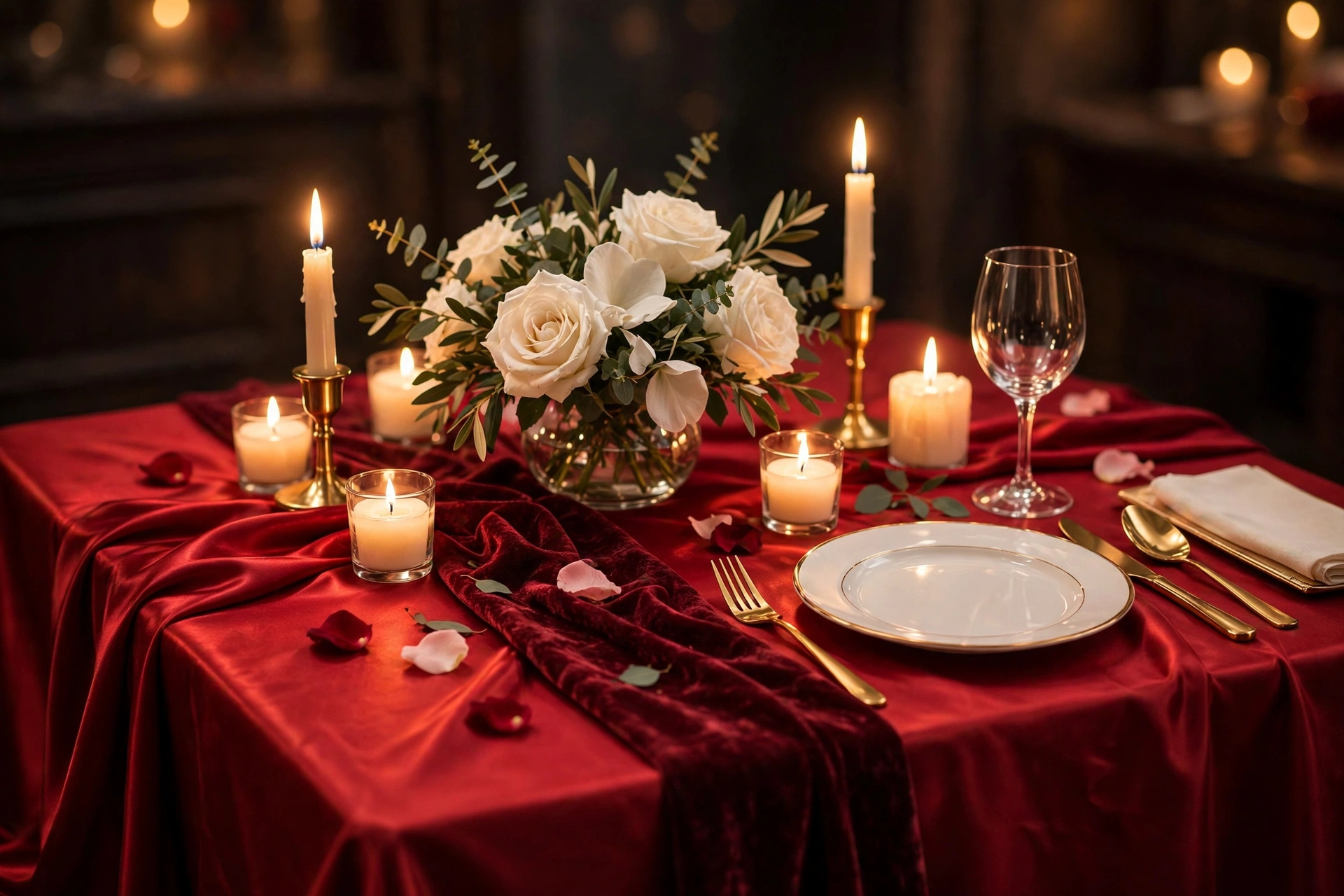
Strip away the cards and the chocolates and what is left of Valentine’s Day is texture: red satin catching candlelight, velvet soft under your hand, a table that feels special before anyone sits down. The room does the romance. And the room is mostly fabric — the tablecloth, the runner, the backdrop behind the table, the drape on the wall.
This guide covers the two fabrics that carry a Valentine’s setting: satin for shine and velvet for depth. Both are sold by the yard at ValentinaTextile.com in the reds, burgundies and blush tones the day calls for, and both work for a table for two at home or a full event room.
Why satin and velvet work together
Satin and velvet are opposites, and that is why they pair so well. Satin is smooth, reflective and fluid — it catches light and moves. Velvet is matte, dense and still — it absorbs light and holds its shape. Put them together and each makes the other look better: the satin’s shine reads brighter against velvet’s depth, and the velvet’s richness reads warmer beside satin’s glow.
The classic Valentine’s pairing is a satin tablecloth with a velvet runner down the centre, or the reverse — a velvet cloth with a satin runner. Either way, the contrast does the work. Add a third texture only if you need it: a lace runner over the velvet, or a sheer organza overlay on the satin, both of which soften the look without competing with it.
The table: cloth, runner and the layers in between
Start with the cloth. A full satin tablecloth in deep red or burgundy sets the tone for the whole table — it is the largest single surface in the room, and its shine is what guests notice first. Our Satin Fabrics collection includes bridal, mikado and liquid satins, all sold by the yard in one continuous cut, so a long banquet table needs no seams. For a Valentine’s table, structured mikado satin holds a crisp drape over the edge; fluid liquid satin pools more softly and suits a smaller, rounder table.
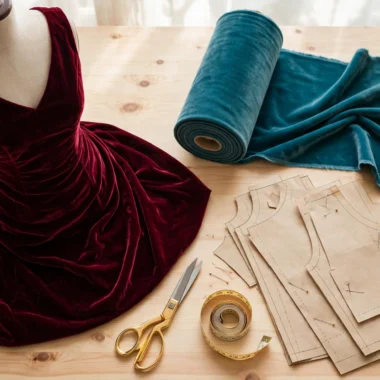
Then the runner. A velvet runner down the centre of a satin cloth is the single most effective Valentine’s detail there is: it breaks up the shine, gives the eye somewhere to rest, and provides a soft surface for candles and flowers to sit on. Our Velvet Fabric collection includes stretch, royal and silk-rayon velvets — royal velvet is the structured choice for a runner that stays flat and crisp, while stretch velvet drapes more softly over the table ends.
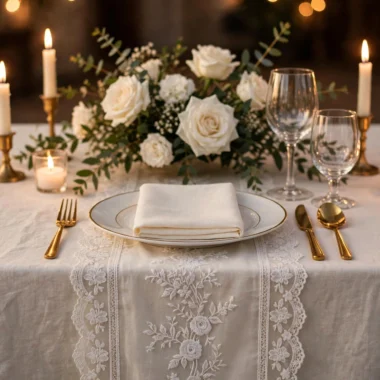
Layer in order: cloth, then runner, then a lace or sheer overlay only if the table still looks bare. Keep the centrepiece low — candles and a short vase of roses — so the fabric, not the flowers, carries the look. And leave the cloth long: fabric pooling slightly at the floor reads as luxury, while a cloth ending at the table edge reads as a restaurant.
Backdrops: the wall behind the table
A backdrop turns a table into a setting. For a Valentine’s dinner, the wall behind the main table is where the camera points, so it deserves fabric too. The simplest effective backdrop is a full-width velvet drape: velvet hangs in heavy, even folds, absorbs the room light, and makes everything in front of it — the table, the people, the candles — stand out. A deep red or burgundy velvet backdrop with warm fairy lights strung across it is the whole decoration; it needs nothing else.
Satin works differently as a backdrop. Because it reflects light, a satin backdrop changes with the room: candlelight warms it, fairy lights sparkle across it, a spotlight makes it glow. A blush or champagne satin backdrop suits a softer setting, while red satin is bolder and more dramatic. Hang satin with more fullness than velvet — satin needs generous folds to look rich, while velvet looks rich even in simple, straight drops.
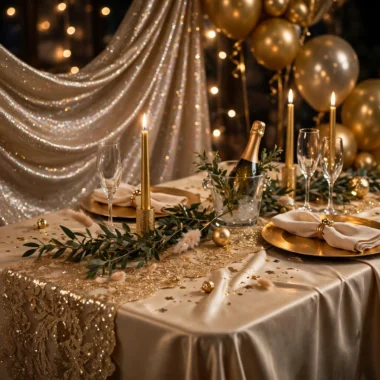
For a photo backdrop — the spot where couples pose — combine the two: a velvet base layer with a satin swag draped across the top, tied back at the sides. The swag gives the shine, the velvet gives the depth, and the combination photographs far better than either fabric alone. Our New Year party décor guide shows the same satin-and-shimmer layering idea applied to a celebration table.
Colour: which red, and how much of it
Not all reds are the same, and the wrong red can fight the room. A true red is bright and classic; burgundy is deeper and more formal; blush is soft and romantic; a dusty rose sits between the two. For a Valentine’s setting, burgundy and deep red are the safest choices — they read as rich in candlelight and photograph well. Bright true red can look flat under harsh light, so if your room is brightly lit, choose burgundy over red.
Use red as the main colour but not the only colour. The most elegant tables pair red with a neutral: ivory or champagne satin beside burgundy velvet, gold cutlery on a red cloth, white roses against a red runner. A good rule is two-thirds red, one-third neutral — enough red to be unmistakably Valentine’s, enough neutral to stay elegant.
Small touches that use the same fabrics
Once the table and backdrop are set, the same satin and velvet can finish the room. Satin ribbon tied around napkins, in the same red as the cloth, costs almost nothing and ties the table together. Velvet chair sashes — a strip of velvet tied in a bow around each chair back — turn plain chairs into part of the setting. A velvet cushion or two on a nearby sofa extends the theme beyond the table.
For a home Valentine’s dinner, the same ideas scale down: a satin runner instead of a full cloth, a velvet placemat under each plate, a small velvet drape behind the table. Because both fabrics are sold by the yard in one continuous cut, buy exactly what the table needs — measure the table, add the drop on each side, and a little for the folds.
Shop satin and velvet by the yard at ValentinaTextile.com
A Valentine’s setting is a satin table, a velvet runner, and a backdrop that makes the camera happy — three pieces of fabric, chosen in the right reds, doing all the romance for you. Browse the Satin Fabrics collection and the Velvet Fabric collection at ValentinaTextile.com, and see the same pairing on a festive table in our Christmas table settings guide and a wedding table in our wedding table linens guide.
Frequently asked questions
Which fabric is better for a Valentine’s tablecloth, satin or velvet?
Satin is the better tablecloth: its shine catches candlelight and it drapes fluidly over the table edge. Velvet is the better runner and backdrop: its matte depth contrasts with the satin’s shine and it hangs in rich, even folds. Use satin for the cloth and velvet for the runner and backdrop for the classic Valentine’s look.
What colour velvet should I choose for Valentine’s Day?
Burgundy or deep red velvet is the safest choice — rich in candlelight and flattering in photos. Bright true red can look flat under harsh light, so choose burgundy for brightly lit rooms. Blush and dusty rose suit a softer, more romantic setting, especially paired with ivory or champagne satin.
How do I make a satin and velvet backdrop for a Valentine’s party?
Hang a full-width velvet drape as the base layer — it absorbs light and makes the table stand out — then drape a satin swag across the top, tied back at the sides. Add warm fairy lights across the velvet for sparkle. Satin needs generous folds to look rich, so allow extra fullness; velvet looks rich even in simple, straight drops.