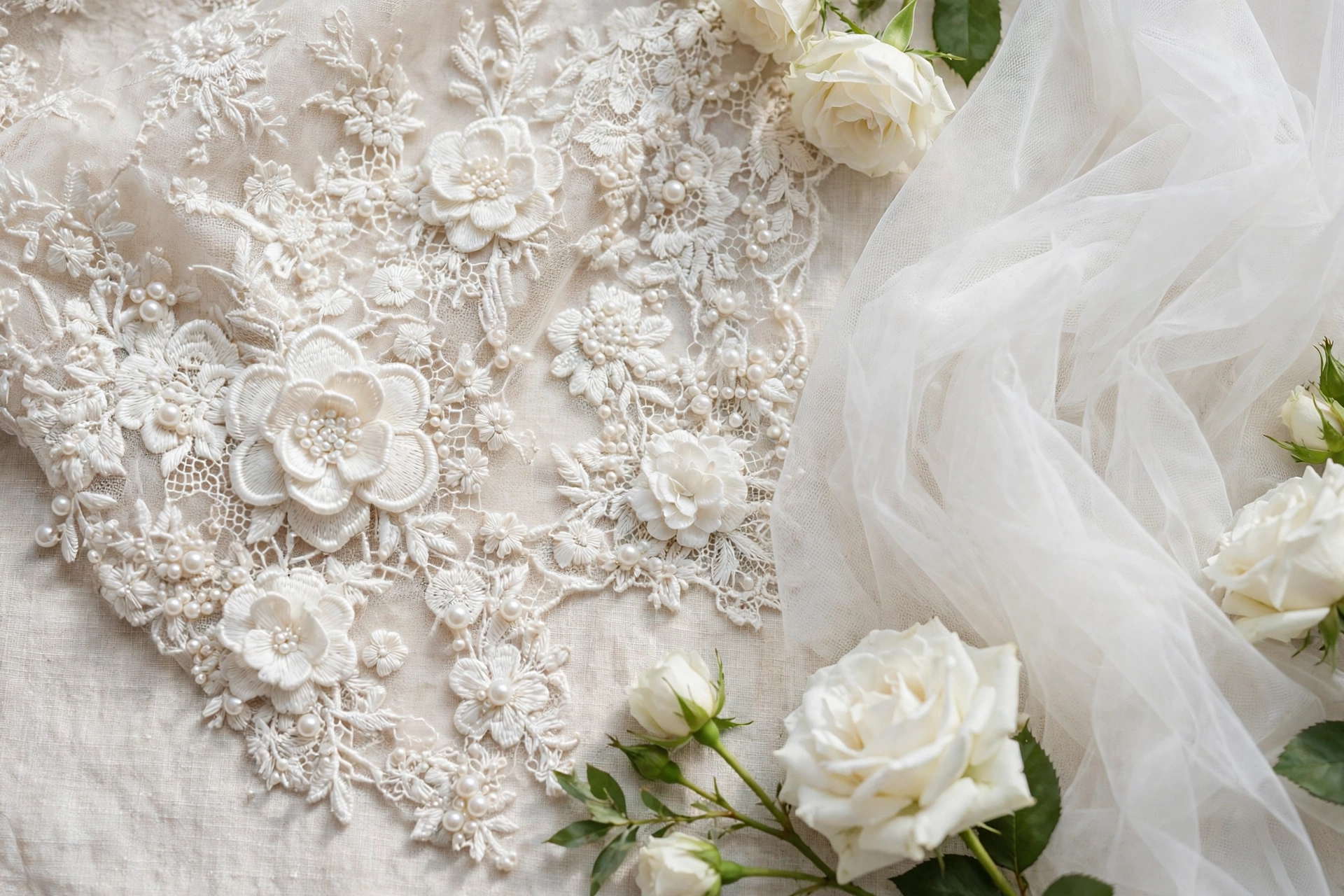
The lace you choose decides how your wedding dress looks, moves and photographs
A wedding dress is rarely made of one fabric. The bodice needs structure, the sleeves need softness, the veil needs lightness — and lace ties all three together. The trouble is that “lace” covers dozens of very different fabrics: a heavy beaded lace that makes a bodice glow will crush a veil, and a delicate embroidered lace that floats as a sleeve overlay will disappear on a full skirt.
This guide matches each part of the dress — bodice, sleeves and veil — to the lace that suits it best, using the laces available by the yard at ValentinaTextile.com.
Start with the bodice: structure first, sparkle second
The bodice carries the dress. It has to hold its shape through a ceremony, a dinner and a dance floor, so the lace you choose here needs body and presence. This is where beaded and 3D lace earn their place. Our 3D Beaded & Sequin Lace (VT-32) combines raised floral appliqué with beads and sequins, giving the bodice dimension that reads beautifully in photographs — the raised flowers catch the light in a way flat lace never does.
Beaded lace is heavier than plain embroidered lace, and that weight helps it sit flat against the lining instead of rippling. Always line a beaded bodice so the beads sit against the lining, not the skin. Plan seams around the pattern — centre a motif on the bodice front and repeat it symmetrically — and buy a little extra: matching a bold lace pattern across seams takes more yardage than a plain fabric.
Embroidered lace: the all-rounder for bodices and overlays
If beaded lace is the statement, embroidered lace is the workhorse. The pattern is stitched onto a mesh ground in thread alone, without beads or raised appliqué, so it is lighter, softer and easier to drape. Our Pearl & Bead Embroidered Lace (VT-31) adds a gentle shimmer of pearls and beads to that embroidered base — enough sparkle for a wedding bodice, without the weight of a fully beaded lace.
Embroidered lace suits a bodice when you want a softer look: a romantic, vintage feel rather than a glittering one. It also works as an overlay over a satin or mikado bodice, where the solid fabric underneath gives the structure and the lace gives the detail. Because it is lighter, it drapes over curves instead of fighting them, which makes fitting simpler.
Sleeves: soft lace that moves with you
Sleeves are where comfort matters most. A sleeve is in constant motion — reaching, hugging, dancing — so the lace needs to be soft, flexible and light. Heavy beaded lace on a long sleeve will pull at the shoulder and tire your arms by the first dance. Save the beads for the bodice and choose an embroidered or fine mesh lace for the sleeves.
Three sleeve styles suit lace particularly well. Long illusion sleeves in embroidered lace give coverage with a barely-there look — the mesh disappears against the skin and only the pattern shows. Three-quarter sleeves are forgiving and elegant, and pair well with a beaded bodice. Short cap sleeves in scalloped-edge lace add a vintage touch with very little fabric.
When you cut lace sleeves, look for the scalloped edge of the fabric: many laces are finished with a decorative border along one side, and using that border as the sleeve hem gives you a finished edge with no hemming at all. It saves hours of hand-finishing.
Veils: the lightest lace of all
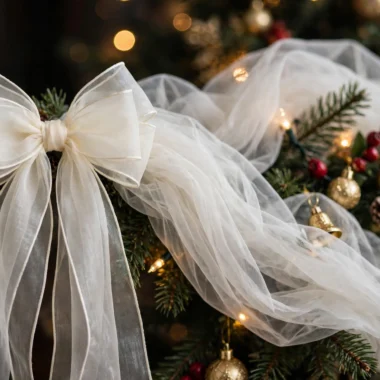
A veil is the one place where less is more. The fabric has to be light enough to float, sheer enough to see through, and soft enough to drape over a hairstyle without pulling it apart. That rules out beaded and 3D lace entirely — their weight drags a veil down and their texture snags in hair.
The classic choice is a fine embroidered lace used only as a border or appliqué on a tulle veil: the tulle gives the length and the lightness, and lace motifs scattered along the edge give the detail. A scattered-motif veil is lighter, cheaper and often more elegant than a fully laced one. Our Tulle vs Organza for Weddings guide explains which sheer fabric makes the better veil base and how the two behave differently when cut and draped.
If you want a lace veil rather than a tulle veil with lace trim, choose the lightest embroidered lace and keep it short — fingertip length or above. A floor-length lace veil is heavy enough to pull at its comb all day.
Matching your lace to your dress style
The right lace depends on the dress as much as on the body part. A ballgown with a structured bodice and full skirt can carry the boldest lace — heavy beading, big 3D flowers, dramatic pattern. A slip dress or sheath needs the opposite: a fine, quiet lace that does not overwhelm a simple silhouette. A bohemian dress suits soft, organic patterns with an irregular, garden-grown feel.
Colour matters too. Ivory and white lace are not interchangeable: ivory over a white lining looks creamy and warm, while white over an ivory lining can look grey. Order swatches of both and hold them against your lining fabric in daylight before you commit — a warm champagne satin wants a warm ivory lace, not a blue-white one.
How much lace to buy
Lace is sold by the yard at ValentinaTextile.com, cut in one continuous piece, and the amount you need depends on the pattern: a bold, large-scale bodice pattern needs extra yardage to match the motif across seams, and a veil border needs the veil’s length plus enough to wrap around the edge. As a starting point, most brides making their own dress buy one to two yards for a bodice, one yard for a pair of sleeves, and one to two yards for a veil border — then add half a yard for pattern matching and mistakes. Our yardage guide walks through measuring for dresses, curtains and crafts step by step.
Before you cut into your good lace, sew a test bodice in cheap lining fabric first, fit it, then use it as the pattern. Lace is not a fabric you want to learn fitting on.
Shop wedding lace by the yard at ValentinaTextile.com
The right lace makes the dress — a beaded 3D lace for a bodice that glows, a soft embroidered lace for sleeves that move, and a light touch of lace on a tulle veil. Browse the full Lace Fabric collection at ValentinaTextile.com, compare the styles in our lace types guide, and order a yard of your favourites to hold against your dress fabric first.
Frequently asked questions
What lace is best for a wedding dress bodice?
Beaded or 3D lace suits a bodice best — its weight and dimension give the bodice presence and help it hold its shape, so try 3D Beaded & Sequin Lace (VT-32) for a statement bodice. For a softer look, embroidered lace such as Pearl & Bead Embroidered Lace (VT-31) gives sparkle without the weight. Always line a beaded bodice so the beads sit against the lining, not the skin.
Can you use the same lace for sleeves and bodice?
You can, but it is usually better not to. Heavy beaded lace tires the arms on a long sleeve, while fine embroidered lace can look lost on a structured bodice. A beaded bodice with a lighter embroidered sleeve looks deliberate and is more comfortable all day.
What lace should I use for a veil?
Use the lightest embroidered lace as a border or scattered appliqué on a tulle veil, not as the whole veil. Beaded and 3D lace are too heavy — they drag the veil down and snag in hair. Keep a lace veil short, fingertip length or above.