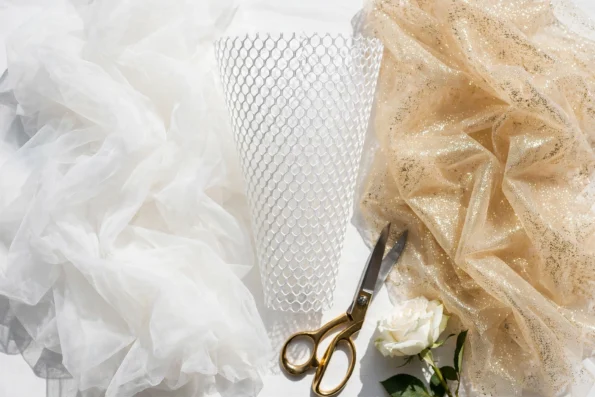
Soft white tulle, stiff crinoline net and gold glitter tulle with scissors and a white rose

Tulle Fabric Types: Soft, Stiff and Glitter Tulle Explained

The short answer: soft tulle drapes, stiff tulle holds shape, glitter tulle adds sparkle Tulle looks simple — a fine net you can see through — but buy the wrong type and your project will fight you. A veil made from stiff tulle stands out from the head instead of falling softly; a tutu made from soft tulle collapses instead of holding its shape. The good news is that tulle types are easy to tell apart: the softness of the hand, the stiffness of the net, and whether the sparkle is woven in or glued on. This guide explains the three main types — soft, stiff and glitter tulle — using real products from ValentinaTextile.com, so you can match the fabric to your project instead of guessing. All three are sold by the yard or by the bolt, and ship as one continuous piece when you order multiple yards. What is tulle? Tulle is a lightweight, sheer net fabric made from fine yarns woven into a small hexagonal or diamond mesh. Most modern tulle is 100% polyester, which keeps it affordable, colourfast and easy to care for. It is sheer enough to layer — several layers create the full, airy skirts of wedding gowns, tutus and veils — and stiff enough to hold a shape without any support. Soft tulle: for veils, overlays and flowing skirts Soft tulle is the gentle one: a fine mesh, a silky hand, and fabric that falls in soft folds. It is the tulle you want whenever the fabric needs to drape: bridal veils, dress overlays, flowing skirts, sheer curtains and delicate wraps. Our Soft Bridal Tulle is a good example — 63 inches wide, sold by the yard, made for veils, bridal gowns and dresses. The extra width matters for veils: a full, generous veil without a centre seam. Our Tulle Bolt is the other soft option — a 54-inch-wide, 40-yard bolt of 100% soft polyester diamond netting, lightweight, sheer and easy to drape. The bolt is the economical choice when you need a lot of it: wedding décor, party backdrops and table decorations all eat through yardage fast, and a 40-yard bolt (120 feet) covers a whole event. Both are soft, fine-textured tulle; the difference is the format — by the yard for a dress or veil, by the bolt for an event. Cut soft tulle with a rotary cutter on a flat surface — scissors can drag the fine net. A rolled hem or a narrow serged edge finishes a veil neatly, and for skirts you can leave the edge raw: soft tulle does not fray the way woven fabrics do. Layer it to build fullness; three layers of soft tulle look fuller and lighter than one layer of stiff tulle. Stiff tulle: for tutus, petticoats and structure Stiff tulle — also called crinoline net — is the structural one: a firmer mesh, a heavier yarn, and fabric that holds its shape instead of collapsing. It is the tulle you want whenever the fabric needs to support something: tutu skirts, petticoats, underskirts and costume volume. Our Petticoat Crinoline Net is the stiff tulle in our range — 56 inches wide, a stiff mesh tulle made for wedding gowns, underskirts, costumes and dressmaking. Worn as an underskirt it pushes a gown out into a full bell; used as a tutu layer it stands out on its own. It is also the tulle to reach for when you need a firm net for crafts and structural décor. Stiff tulle is less forgiving to sew: the edges are scratchier and a single layer can look too open, so it is usually layered, lined, or worn under a softer fabric. For a tutu, alternate stiff and soft layers: the stiff layers give the lift, the soft layers give the pretty finish. Glitter tulle: for sparkle that stays in the fabric Glitter tulle is soft tulle with sparkle built into the mesh. The difference between good glitter tulle and a disappointing one is how the sparkle is attached: in the better products the glitter is part of the fabric, not a coating that flakes off at the first touch. Our Tulle Glitter Fabric is a 54-inch-wide sparkle mesh bolt, 10 yards long, made for wedding decorations, tutu skirts, costumes, backdrops and crafts. It gives you the shimmer of sequins without the weight or the cost, and it layers beautifully over a solid fabric. Glitter tulle is best used as an accent rather than a base: one or two layers over a solid colour, a table runner over a plain cloth, a tutu layer over a soft tulle skirt. Used that way it reads as sparkle, not as noise. Handle it gently when cutting — shake it out outdoors after cutting, and keep it away from dark fabrics until the loose glitter has settled. For a subtler sparkle, our Pearl Tulle is a 58-inch-wide soft mesh with scattered pearls. Soft vs stiff vs glitter: a quick comparison Soft tulle drapes and falls; use it for veils, overlays, flowing skirts, curtains and event draping. Stiff tulle holds shape; use it for tutus, petticoats, underskirts and costumes that need volume. Glitter tulle sparkles; use it as an overlay or accent for party dresses, tutus, table décor and backdrops. Widths differ too: soft bridal tulle is 63 inches, the tulle bolt and glitter tulle are 54 inches, and the crinoline net is 56 inches — check the width before you calculate yardage. If you are choosing between tulle and organza, our guide to tulle vs organza for weddings compares the two sheers side by side, and our tulle vs chiffon for veils guide covers veils specifically. How much tulle do you need? Tulle yardage surprises first-time buyers: the fabric is so light that a little goes a long way — and then a full skirt needs many layers. A fingertip veil takes about 2–3 yards of 54–63 inch tulle; a knee-length tutu takes 5–8 yards; a table drape takes the
CONTINUE READING ➞
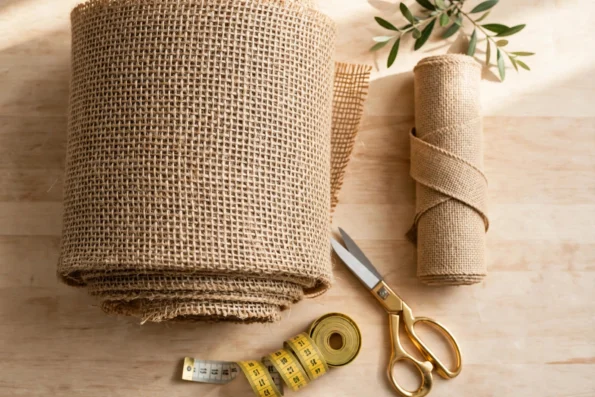
Wide hessian burlap roll beside a narrow natural jute burlap ribbon roll with scissors and measuring tape

Burlap vs Hessian: What’s the Difference?

The short answer: hessian is a type of burlap, not a different fabric If you have ever searched for rustic wedding décor and found yourself staring at two listings — one called burlap, one called hessian — wondering whether they are the same thing, you are not alone. Here is the short answer: hessian is a name for burlap. In Britain, Australia and much of the Commonwealth, the coarse woven jute fabric used for sacks, table runners and rustic décor is called hessian. In the United States, the same fabric is usually called burlap. So in most shops, “burlap” and “hessian” describe the same family of fabric — but the two words are not always used for exactly the same product. On ValentinaTextile.com the distinction is practical rather than technical. Our Hessian Jute Burlap is a full 60-inch-wide fabric by the yard, woven from 100% natural jute fibre and finished on an evenly stitched roll. Our Natural Jute Burlap is the same natural jute in a narrow 12–14 inch width, sold by the yard as a ready-made ribbon width. This guide explains what each name means, how the two compare, and which one to choose. What is burlap? Burlap is a coarse, open-weave fabric with a distinctly rustic look. You can usually see the weave clearly, and the surface has a slightly rough, natural texture. Traditionally it was used for sacks and agricultural packing, which is why it still carries that sturdy, workhorse character. Today it is just as likely to appear as a table runner at a rustic wedding or a backing for a wreath. Most burlap is woven from jute, a natural plant fibre grown mainly in South Asia. Jute is strong, inexpensive, biodegradable and eco-friendly, which is why burlap has stayed popular even as synthetic fabrics have taken over other uses. The fibre is spun into a coarse yarn and woven loosely, leaving the open, airy structure that defines the look. That openness is also why burlap frays easily and sheds fibres when cut. Because “burlap” is a generic term for the weave rather than a single standard product, it comes in many widths, weights and finishes. When you buy burlap, the width and the finish matter at least as much as the name on the listing. What is hessian? Hessian is simply the British and Commonwealth name for burlap. The word comes from Hesse, a region in Germany where the fabric was historically made from hemp and flax before jute became the standard fibre. In the UK, Australia and New Zealand, the fabric shop shelf will be labelled hessian rather than burlap. There is one nuance worth knowing. Because “hessian” is the everyday word in those markets, it is sometimes used for the finer, more evenly woven end of the burlap family — the kind of fabric you would put on a wedding table rather than in a grain store. Our Hessian Jute Burlap fits that description: 100% natural jute on an evenly stitched roll, described as softer, smoother and easier to work with than typical coarse burlaps, while keeping the same rustic character. For most practical purposes, though, the rule is simple: if a listing says hessian and another says burlap, and both are 100% jute with a similar weave, you are looking at the same fabric under two regional names. The real question is not the name — it is the width, the weight and the finish. Burlap vs hessian: the differences that actually matter 1. The name — and where it is used Burlap is the American name; hessian is the British, Australian and Commonwealth name. In the US, “hessian” is also a historical word — Hessian soldiers in the American Revolutionary War wore uniforms made from the fabric — but in a modern fabric shop it usually signals the same jute weave. Neither name guarantees a particular quality on its own. 2. Width — the biggest practical difference This is where the two products on our site genuinely differ. The Hessian Jute Burlap is 60 inches wide, sold by the yard. That width makes it the right choice for table runners, aisle wraps, chair ties and backdrop draping. The Natural Jute Burlap is only 12–14 inches wide — a ready-made ribbon width for chair sashes, pew bows, wreath bases, tree skirts and gift-wrap ribbon, with no need to cut wide yardage down. The narrow width is the product, not a limitation: you buy it when you want a ribbon, not a bolt. 3. Feel and finish All jute burlap has a slightly rough hand. The Hessian is finished to be softer and smoother than typical coarse burlap, with an even stitch that makes it easier to cut and sew. Both will shed a little when cut, so use sharp scissors or a rotary cutter. If your project will touch skin — a chair sash guests lean against, a wrap around a bouquet — the softer finished hessian is the safer pick. 4. Best uses Wide hessian is the workhorse: rustic wedding décor, table runners, aisle wraps, chair ties, backdrop draping, wreaths, wall hangings, gift wrapping and floral arrangements, plus outdoor jobs such as protecting seedlings, wrapping plants for winter and lining planters. Narrow jute burlap is the detail fabric: runners and sashes, pew bows, wreath bases, tree skirts, gift ribbon and craft trims. The natural tan weave pairs beautifully with lace, greenery and fairy lights. Which one should you buy? Choose the 60-inch Hessian Jute Burlap when you need coverage: table runners, backdrops, aisle fabric or any project where a wide piece saves you seaming. Choose the 12–14 inch Natural Jute Burlap when you need a ribbon: chair sashes, pew bows, wreath bases, gift wrap and craft trims. If you are unsure, buy the wide hessian — you can always cut it down, but you cannot widen a ribbon. Our guide to burlap vs jute explains the fibre-versus-fabric difference, while our felt vs burlap for Christmas crafts guide shows both fabrics

CONTINUE READING ➞
My Cart
Wishlist
Recently Viewed
Categories

SPIN TO WIN!

  • Try your luck to get a discount coupon
  • 1 spin per email
  • No cheating
Try Your Lucky
Never
Remind later
No thanks