
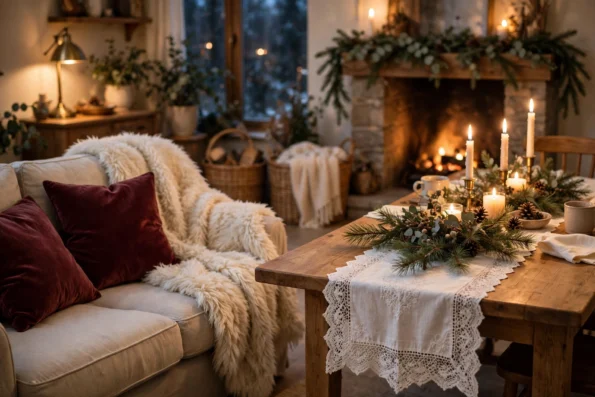
Cream faux fur throw and burgundy velvet cushions on a sofa beside a lace table runner with candles

Winter Décor: Faux Fur Throws, Velvet Cushions and Lace Runners

Three fabrics that make a home feel like winter Winter decorating is not about filling a room — it is about texture. A room feels warm when there is something soft to sink into, something rich to catch the light, and something delicate to finish the table. Three fabrics do that work better than anything else: faux fur for throws, velvet for cushions, and lace for runners. This guide shows how to style all three — where each one belongs, how to choose colours, and how to sew your own pieces by the yard so every throw, cushion and runner fits your home exactly. Faux fur throws: instant warmth on the sofa Nothing says winter like a faux fur throw draped over the arm of a sofa. Our Faux Fur Shaggy Fabric by the Yard is a 60-inch-wide, 100% polyester plush with an extra-long, fluffy pile and a realistic fur-like look. It is sold by the yard in continuous cuts, so a two-yard length makes a generous throw with no seam in the middle. Style a faux fur throw the easy way: fold it in half lengthways and drape it over one arm of the sofa, or lay it across the back so the pile catches the light. Cream and ivory throws brighten a dark winter room; deep browns and greys feel cosier against a pale sofa. The long pile is the point — it looks soft from across the room and feels warm the moment you pull it over your knees. Browse the full Faux Fur Fabric collection for more colours and pile lengths. Sewing with faux fur is simpler than it looks. Cut from the back of the fabric with a craft knife so the pile stays long, use a walking foot or plenty of pins to stop the layers shifting, and finish the edges with a simple hem or a soft backing fabric. Shake the finished throw outside to release loose fibres. Velvet cushions: rich colour that catches the light If faux fur brings the softness, velvet brings the colour. Velvet cushions are the fastest way to change a room for winter: swap summer linen covers for velvet in burgundy, forest green, navy or mustard, and the whole sofa looks like a different piece of furniture. Velvet’s pile catches the light differently from every angle, so a cushion looks deep and rich even in a dim room. Our Premium Velvet Fabric by the Yard is a spandex-blend velvet, 58 inches wide, in more than 50 colours, sold by the yard and cut as one continuous piece — so you can cover a whole set of cushions from a single length with no colour mismatch. One yard covers two standard cushion fronts with fabric to spare; buy by the yard and cut each cover from the same length so the pile runs the same way on every cushion. Mix velvet cushions with your faux fur throw rather than matching them exactly. A cream fur throw with burgundy and forest velvet cushions is a classic winter combination; a grey throw with navy and mustard cushions feels modern. Keep the cushion sizes varied — two large squares at the corners, one smaller lumbar cushion in the middle — and let the velvet do the talking. Browse the full Velvet Fabric collection for the full colour range. Lace runners: the delicate finish on the table A winter table needs one delicate note to balance all that softness, and that is where a lace runner earns its place. A lace runner down the centre of a wooden dining table softens the hard surface, catches candlelight, and makes even a weeknight dinner feel like an occasion. It is the finishing layer — the piece guests notice when they sit down. Our Floral Lace Table Runner Fabric (VT-18) is an embroidered sequin lace runner, 14 inches wide, sold by the yard so you can cut one long continuous runner for any table. For a more formal table, the Beaded Lace Table Runner Fabric (VT-33) is a 3D embroidered lace with pearls and sequins, 13 inches wide, also sold by the yard. Both are made to be cut to length: measure your table, add the overhang you want at each end — about 6 inches for a casual look, more for a formal drop — and order that many yards. Browse the full Lace Table Runners collection for more widths and designs. Style a lace runner over a plain cloth or straight onto bare wood. On a wooden table, the lace pattern shows through the openwork and the wood grain becomes part of the decoration. Add pine branches, pinecones and pillar candles down the centre, and keep the rest of the table simple — white plates, plain glasses — so the runner stays the star. For Christmas, the same runner works under a garland; see our Christmas tree skirt ideas for the matching look under the tree. How much fabric do you need? A faux fur throw for a sofa needs about two yards of 60-inch-wide fabric — enough for a generous throw with no centre seam. A standard 18-inch cushion cover needs about half a yard of 58-inch velvet per cover, front and back, so two yards covers four cushions. A lace table runner needs the length of your table plus twice the overhang: a 6-foot table with a 6-inch drop at each end needs about two and a half yards of runner fabric. All three fabrics are sold by the yard and cut as one continuous piece, so a long runner or a wide throw arrives as a single length. Our yardage guide covers measuring in detail. Caring for your winter fabrics Winter fabrics need gentle care to stay beautiful. Shake faux fur throws outside regularly and wash on a gentle cycle, then air-dry — high heat can flatten the pile. Brush velvet cushions with a soft clothes brush to lift the pile and keep the colour rich, and spot-clean marks rather
CONTINUE READING ➞
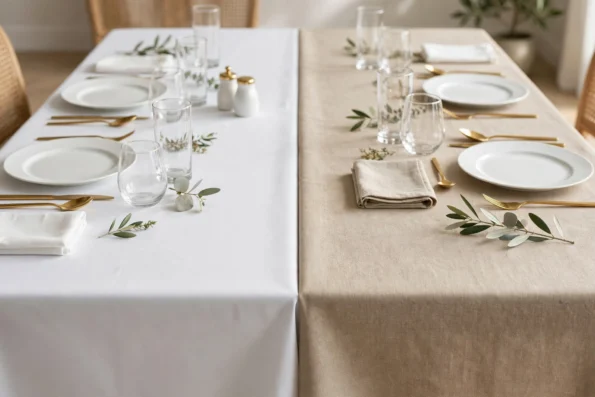
White polyester tablecloth beside a natural cotton canvas tablecloth on a set dining table

Polyester vs Cotton Tablecloths: Care, Drape and Durability

Choosing between polyester and cotton for your table A tablecloth is the fastest way to change a room — it sets the colour, the mood and the level of formality before a single plate goes down. But polyester and cotton behave very differently once dinner is over: one shrugs off red wine and comes out of the wash ready to use again, the other feels softer and more natural but asks for ironing and a little patience. This guide compares polyester and cotton tablecloths on the three things that decide whether you will love living with them — care, drape and durability — so you can pick the right one for weeknight dinners, holiday gatherings and weddings alike. Polyester tablecloths: the practical workhorse Polyester is the fabric behind most event tablecloths, and there is a good reason for that. Our Polyester Rectangular Tablecloth 60″x144″ is made from durable polyester with a wrinkle-resistant, stain-proof finish, and it is machine washable and reusable. It is sized for banquet and dining tables and made for weddings, banquets, parties and everyday dining — in other words, for tables that get used hard and need to look good again the next day. The wrinkle resistance is the feature you notice first. A polyester tablecloth comes out of the wash smooth enough to put straight back on the table, with no ironing and no creases from being folded in a cupboard. Spills bead up on the stain-proof finish instead of soaking straight in, so a knocked-over glass of red wine is a quick wipe rather than a ruined cloth. Polyester also gives you pattern and colour choice without the upkeep. Our Gingham Tablecloth 60 x 108 Inches is 100% polyester with a classic 1-inch checkered pattern — a cheerful, wipe-clean option for family meals, picnics and parties that keeps its crisp check wash after wash. Cotton tablecloths: natural, soft and breathable Cotton is the traditional tablecloth fabric, and it earns its place on feel alone. Cotton is a natural fibre, so a cotton tablecloth feels soft and breathable against the skin, drapes with a relaxed, lived-in softness, and gets more comfortable the more it is washed. For a slow Sunday lunch or a rustic farmhouse table, that natural texture is exactly the look — nothing synthetic reads quite the same in daylight. If you want to sew your own cotton tablecloth, start with a sturdy cotton cloth. Our 7 OZ Natural Cotton Canvas Fabric is a 60-inch-wide, heavy-duty cotton sold by the yard — a natural cotton you can cut to the exact length your table needs, hem, and use as a hard-wearing table cover for everyday meals, craft tables and outdoor dining. The Cotton & Canvas collection has more natural cotton weights and colours to choose from. Cotton’s trade-off is care. Cotton wrinkles — it creases in the wash, creases where it folds, and usually needs ironing before guests arrive. It also absorbs spills instead of repelling them, so a coffee or wine stain needs treating straight away, and cotton can shrink slightly on the first hot wash. Care: polyester wins on laundry day For a household with children, pets or frequent parties, polyester’s easy care is hard to beat. For a home where the tablecloth is used once a week and ironed as part of the ritual, cotton’s care is a small price for the natural feel. If you host often, consider owning both: polyester for the busy nights, cotton for the slow ones. Our tablecloth fabrics guide compares polyester, cotton and vinyl side by side, including when vinyl is the smarter choice. Drape: crisp polyester vs soft cotton Drape is how the cloth falls over the edge of the table, and it changes the whole look of the room. Polyester drapes smoothly and crisply — it holds a clean, tailored line from the tabletop to the floor, which is why banquet halls and wedding venues choose it. It also holds a crease-free fall even after being folded, so a long banquet cloth looks as neat at the end of the night as it did at the start. Cotton drapes more softly, with gentle folds and a slightly relaxed edge. On a round or farmhouse table that softness looks inviting and informal; on a long formal table it can look a little less structured than polyester. Heavy cotton canvas drapes with more body and stays put in a breeze, which makes it a good choice for outdoor tables. Durability: which lasts longer? Polyester is the tougher fabric. It resists stains, holds its colour in sunlight and through repeated washing, and does not weaken when wet. A polyester tablecloth used weekly can last for years with almost no visible wear, which is why caterers and venues rely on it. Cotton is strong too — cotton canvas is genuinely heavy-duty — but it fades a little faster in strong sun, stains more easily, and loses softness and strength slowly over many hot washes. If you want the cloth you buy once and forget about, polyester is the safer bet. Which tablecloth for which occasion? For weddings, banquets and large parties, choose polyester: wrinkle-resistant, stain-proof, machine washable, and available in long banquet sizes like the 60″x144″ cloth. For everyday family meals, choose whichever you enjoy living with — polyester for zero-iron convenience, cotton for natural softness. For a holiday table, layer them: a polyester cloth underneath for protection, with a cotton or lace runner on top for texture — see our wedding table linens guide for runner, cloth and overlay combinations. How much fabric do you need? Measure your table, then add the drop — the length of cloth that hangs over the edge. A casual drop is 6 to 8 inches on each side; a formal drop reaches the floor. A standard 6-foot banquet table needs a cloth about 60 inches wide and 120 to 144 inches long, which is exactly what our 60″x144″ polyester tablecloth is made for. If you are sewing your own

CONTINUE READING ➞
My Cart
Wishlist
Recently Viewed
Categories

SPIN TO WIN!

  • Try your luck to get a discount coupon
  • 1 spin per email
  • No cheating
Try Your Lucky
Never
Remind later
No thanks