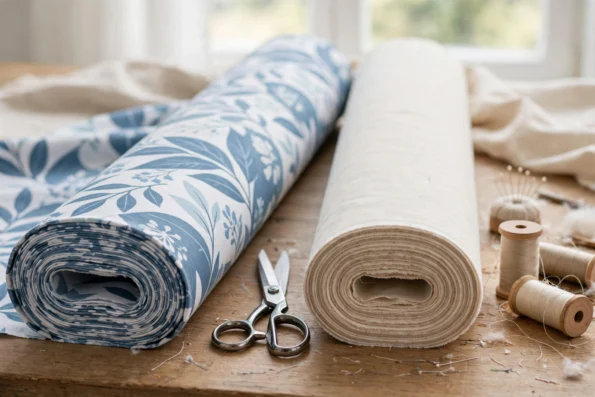
Printed poly cotton fabric roll beside a plain 100 percent cotton fabric roll

Poly Cotton vs 100% Cotton for Everyday Sewing

The short answer: poly cotton for durability and easy care, 100% cotton for breathability and a natural feel Everyday sewing runs on two fabrics: poly cotton and 100% cotton. They look alike on the bolt, they are both easy to find, and they are both sold by the yard at ValentinaTextile.com — but they behave differently in the wash, on the ironing board, and after a year of wear. Choosing the wrong one will not ruin a project, but choosing the right one makes the difference between a shirt you reach for every week and one that wrinkles in the drawer, or a tote bag that holds its shape and one that fades and sags. The rule of thumb is simple: poly cotton is the practical, hard-wearing choice, and 100% cotton is the breathable, natural choice. Poly cotton blends polyester with cotton for wrinkle resistance, durability and colourfastness. Pure cotton breathes better, feels softer against the skin, and presses to a crisp finish that blends cannot quite match. This guide compares the two for everyday sewing — shirts, dresses, children’s clothes, bags and home sewing — so you can pick the right fabric before you cut. Browse both in the Poly Cotton Fabric collection and the Cotton & Canvas collection, and see our Cotton vs Poly Cotton guide for the broader comparison. What each fabric actually is Poly cotton is a blend, usually cotton mixed with polyester. The polyester brings strength, wrinkle resistance and shape retention; the cotton brings softness and breathability that pure polyester lacks. The result is a fabric that is easier to live with than either fibre alone: it creases less, holds its colour through repeated washing, and dries faster than pure cotton. That is why poly cotton is so common in school uniforms, work shirts, table linens and children’s clothes — the garments that get worn hard and washed often. 100% cotton is exactly what it sounds like: a natural plant fibre, woven or knitted without synthetic content. It breathes better than any blend, which makes it cooler in warm weather and more comfortable against the skin. It also takes dye beautifully, giving rich, natural-looking colours, and it presses crisply, which is why quilters and dressmakers love it for structured garments. Its trade-offs are wrinkles, some shrinkage on the first wash, and a tendency to fade slightly faster than a blend if washed hot or dried in strong sun. The 100% Cotton collection is the place to start for pure cotton by the yard. Everyday sewing: which wins for which project? For children’s clothes, poly cotton usually wins on practicality. Children outgrow clothes before they wear them out, but the clothes still need to survive weekly washing, playground wear and food stains. Poly cotton’s wrinkle resistance means less ironing, and its colourfastness keeps bright prints looking bright. For a special-occasion dress or a christening outfit, though, 100% cotton’s softer hand and crisper press give a more premium finish. For shirts, dresses and blouses you wear often, the choice depends on how you live in them. A poly cotton shirt comes out of the dryer ready to wear, holds its shape through a long day, and suits workwear and uniforms. A 100% cotton shirt breathes better on a hot day, feels softer against the skin, and looks more refined — at the cost of ironing. Many sewists keep both in the wardrobe: poly cotton for everyday workhorses, pure cotton for the pieces they love most. For bags, aprons and home sewing, the balance shifts again. Poly cotton’s durability and stain resistance suit aprons, tote bags and table runners that get heavy use. Pure cotton, especially a heavier canvas weight, suits structured bags and home décor where a natural look and a firm hand matter. Check the weight and weave on the listing you buy: a lightweight cotton and a heavy canvas are both 100% cotton, but they sew and drape very differently. Care, wrinkles and longevity Care is where the two fabrics diverge most in daily life. Poly cotton needs little ironing, dries quickly, and resists shrinking, which is why it is the low-maintenance option. It can, however, hold onto odours more than pure cotton, and very hot ironing can damage the polyester fibres, so press it on a moderate setting. 100% cotton needs more care, but rewards it. Pre-wash cotton before cutting, because it can shrink on its first wash — cutting first and washing later is how a perfect dress ends up a size too small. Iron cotton while slightly damp for the crispest finish, and wash it in cool or warm water to protect its colour. With that care, cotton garments age gracefully, softening with every wash rather than thinning or pilling. For longevity, both fabrics last well when used for the right job. Poly cotton resists wear and keeps its shape, so it wins for high-wear items. Pure cotton can last for years too, especially in heavier weights, and it is the easier fabric to repair and repurpose — a worn cotton shirt becomes cleaning cloths or quilt squares, while a worn blend is harder to recycle. Neither fabric is objectively better; they simply age differently. Cost, comfort and the environment Poly cotton is usually the more budget-friendly option, and its durability means fewer replacements, which matters for uniforms and children’s clothes that are outgrown quickly. Pure cotton often costs a little more per yard, but its comfort and natural feel justify it for garments worn close to the skin. Which should you buy for everyday sewing? Buy poly cotton if your priority is easy care, durability and wrinkle resistance: uniforms, children’s everyday clothes, aprons, tote bags and anything washed weekly. Buy 100% cotton if your priority is breathability, softness and a natural feel: summer shirts and dresses, baby clothes, quilting, and garments you want to press to a crisp, refined finish. Buy both if you sew regularly — most sewists end up with a stash of each, because no single fabric
CONTINUE READING ➞
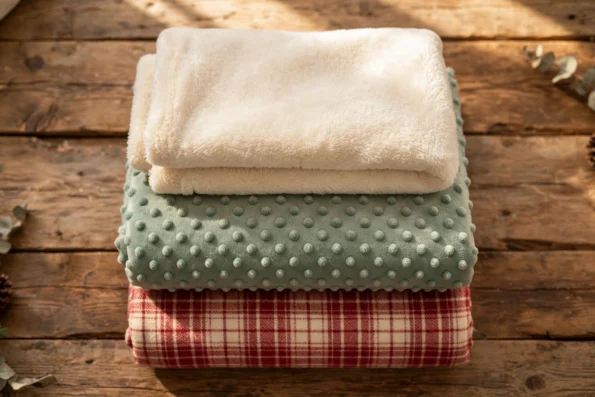
Stack of winter blankets in cream fleece, sage dotted minky and red plaid cotton flannel

Winter Blanket Fabrics: Fleece, Minky and Flannel Compared

The short answer: fleece for easy warmth, minky for softness, flannel for breathable comfort When the cold sets in, the blanket you reach for matters more than you think. A blanket that is too hot leaves you kicking it off at 2 a.m.; one that is too thin leaves you reaching for a second layer. And if you are sewing the blanket yourself, the fabric you choose decides not just how warm it feels, but how it washes, how it wears, and how long it stays soft. Three fabrics dominate winter blanket sewing: fleece, minky and cotton flannel. All three are warm, all three are sold by the yard at ValentinaTextile.com, and all three suit a different kind of sleeper and a different kind of project. The short version: fleece is the easy, everyday warm blanket. Minky is the softest, most luxurious-feeling option, and the one children and gift recipients love most. Cotton flannel is the breathable, natural-fibre choice — warm without the clammy feeling, and the best pick if you sleep hot or want a blanket that works across seasons. This guide compares the three on warmth, weight, feel, care and best uses, so you can buy the right fabric for the blanket you actually want to make. Start with the Minky & Fleece collection for the plush options, and the 100% Cotton Flannel Fabric by the Yard for the natural-fibre option — that flannel is 42/43 inches wide and brushed on both sides for softness. Fleece: the easy, everyday winter blanket Fleece is the workhorse of winter blankets. It is light for its warmth, it dries quickly, it needs no special care, and it comes in a huge range of colours and prints. A fleece throw is the blanket you keep on the sofa, the one you sew for a dorm room, and the one you make in an afternoon when you need a gift by the weekend. The one thing to watch with fleece is pilling. Ordinary fleece can develop small bobbles on the surface after repeated washing, which is why the Anti-Pill Fleece collection exists: anti-pill fleece is treated to resist those bobbles, so the blanket stays smooth and new-looking far longer. If you are sewing a blanket that will be washed often — a child’s blanket, a pet blanket, a sofa throw — anti-pill fleece is worth choosing over standard fleece. Our Anti-Pill Fleece guide explains what the treatment does and why it matters for blankets in particular. Fleece is also the most forgiving fabric to sew. It does not fray, so edges can be left raw or finished with a simple blanket stitch, and it does not need a lining. A single layer of fleece makes a perfectly good throw; two layers, sewn together, make a warmer blanket with a finished look on both sides. For a first blanket project, fleece is the easiest place to start. Minky: the softest blanket you can sew Minky is the fabric people touch first in a fabric shop. It has a short, dense, velvety pile that feels softer than almost anything else you can sew, and that softness is the whole point. A minky blanket is a comfort blanket: the one for a baby’s crib, a toddler’s bed, a gift for someone who is unwell, or the luxury throw on your own bed. The dotted and rosebud textures in the Minky & Fleece collection add a tactile pattern that children especially love, and the fabric’s plush pile makes even a simple rectangle of minky feel like a finished, expensive gift. Minky is warm, but it is a different kind of warm from fleece. It feels heavier and more enveloping, and it holds heat close to the body, so it suits cold bedrooms and people who feel the cold. Sewing minky takes a little more care than sewing fleece. The pile can shift under the presser foot, so use plenty of pins, sew slowly, and expect some shedding when you cut it. A walking foot helps if you have one. The result is worth the extra care: a minky blanket looks and feels far more luxurious than its simple construction suggests. Cotton flannel: warm, breathable and natural Cotton flannel is the quiet achiever of winter blankets. It is 100% cotton, brushed on both sides so it feels soft and slightly fuzzy, and it is warm without being heavy or clammy. Where fleece and minky trap heat, flannel breathes: it keeps you warm, but it lets moisture escape, so you wake up comfortable rather than overheated. That makes flannel the best choice for people who sleep hot, for children’s beds, and for blankets that need to work in autumn and spring as well as winter. Flannel also has the widest range of looks. Plaids, checks and solid colours suit everything from a rustic cabin throw to a classic children’s blanket, and because it is a woven cotton rather than a knit or pile fabric, it holds its shape well and layers neatly with other fabrics. A flannel blanket backed with fleece gives you the best of both worlds: the breathable cotton side against the skin and the plush fleece side for extra warmth. One practical note: flannel is 42/43 inches wide, narrower than many fleece and minky fabrics, so for a wide blanket you may need to join two widths or plan a design that uses the width creatively, such as a panelled throw. Always check the width on the listing you buy, and pre-wash flannel before cutting, since cotton can shrink on its first wash. Which blanket fabric should you buy? Choose anti-pill fleece if you want an easy, washable, everyday blanket — the sofa throw, the dorm blanket, the gift you need quickly. Choose minky if softness is the priority — baby blankets, comfort blankets, and luxury throws where the feel of the fabric is the gift. Choose cotton flannel if you want a natural, breathable blanket that works across seasons, or if you sleep hot

CONTINUE READING ➞
My Cart
Wishlist
Recently Viewed
Categories

SPIN TO WIN!

  • Try your luck to get a discount coupon
  • 1 spin per email
  • No cheating
Try Your Lucky
Never
Remind later
No thanks