Sequin Lace vs Beaded Lace: Which Shine for Evening?
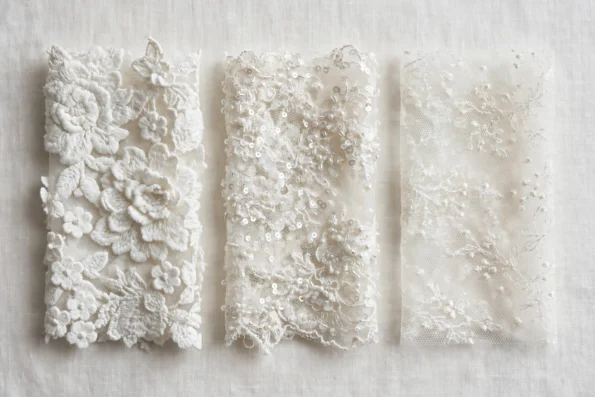
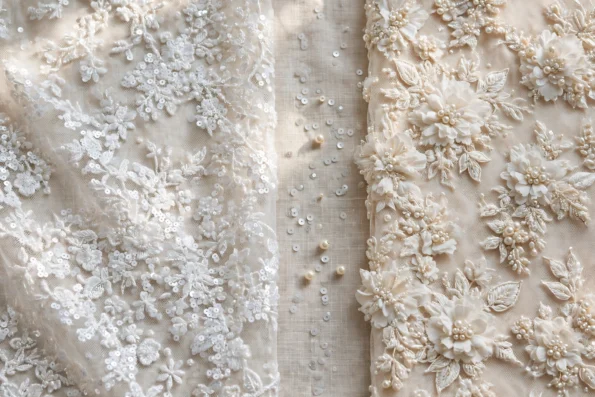
Two evening laces, two very different kinds of shine Sequin lace and beaded lace are the two fabrics every evening dressmaker reaches for when a gown needs to sparkle — and they are easy to confuse. Both sit on a soft mesh ground and both are covered in floral work. But the shine they give you is not the same shine, and the dress you can make from each one is not the same dress. Sequin lace sparkles flat and even; beaded lace sparkles in depth, with raised flowers, beads and pearls that catch the light as you move. One is lighter and easier to cut; the other is heavier and more dramatic. This guide compares the two, so you can choose with confidence before you cut. What sequin lace is Sequin lace is embroidery plus sequins on a mesh ground. Our Floral Sequin Lace Fabric by the Yard (VT-10) is a good example: dense floral embroidery with shimmering sequins over a soft mesh, in 100% polyester, 51 inches wide, in 16 colours. The embroidery gives the lace its pattern; the sequins give it its sparkle. Because the sequins lie flat, the surface stays smooth and the fabric drapes like a normal lace. That flatness is sequin lace’s biggest practical advantage. It is the easier of the two laces to cut and sew: seams press flat, darts sit neatly, and a lining slips underneath without bulk. It is also lighter, so a full skirt or a long train moves freely. The trade-off is depth: from a distance it reads as one even field of sparkle. What beaded lace is Beaded lace builds its decoration upward instead of laying it flat. Our Premium 3D Beaded Lace Fabric by the Yard (VT-32) is the classic of the type: big dimensional floral appliqués over a soft mesh and tulle base, each finished with beads and sequins for depth and sparkle. It is polyester on a soft mesh base, approximately 54–55 inches wide, in 7 rich colours. The difference is in the hand: run your fingers over beaded lace and you feel the flowers standing proud of the mesh, the beads sitting in the centre of each bloom. That raised work gives beaded lace its occasion feel — it reads as couture even in a simple silhouette. The trade-off is weight and bulk: the appliqués make seams thicker, and the flowers need room, so cut too small a piece and you lose the motif. Shine, texture and drape compared Sequin lace gives you a bright, even sparkle that reads well in photographs and under party lighting, because hundreds of flat sequins reflect light in the same direction at once. Beaded lace gives you a slower, richer sparkle: the beads and raised petals catch light at different angles, so the fabric seems to change as the wearer moves. Sequin lace flashes; beaded lace glows. Texture follows the same split. Sequin lace feels like embroidered mesh with a light glitter — smooth enough to wear against the skin with a lining. Beaded lace feels sculptural and deliberately ornate, and most makers keep it away from areas that rub. Drape is where sequin lace wins outright: it falls in soft folds and suits flowing skirts. Beaded lace holds its shape more, which is why it suits structured bodices, statement sleeves and trains. Which lace for which dress? For a wedding dress, the choice depends on the look you want. Sequin lace suits the bride who wants sparkle everywhere — a full sequin-lace gown, a sequin overlay, or a veil with a sequin edge — because it is light enough to wear all day. Beaded lace suits the bride who wants one unforgettable focal point: a beaded bodice, a train edged with raised flowers. Our guide to choosing lace for a wedding dress covers bodices, sleeves and veils. For evening gowns, prom and pageant dresses, the same logic holds. A sequin lace gown suits a fitted silhouette that needs to move — the mesh gives a little and the sequins add no weight where the dress is tightest. A beaded lace gown suits a ballgown or an A-line, where the skirt has room for the appliqués. For quinceañera dresses, beaded lace is often the pick for the bodice alone, with a plainer skirt to balance it. Both laces work for overlays, bodices and statement sleeves; only sequin lace is comfortable for a long train worn for hours. Sewing and care: what to know before you cut Both laces sit on a mesh ground, so both need the same approach: a lining underneath, sharp scissors, and a plan for the motifs before the first cut. With sequin lace, remove the few sequins that fall on a seam line — a seam sewn over sequins will pucker and blunt the needle. Use a fine needle and a slightly longer stitch, and press gently from the wrong side with a pressing cloth, never a hot iron on the sequins. With beaded lace, the planning matters more. Lay the pattern pieces on the fabric until the flowers fall where you want them — a bloom centred on the bodice, a full motif on each sleeve — because once you cut through an appliqué it cannot be moved. Cut around the flowers where you can, and hand-tack them at the seams so they sit flat. Both laces should be dry-cleaned or hand-washed cold and laid flat to dry; never machine-wash beaded lace, and never tumble-dry either one. Our lace fabric types guide explains the 3D, beaded and embroidered families, including the Luxury Beaded Lace (VT-31), a 55-inch embroidered beaded tulle between the two styles. Cost, width and how much to buy Sequin lace VT-10 is 51 inches wide; beaded lace VT-32 is approximately 54–55 inches wide. That extra width matters, because the appliqués need space. Both fabrics are sold by the yard in one continuous piece at ValentinaTextile.com, so a three-yard order arrives as one uncut length. Allow two to three yards