The wrong curtain fabric fights you every day
Curtains are the largest piece of fabric in most rooms, and the wrong choice announces itself every day: a sheer that leaves you on display at night, a blackout that hangs like a board, a velvet that swallows the light. Curtain fabric is not one decision — it is three. How much light do you want to block? How much privacy do you need? And how should the curtain fall?
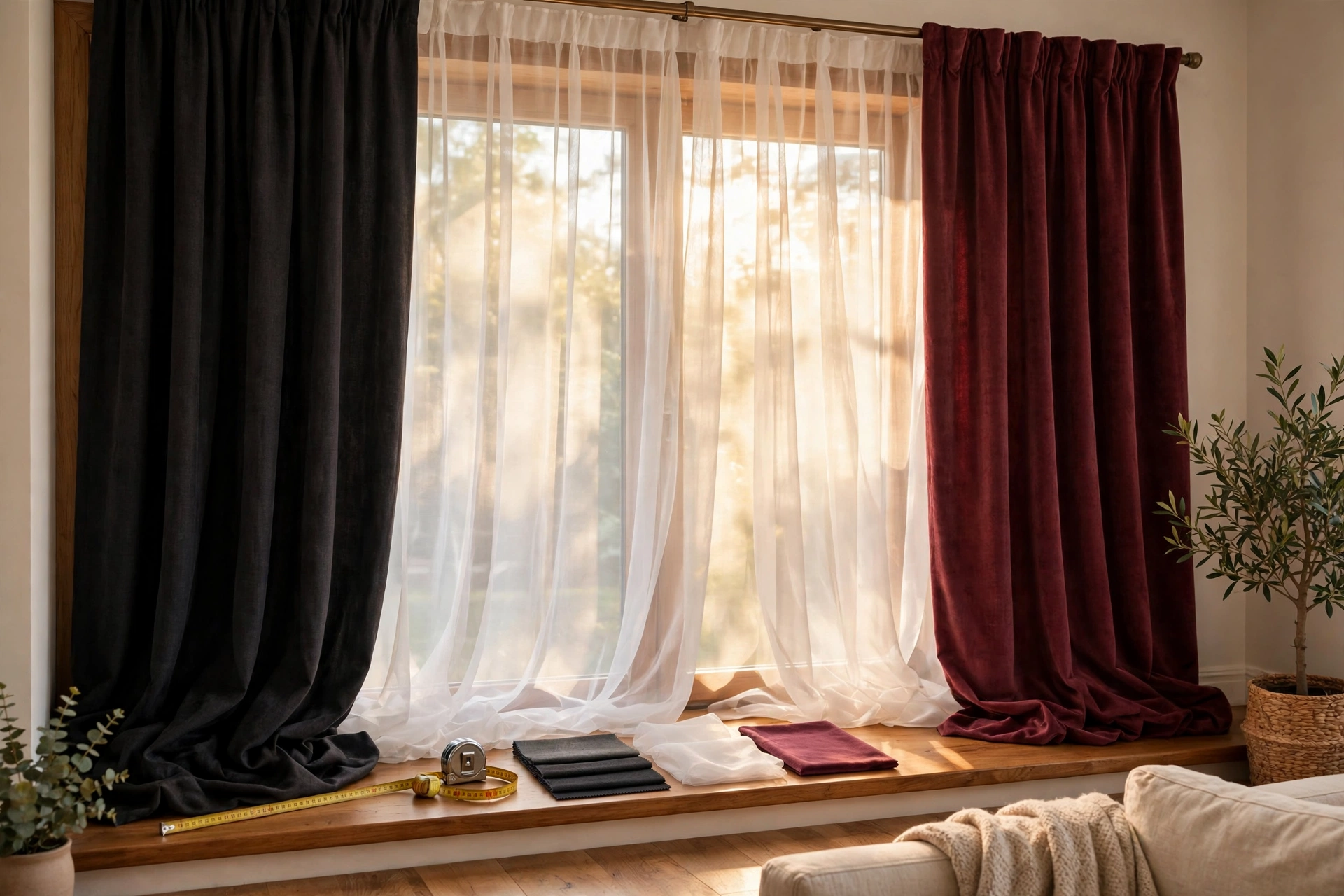
The three fabrics in this guide answer those questions in three different ways. Blackout blocks the light. Sheer organza filters it. Velvet frames it. Most well-dressed windows use more than one — a sheer for the day, a blackout or a velvet for the night — and this guide shows you how to choose, how much to buy, and how to sew each one.
Blackout: total light control, day and night
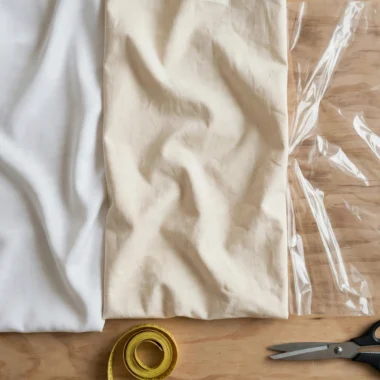
Blackout fabric exists for one job: stopping light. Our Blackout Drapery Lining Fabric by the Yard is 100% polyester, 60 inches wide, and built to block sunlight, cut UV exposure and darken a room properly. It is the fabric for bedrooms, nurseries, media rooms and any window that faces a streetlight or a sunrise.
Blackout is usually used as a lining rather than the face fabric: it sits behind the curtain you actually see, doing the light-blocking work invisibly. That makes it the most forgiving of the three fabrics to sew — a smooth, stable polyester that cuts cleanly, feeds evenly under the presser foot and does not stretch or slip. Line a pair of curtains with it and you get the look of your chosen face fabric with the sleep of a blackout room. It also helps regulate room temperature and protects furniture from UV fading. The trade-off is the hand: blackout lining is heavier and stiffer than a sheer. Care is gentle — machine wash cold, tumble dry low, do not bleach.
Sheer organza: light, privacy and a soft glow
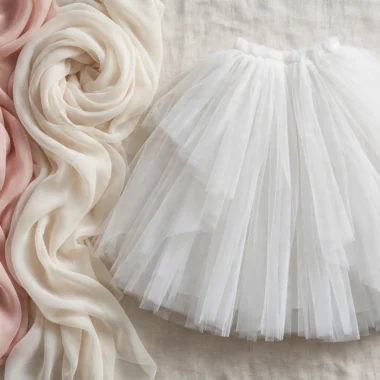
Sheer organza is the opposite of blackout: it does not block light, it transforms it. Our Sheer Crystal Organza Fabric by the Yard is 100% polyester, 58–60 inches wide, in 45 colours, and it is crisp, lightweight and sheer — the fabric that turns harsh daylight into a soft glow and gives a window privacy during the day without shutting the room in darkness.
Organza is the daytime layer. Hung alone, it softens the view from the street while keeping the room bright — ideal for living rooms, dining rooms and kitchens, where you want light and a little privacy at the same time. Hung in front of a blackout lining or behind a heavier curtain, it does double duty: the sheer filters the day, and the heavier layer closes at night. Browse the Tulle & Organza collection to see the full sheer range and match the organza colour to the room. Organza needs a light touch at the machine: a fine needle, a short stitch, and French seams or a narrow rolled hem. It creases if crushed, so hang it as soon as it is sewn.
Velvet: drama, warmth and a heavy drape
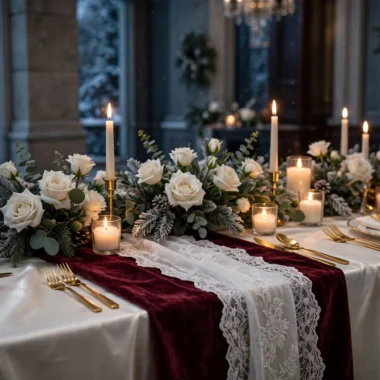
Velvet is the statement fabric of the three. Our Premium Velvet Fabric by the Yard is a soft stretch velvet that falls in deep, even folds and catches the light on every fold — the fabric that makes a plain window look dressed. Browse the Velvet Fabric collection for the colour range, from deep burgundy and forest green for winter rooms to soft blush and sage for lighter spaces.
Velvet’s strength is drape and presence. It hangs heavily, it pools beautifully on the floor if you want that look, and it absorbs sound — a velvet curtain makes a room feel quieter as well as warmer. It is the right choice for a feature window, a bedroom where you want a cocooned feel, or a living room where the curtains are part of the decoration. It also pairs naturally with the other two fabrics: velvet over a sheer organza gives you a sheer by day and a statement by night, and velvet lined with blackout gives you the warmest, darkest bedroom a curtain can make. Velvet is the hardest of the three to sew: cut it in a single direction, because velvet has a nap, and panels cut in opposite directions will look like two different colours. Use a walking foot if you have one, pin generously, and press from the back with a cool iron and a pressing cloth.
How much fabric do you need?
Curtain yardage follows one rule: fullness. A flat panel that just covers the window looks like a sheet; a curtain needs one-and-a-half to two-and-a-half times the width of the window in fabric. A sheer organza panel looks best at the full end of that range — two to two-and-a-half times the width — because the folds are what make a sheer beautiful. Blackout lining needs only the same width as the face fabric it lines, plus a little for hems. Velvet sits in the middle: one-and-a-half to two times the width gives you deep, even folds without making the curtain too heavy to draw. For length, measure from the rod to where you want the curtain to end and add eight to ten inches for the hems. Buy the whole drop in one continuous piece, and order both panels of a pair from the same cut so the colour and the nap match. If you are new to measuring, our Yardage Guide covers curtains as well as dresses.
Which fabric for which room?
Choose blackout lining for bedrooms, nurseries and media rooms — anywhere sleep or a dark room matters. It is almost always a lining, so pair it with whatever face fabric suits the room. Choose sheer organza for living rooms, dining rooms and kitchens, where you want daylight and daytime privacy, and for any window where the view matters — organza softens a view without hiding it. Choose velvet for feature windows, formal living rooms and bedrooms where warmth and drama are the point. And for most windows, choose two: a sheer organza panel on the window with a heavier curtain — velvet, or any face fabric lined with blackout — on a second rod in front of it. Open the heavy curtain by day and the sheer does the work; close it at night and the room is private, dark and quiet.
Shop curtain fabrics by the yard
The right curtain fabric changes how a room feels — bright in the morning, private at night, warm in winter. Shop Blackout Drapery Lining by the Yard for total light control, Sheer Crystal Organza by the Yard in 45 colours for a soft daytime glow, and Premium Velvet by the Yard for a statement drape — all at ValentinaTextile.com, with every cut in one continuous piece.
Frequently asked questions
Do I need blackout lining on all my curtains?
No — only where darkness matters. Bedrooms, nurseries and media rooms benefit most. Living rooms and kitchens usually do better with a sheer organza panel that keeps the daylight, and you can always add a blackout lining later to an existing curtain.
How wide should curtain panels be?
Allow one-and-a-half to two-and-a-half times the width of the window in fabric. Sheer organza looks best at the full end — two to two-and-a-half times — while velvet needs one-and-a-half to two times. A flat panel with no fullness will look like a sheet.
Can I layer sheer organza with velvet curtains?
Yes — it is the classic combination. Hang the sheer organza on the window rod and the velvet on a second rod in front of it. Open the velvet by day, close it at night for privacy and warmth.