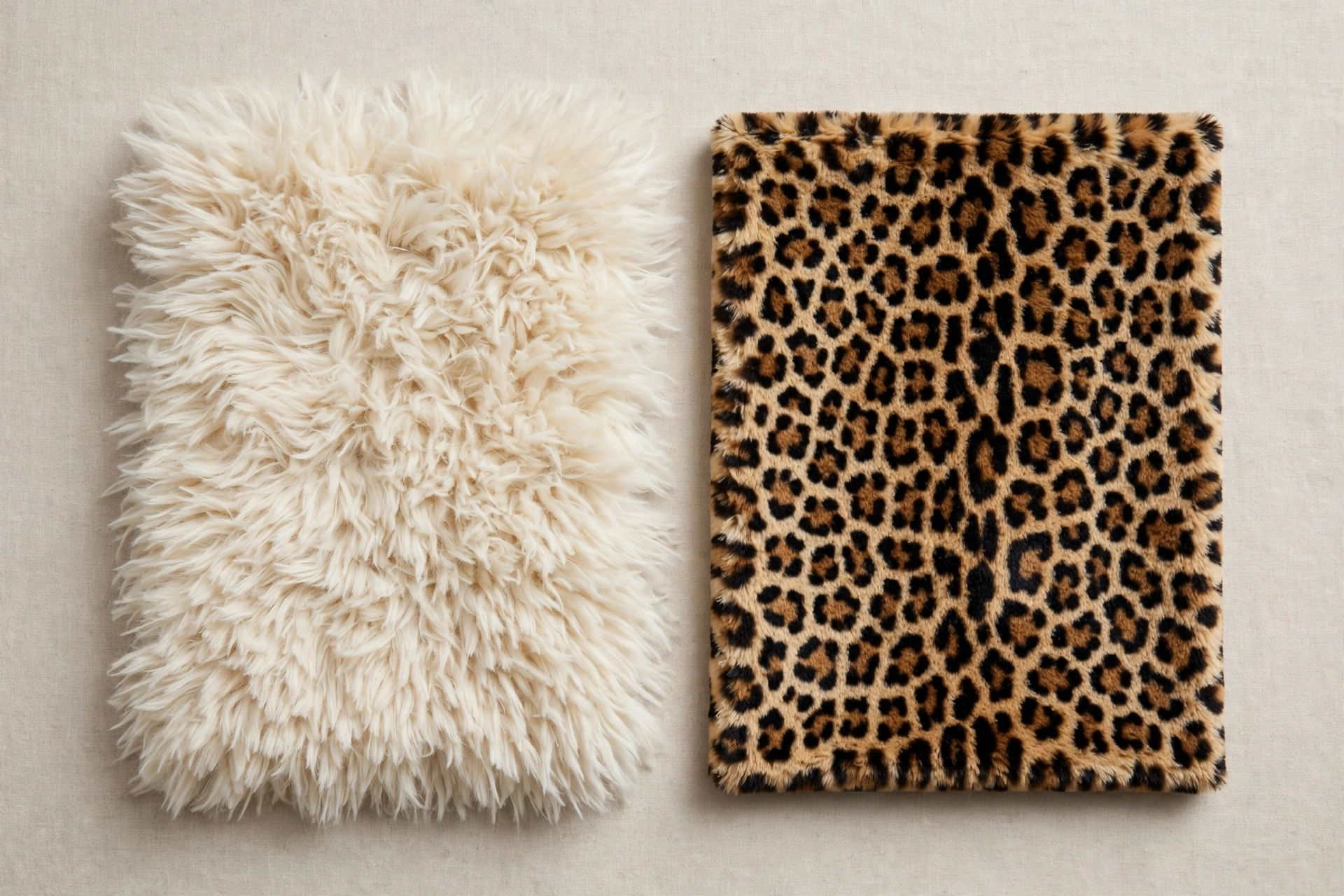
The short answer: faux fur for drama and warmth, velboa for softness and detail — and the project decides
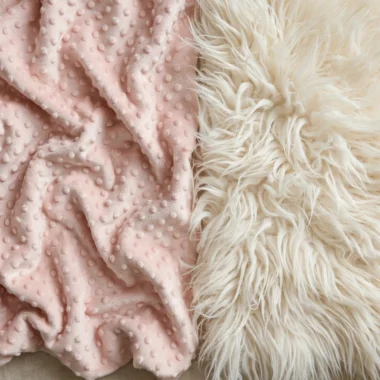
Faux fur and velboa look alike at a glance: both are soft, plush, and made for costumes, toys, and cosy projects. But they behave very differently once you start cutting and sewing, and choosing the wrong one can turn a fun project into a frustrating one. Faux fur is long, shaggy, and dramatic. Velboa is short, dense, and smooth. This guide compares the two side by side — pile, drape, sewing, care, and best uses — so you can pick the right plush fabric for your next costume or toy.
What is faux fur?
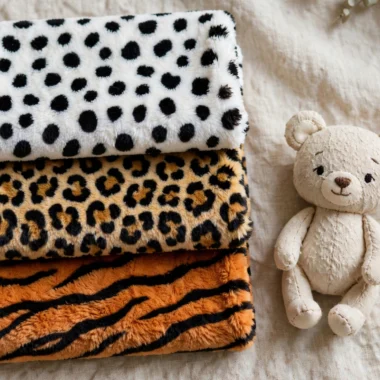
Faux fur is a pile fabric made to imitate animal fur: long, loose fibres that stand up from a backing and move when you touch them. It comes in solid colours and animal prints, from classic cream and black to leopard, tiger, and dalmatian patterns. Because the pile is long, faux fur has real presence — a faux fur cape, coat, or hood reads as fur from across the room, which is exactly why it is the go-to fabric for animal costumes, winter characters, and statement outerwear.
Valentina Textile’s shaggy faux fur is sold by the yard as the Luxury Shaggy Faux Fur (60 inch), and the wider Faux Fur collection covers solid and animal-print options. If your project needs to look like fur, start here.
What is velboa?
Velboa is a short-pile plush fabric: dense, soft, and velvety to the touch, with fibres that lie close to the backing rather than standing up. It is the fabric behind many plush toys, stuffed animals, and costume pieces where a smooth, even surface matters more than a wild, shaggy look. Velboa takes printed patterns beautifully — dalmatian spots, leopard rosettes, and other animal prints stay crisp on its short pile, where the same print on long faux fur would be half-hidden by the fibres.
Our What Is Velboa? guide explains the fabric in more depth, and the Dalmatian Velboa collection shows how clean a printed pattern looks on short pile. Browse the full Faux Fur & Animal Prints collection to compare both fabrics side by side.
Pile and feel: the biggest difference
Pile is the single biggest difference between the two fabrics, and it drives almost every other decision. Faux fur’s long pile is soft in a fluffy, hair-like way: you sink your fingers into it, and it moves and parts as you touch it. Velboa’s short pile is soft in a velvety, even way: it feels like stroking a plush toy, smooth and consistent in every direction.
Drape and structure
Faux fur has body. Its long pile and backing give it weight and structure, so it holds its shape in capes, hoods, coats, and costume bodies. It does not drape like a fluid fabric — it stands, fluffs, and fills out a shape, which is ideal when you want a costume to look full and generous. Velboa is lighter and more flexible. It drapes more easily, follows curves better, and suits smaller, more detailed pieces: toy bodies, ears, paws, costume trims, and soft accessories where the fabric needs to bend rather than stand up.
Sewing: what to expect with each
Sewing faux fur takes a little patience. The long pile sheds as you cut it, so cut from the backing side where you can, keep a vacuum or lint roller nearby, and expect fibres on your machine and your clothes. Seams need care too: pile trapped in a seam line can make it look bulky, so brush pile away from the seam before you stitch, and use a longer stitch length than you would for a flat fabric. The result is worth it — a faux fur seam, once trimmed and brushed out, disappears into the pile.
Velboa is the easier sew of the two. Its short pile sheds far less, seams sit flatter, and small pieces are easier to turn and topstitch neatly. If you are making a plush toy with small parts — ears, muzzles, paws — velboa will give you cleaner edges and crisper details. Beginners making their first plush project will usually find velboa the friendlier fabric, while faux fur rewards a little more experience with a much more dramatic result.
Best uses: which fabric for which project?
Choose faux fur for
Animal costumes where the fur needs to read from a distance, winter capes and coats, hood trims, Santa-style costumes, and statement throws or cushions where a wild, fluffy look is the point. If the project should look like fur, faux fur is the answer.
Choose velboa for
Plush toys and stuffed animals, costume pieces with printed animal patterns that need to stay crisp, soft baby items, costume trims and ears, and any project with small, detailed pieces where clean seams matter more than shaggy drama. If the project should feel like a plush toy, velboa is the answer.
Use both together
Many of the best costume projects combine the two: a velboa body with faux fur trim, a velboa toy with a faux fur mane, or a costume with a velboa base and faux fur cuffs and collar. The contrast between short and long pile adds depth that either fabric alone cannot give, and it lets you put the drama exactly where you want it.
Care: keeping plush fabrics beautiful
Care varies by product, so the listing for the exact fabric you buy is the final word. As general guidance, both fabrics prefer gentle handling: shake or brush them out rather than washing aggressively, blot spills quickly, and keep them away from high heat, which can damage pile fibres. Faux fur benefits from a gentle brush after washing or storage to restore its fluffy look, while velboa’s short pile usually recovers its even feel with a light shake.
The verdict
There is no single winner — there is a right fabric for each project. Want drama, warmth, and a look that reads as real fur? Choose faux fur, starting with the Luxury Shaggy Faux Fur. Want softness, crisp printed patterns, and clean, easy sewing for toys and detailed pieces? Choose velboa, starting with the Dalmatian Velboa collection. Want the best of both? Combine them — a velboa body with faux fur trim is one of the most effective costume tricks there is.
Shop plush fabrics at ValentinaTextile.com
Whether your next project is a costume, a plush toy, or a cosy winter accessory, the right plush fabric makes the difference between a project that looks homemade and one that looks professional. Shop faux fur and velboa by the yard at ValentinaTextile.com, and pick the pile that fits your project.
Frequently asked questions
Is velboa easier to sew than faux fur?
Yes, for most projects. Velboa’s short pile sheds less, seams sit flatter, and small pieces are easier to turn neatly. Faux fur needs a little more care — cutting from the backing, brushing pile out of seams, and managing shedding — but it gives a more dramatic result.
Can I wash faux fur and velboa?
Care varies by product, so check the listing for the exact fabric you buy before washing. As general guidance, both prefer gentle handling and low heat; brush faux fur out after washing to restore its pile, and let both air-dry rather than using high heat.
Which is better for a child’s stuffed animal?
Velboa is usually the better choice for a stuffed animal that will be hugged and carried daily: its short, even pile is soft, durable-feeling, and easy to keep tidy. Faux fur suits a display toy or a costume piece better, where its dramatic look matters more than daily wear.