The short answer: tulle for soft volume, organza for crisp structure
Planning a wedding brings a lovely problem: you fall in love with a sheer fabric, then realise you have no idea whether it will hold a skirt shape, float over a veil, or drape gracefully across a reception table. Tulle and organza look similar on a screen — both sheer, both light, both wedding favourites — but they behave very differently once you cut and sew them. Choose the wrong one and a veil can look stiff when you wanted it soft, or a skirt can collapse when you wanted it to stand out. This guide compares tulle and organza for the three jobs wedding makers ask about most: skirts, veils, and décor, so you can buy with confidence.
What is tulle?
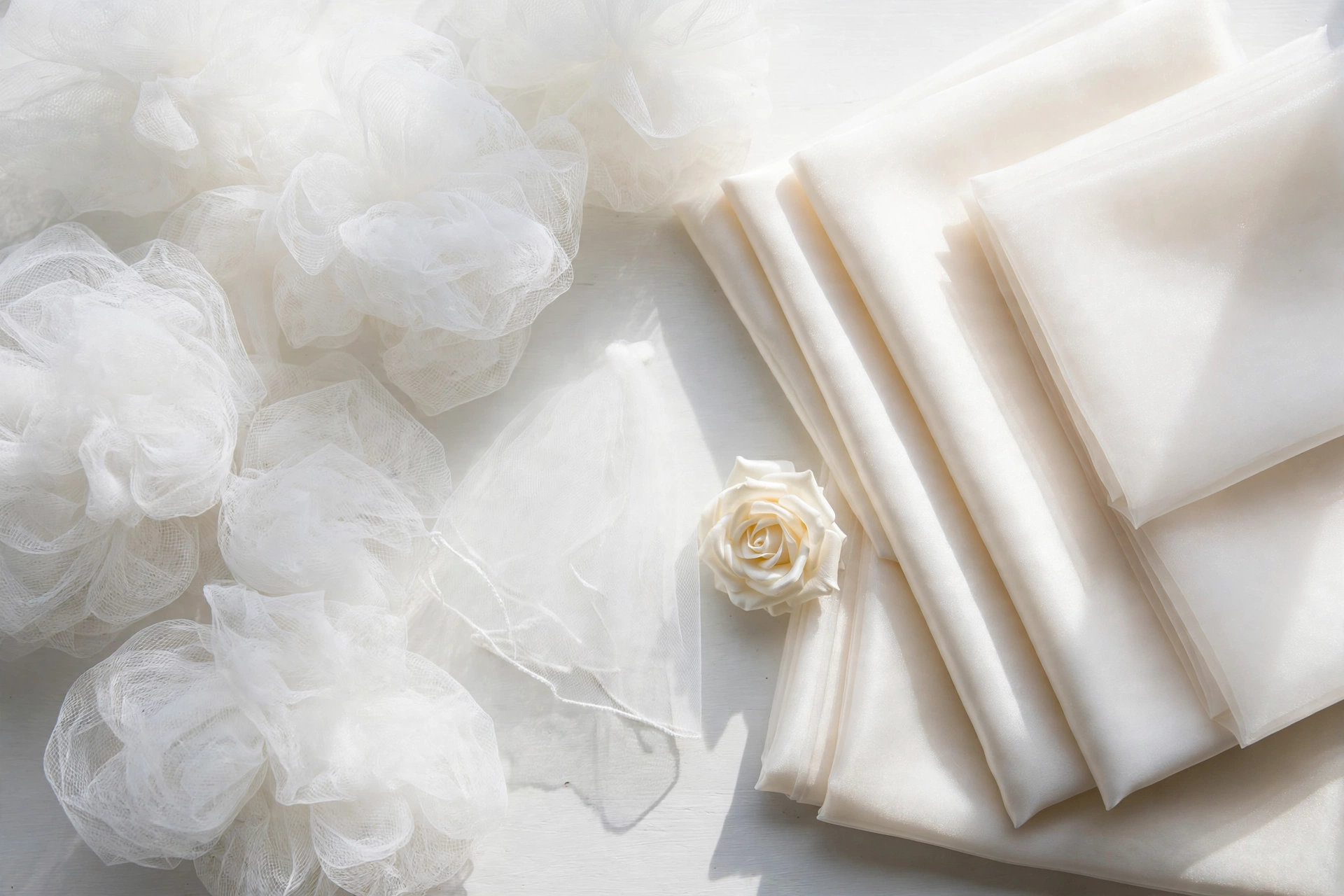
Tulle is a fine netting fabric made from very fine threads woven into an open, hexagonal mesh. It is feather-light, softly transparent, and famously used for ballet tutus, bridal veils, and wedding skirts that need airy volume without weight. Because tulle is a net rather than a woven cloth, it does not fray in the usual way, and layers of it build up a cloud-like fullness. You can gather it, ruffle it, or let it fall in soft folds, and it will still feel light. Browse the Tulle Bolt 54″ collection to see the classic wedding tulle width, sold by the yard for skirts, veils, and draping.
What is organza?
Organza is a sheer, plain-weave fabric with a crisp, slightly stiff hand. Where tulle is a net, organza is a tightly woven cloth, which is why it holds its shape, catches the light with a subtle sheen, and gives a more structured, polished look. It is the fabric behind structured overskirts, crisp bows, sheer sleeves that stand away from the arm, and table overlays that need to hold a neat fold. See the full range in the Organza collection at ValentinaTextile.com, alongside tulle in the wider Tulle & Organza collection.
Tulle vs organza at a glance
Feel and drape
Tulle feels soft, airy, and slightly springy. It floats, gathers into clouds, and moves gently with the wearer. Organza feels crisper and smoother, with a papery rustle and a drape that holds folds and shape rather than collapsing into softness. If you want romance and movement, tulle leads. If you want polish and architecture, organza leads.
Sheerness and light
Both are sheer, but they filter light differently. Tulle’s open mesh reads as a soft haze, especially in layers, and colours look muted and dreamy through it. Organza’s woven surface reads clearer and brighter, with a gentle shine that photographs beautifully under reception lighting.
Structure and volume
This is the deciding difference. Tulle creates volume through layering: one layer floats, five layers billow. It is forgiving, easy to gather, and rarely looks stiff. Organza creates structure on its own: a single layer can hold a bow, a puff sleeve, or an overskirt silhouette. That structure is a gift when you want shape, and a drawback when you want softness, so match the fabric to the silhouette, not just the colour.
Sewing and handling
Tulle is beginner-friendly in some ways and fiddly in others. It does not fray, so hems can be left raw or finished with a simple rolled edge, but it slips, shifts, and sticks to itself with static, so pin generously and cut with a rotary cutter where possible. Organza sews more like a regular woven fabric, but its sheerness shows every seam, so French seams or neatly bound edges look best, and it can fray, so finish raw edges promptly. For both fabrics, always check the care and width details on the exact product page before ordering.
Which should you choose for a wedding skirt?
Choose tulle for a soft, romantic, layered skirt
A-line gowns, princess skirts, flower-girl dresses, and boho bridal looks all love tulle. Layer it over a lining or a satin underskirt, and you get movement, softness, and that floating bridal feeling without heavy weight. The Tulle Bolt 54″ collection is the natural starting point for this look, with bolts that make yardage planning for a full skirt straightforward.
Choose organza for a structured overskirt or statement silhouette
If the skirt needs to hold a shape — a crisp overskirt, a sculpted bow at the back, a ballgown layer that stands away from the body — organza is the better tool. It gives a gown presence and polish, and it layers beautifully over satin without adding the cloud of tulle. Pair it with a tulle underskirt if you want both structure on top and softness underneath.
Which should you choose for a veil?
For a classic soft veil that drapes over the face and shoulders, tulle is the traditional choice: light, forgiving, and easy to gather onto a comb. For a shorter, more sculptural veil, a blusher with body, or a veil with a crisp edge that holds its shape in photographs, organza gives that definition. Many makers also combine the two, with a tulle veil and an organza trim or bow. If you are still weighing sheer fabrics generally, our comparison of Chiffon vs Organza explains how organza differs from an even softer sheer.
Which should you choose for wedding décor?
Tulle for draping, chair sashes, and soft backdrops
Tulle drapes, swags, and gathers effortlessly, which makes it ideal for ceiling draping, chair sashes, table skirts, and ceremony arches. It hides imperfect folds, catches light softly, and stretches a long way on a budget because a little yardage gathers into a lot of decoration.
Organza for table overlays, runners, and crisp accents
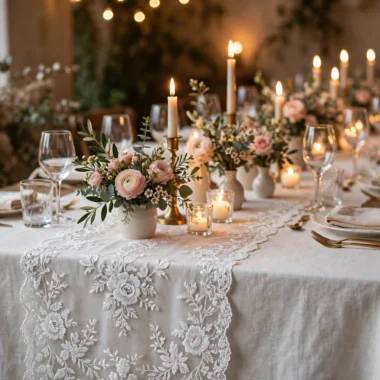
Organza suits table overlays, runners, and chair covers where a neat, pressed look matters. It lies flatter, holds a fold, and reflects light, so a reception table looks dressed rather than draped. For a layered table, try an organza overlay over a solid tablecloth, with tulle used only for the softer accents around the room.
How much should you buy?
Yardage depends on the project, not the fabric alone. A simple single-layer veil may need only a yard or two, while a full layered skirt or a draped ceiling can need many yards. Always measure the finished piece, add extra for gathering, and check whether the listing is sold by the yard in one continuous cut before you order.
Shop tulle and organza at ValentinaTextile.com
Whether your wedding needs the soft cloud of tulle or the crisp polish of organza, you will find both sold by the yard at ValentinaTextile.com, so you can buy exactly the length your skirt, veil, or décor needs. Start with the Tulle & Organza collection, compare Organza with Tulle Bolt 54″, and choose the sheer that matches the silhouette you actually want to wear and photograph.
Frequently asked questions
Is tulle the same as organza?
No. Tulle is a fine netting with an open mesh, while organza is a sheer plain-weave fabric. Tulle feels softer and builds volume in layers; organza feels crisper and holds its shape.
Which is better for a wedding veil, tulle or organza?
Tulle suits a soft, draping veil, while organza suits a shorter, more structured veil with body. The right choice depends on whether you want softness or shape.
Can I use tulle and organza together?
Yes. Makers often pair them — for example, a tulle skirt under a structured organza overskirt, or a tulle veil with an organza bow — to get both softness and structure in one design.