
Minky vs Faux Fur: Softness, Pile and Best Uses Compared
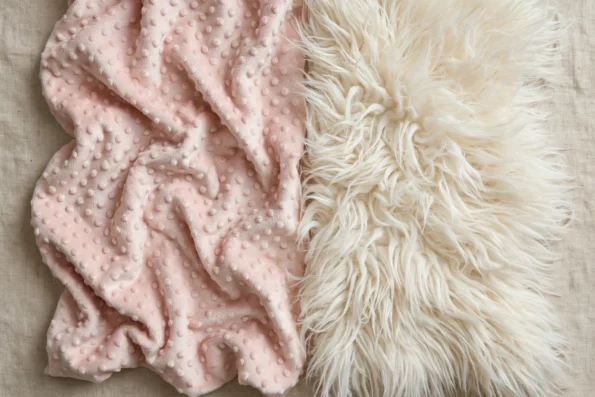
The short answer: minky is soft and sleek, faux fur is bold and fluffy If you are shopping for a cosy, plush fabric, you will quickly meet two favourites: minky and faux fur. Both are wonderfully soft, both are made from polyester, and both turn up in blankets, costumes, and home décor. But they feel and behave quite differently, and picking the wrong one can leave a blanket looking flat or a costume looking less dramatic than you imagined. In short: minky has a short, smooth, velvety pile that feels silky against the skin, while faux fur has a long, fluffy pile that looks and feels like real fur. This guide compares softness, pile, warmth, sewing, and care, so you can choose with confidence. What is minky? Minky is a plush knit fabric with a short, dense pile and a famously silky hand-feel. It is the fabric behind many baby blankets, loveys, and soft throws, and it comes in smooth, dotted, and embossed textures — including the dimple-dot and rosebud styles you will find in the Minky & Fleece collection. One side is soft and plush; the reverse is flatter and more stable, which makes it easy to back a blanket or pair with another fabric. Because the pile is short, minky drapes neatly, shows printed or embossed patterns clearly, and photographs beautifully — a big reason it is so popular for gifts and nursery projects. What is faux fur? Faux fur is made to imitate real animal fur, with a much longer, looser pile that stands up from the backing and moves as you touch it. Faux Fur Shaggy at ValentinaTextile.com is a good example: 100% polyester, 60 inches wide, with an extra-long, fluffy pile and a realistic shaggy look. That drama is the whole point — a faux fur coat, rug, or costume piece makes a statement the moment it enters the room. The trade-off is bulk: long pile takes up more space, sheds a little more during cutting, and needs a bit more care when sewing. Minky vs faux fur at a glance Softness and feel Minky wins on silky softness. Its short microfibre pile feels smooth and velvety, almost like stroking a peach — gentle enough for a baby blanket or a throw you will press against your face. Faux fur feels plusher and more voluminous rather than silky: running your hand through long shaggy pile is satisfying in a completely different way, like petting a soft animal. If the project will touch bare skin for hours, minky is usually the more comfortable pick. If you want touchable drama, faux fur delivers it. Pile height and look This is the most visible difference. Minky’s pile is short and even, so it looks sleek, neat, and modern — patterns and colours read crisply. Faux fur’s pile is long and directional, so it looks wild, luxurious, and textured, with light and shadow playing across the fibres. A minky throw looks polished; a faux fur throw looks like a statement piece. Neither is better in the abstract — it depends entirely on the look you are going for. Warmth Both are warm, but in different ways. Minky’s dense, short pile traps warmth close to the body without much bulk, which makes it ideal for blankets you actually want to snuggle under. Faux fur insulates through its deep, lofty pile, which traps air — wonderful for coats, rugs, and decorative throws, though it can feel heavy as a full bed blanket. For a child’s blanket or a lap throw, minky is the practical warmer; for a showpiece coat or a luxe rug, faux fur’s loft is part of the appeal. Sewing and handling Minky is the easier sew. Its short pile means seams press neatly, edges stay tidy, and cutting does not fill your workspace with fluff. It does have a little stretch, so pin well and use a walking foot if your machine struggles. Faux fur needs more patience: cut from the back with a craft knife or sharp scissors to avoid chopping the pile, brush pile out of seam allowances, and expect some shedding during construction. The results are worth it for costumes and statement pieces, but beginners usually find their first minky project far less messy. For both fabrics, always check the care details on the exact product page before washing. Care Care differs by product, so the product page is the final word. As a general guide, minky is typically machine-washable on a gentle cycle and widely chosen for items that will be washed often, like baby blankets. Shaggy faux fur is more delicate: the Faux Fur Shaggy listing recommends spot cleaning or dry cleaning, shaking gently to keep the pile fluffy, and avoiding bleach and ironing. If easy laundering matters most, that difference alone may settle your choice. Which should you choose? Choose minky for blankets, baby items, and everyday softness Baby blankets, loveys, children’s throws, pillowcases, and soft linings are classic minky territory. Its silky feel, neat drape, and easy handling make it the go-to when softness and washability matter more than drama. Browse the Minky & Fleece collection to compare smooth, dot, and rosebud textures side by side. Choose faux fur for costumes, coats, and statement décor Fursuits, cosplay, coats, rugs, statement throws, and plush cushions are where faux fur shines. Its long pile reads as luxury from across the room, and nothing else gives a costume that wild, furry silhouette. If your project is meant to be noticed, start with Faux Fur Shaggy and pick from its wide colour range in the Faux Fur collection. Can you use both in one project? Absolutely — makers often pair them. A minky-lined faux fur coat gives you drama outside and silkiness inside; a faux fur trim on a minky blanket adds a luxe border without the bulk of a full fur throw. Just remember the care gap: if the finished piece will be washed often, keep the faux fur portion trimmable or choose