The short answer: burlap is a fabric, jute is a fibre
If you have ever stood in a fabric shop wondering whether burlap and jute are two names for the same thing, you are not alone. The confusion is understandable, because the two are closely related — and the answer matters when you are choosing fabric for table runners, wedding décor, garden projects, or rustic crafts. In short: jute is a natural plant fibre, while burlap is a coarse woven fabric that is very often made from jute. That means all burlap made from jute is a jute product, but not every jute fabric is burlap. Some jute fabrics are woven more tightly, finished more smoothly, or used in quite different ways.
This guide explains the difference in plain language, compares look, feel, strength, and best uses, and helps you choose the right one for your next project — without overcomplicating it. Where a choice depends on the exact product, we point you to the real listings on ValentinaTextile.com so you can check the details before you buy.
What is burlap?
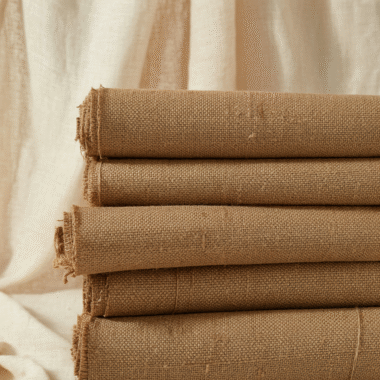
Burlap, also called hessian in many parts of the world, is a coarse, open-weave fabric with a distinctly rustic look. You can usually see the weave clearly, and the surface has a slightly rough, natural texture. Traditionally it was used for sacks and agricultural packing, which is why it still carries that sturdy, workhorse character. Today it is just as likely to appear as a table runner at a rustic wedding, a backing for a craft project, or a natural-looking wrap for a plant pot.
Burlap’s charm is its honesty: it does not try to look polished. Its loose weave gives it a breathable, textured finish, and its natural colour range — warm tans, browns, and undyed neutrals — suits farmhouse, boho, and vintage-inspired décor. It frays readily at cut edges, so most makers finish the edges with a simple hem, a zigzag stitch, or a fray-checking technique before using it for a finished piece.
What is jute?
Jute is the fibre itself: a long, soft, shiny vegetable fibre harvested from the jute plant. It is one of the most widely grown natural fibres in the world, valued for being strong, affordable, and biodegradable. Jute fibre can be spun into yarn and then woven or braided into many different products — not just burlap, but also twine, rope, rugs, bags, and smoother jute fabrics used for upholstery and home décor.
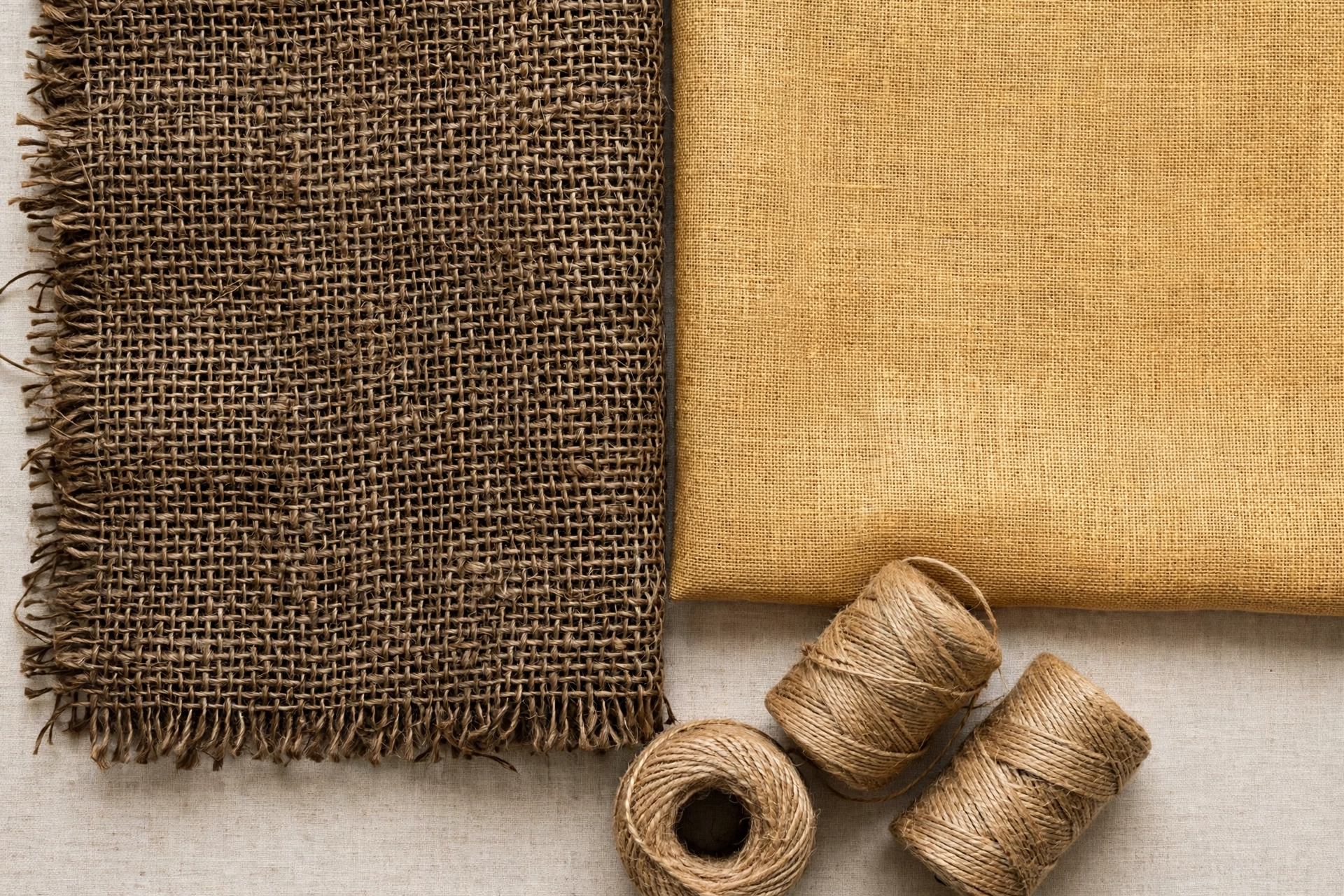
When people talk about “jute fabric,” they usually mean a fabric woven from jute yarn. That fabric may look and feel quite different from classic burlap, depending on how tightly it is woven and how it is finished. A tightly woven jute fabric can look much neater and feel smoother than the open, rustic weave most people picture when they hear the word burlap.
Burlap vs jute at a glance
Think of it this way: jute is the ingredient, burlap is one well-known recipe. The table below sums up the practical differences shoppers notice most.
Look and texture
Burlap has a visibly open weave and a rough, earthy texture. Jute fabric can range from that same rustic openness to a much tighter, smoother weave, depending on the product. If you want the classic see-through, chunky texture for a rustic table runner, burlap is the obvious pick. If you want a neater natural look — for example, a cushion cover or a structured tote — a smoother jute fabric may suit you better.
Strength and durability
Both are strong for their weight, which is why jute has been trusted for sacks, ropes, and heavy-duty bags for generations. Burlap’s open weave makes it breathable but also means it can snag or fray more easily than a tight weave. Jute fabrics with a denser weave generally hold their shape better and resist snagging, making them a good choice for items that will be handled often.
Drape and structure
Neither fabric drapes like silk or chiffon — and that is the point. Burlap holds a soft, slightly stiff shape, which is ideal for table runners, banners, and bows that need to keep their form. Smoother jute fabrics offer a little more structure still, which is useful for bags, placemats, and home accessories that need to stand up on their own.
Care and handling
Natural jute-based fabrics are best treated gently: spot-clean where possible, avoid harsh machine washing unless the product listing says otherwise, and let them air-dry. Always check the care details on the exact product page before washing, because finishes and blends can change what is safe.
Which should you choose for your project?
Choose burlap for rustic décor and events
Table runners, chair sashes, wedding aisle décor, gift wrapping, and garden projects are classic burlap territory. Its open weave and natural colour instantly create a warm, handmade feel, and it pairs beautifully with lace, twine, dried flowers, and fairy lights. If your project is decorative and you love that farmhouse texture, start with Hessian Jute Burlap.
Choose jute fabric for sturdier, neater pieces
If you are making a tote, a storage basket cover, a placemat set, or a cushion that will be used every day, a smoother, denser jute fabric is usually the better buy. It still looks natural, but it behaves more like a workhorse home fabric. Browse the Jute & Burlap collection to compare textures side by side.
Choose Natural Jute Burlap for an in-between option
Some shoppers want the natural jute look with a little more refinement than classic hessian. Natural Jute Burlap is worth a close look for projects where you want the earthy character of jute without the loosest, roughest weave.
Simple buying tips
First, decide how the finished piece will be used: purely decorative, or handled and washed often? That one question usually settles the burlap-versus-jute choice. Second, order with your project in mind: measure your table, window, or pattern piece, add a little extra for hems and fraying, and buy it in one continuous cut where possible so colours and weave match. Third, finish your edges — a quick hem or zigzag stitch makes burlap projects look finished and last much longer. Finally, pair natural fabrics with care: burlap looks wonderful next to lace and soft cottons, which soften its rustic edge for weddings and celebrations.
Shop the look at ValentinaTextile.com
Whether you need the open, rustic weave of hessian or a smoother natural jute, you will find both in the Jute & Burlap collection at ValentinaTextile.com — sold by the yard, so you can buy exactly what your project needs. Start with the Jute & Burlap collection, compare Hessian Jute Burlap and Natural Jute Burlap, and pick the texture that matches your project. Your next rustic table, wedding, or craft project starts with the right natural fabric — and the right fabric is the one that fits how you will actually use it.
Frequently asked questions
Is burlap the same as jute?
Not exactly. Jute is a natural fibre; burlap (hessian) is a coarse woven fabric often made from jute. All jute burlap is made from jute fibre, but jute fibre is also used for many other fabrics, twines, and rugs.
Is burlap good for table runners?
Yes — it is one of the most popular choices for rustic and farmhouse table runners, because its open weave and natural colour suit weddings, parties, and seasonal tables. Hem the edges for a finished look.
Can I wash burlap or jute fabric?
Spot-cleaning and air-drying are the safest options for most natural jute fabrics. Always check the care instructions on the exact product page before machine washing, as finishes can vary.