What makes a fabric right for dancewear?
A dance costume has to do two jobs at once: look spectacular from the back row and move with the dancer through every lift, split and spin. A fabric that looks beautiful standing still can fail the moment the music starts — it pulls across the shoulders, rides up at the waist, or tears at the seam after one rehearsal. The three fabrics dancers and costume makers reach for most are stretch velvet, metallic lamé and stretch mesh, and each one earns its place for a different reason.
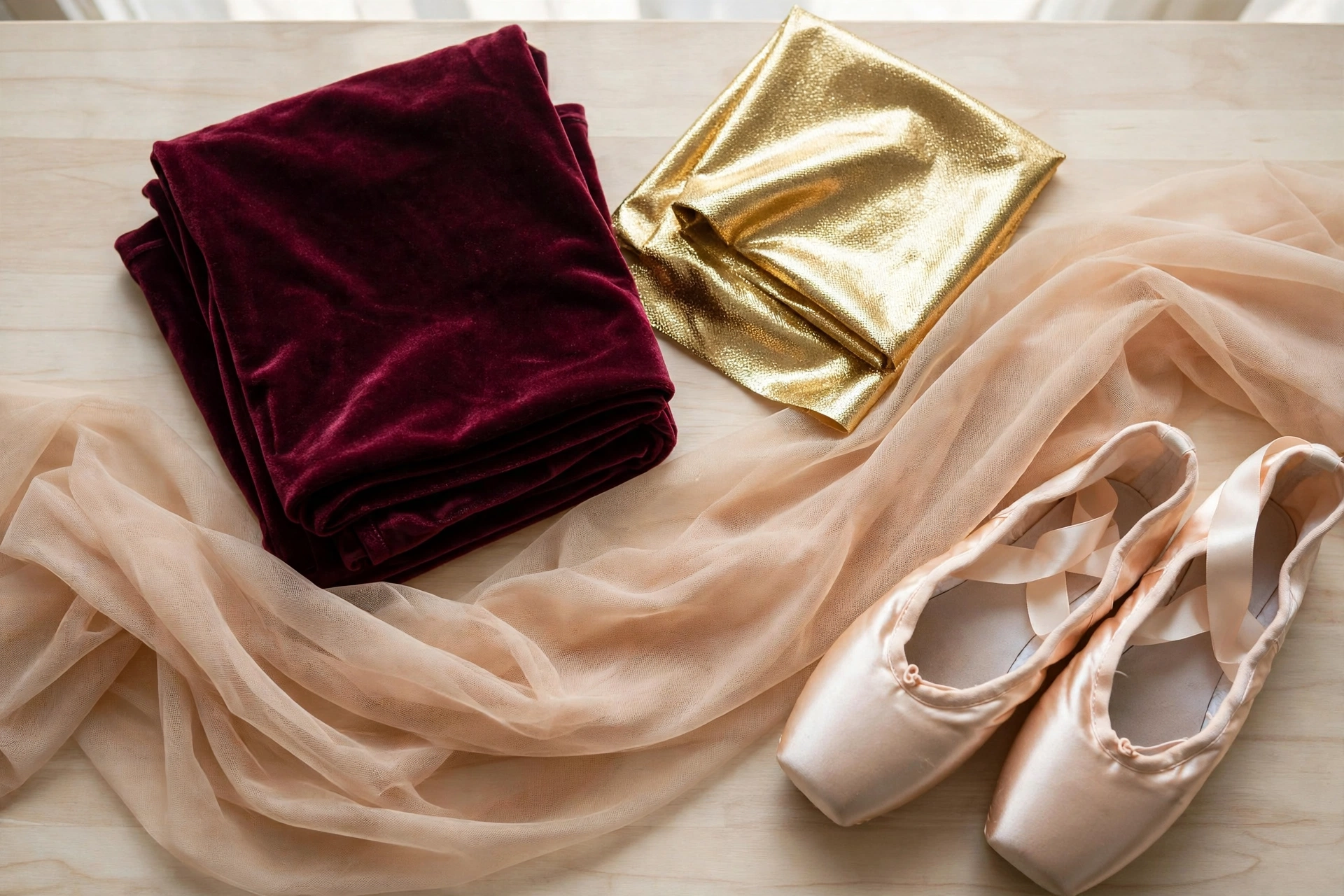
Stretch velvet brings depth and warmth, metallic lamé brings shine that catches the stage lights, and stretch mesh brings the sheer layer — sleeves, skirts, illusion necklines and overlays — that turns a plain leotard into a costume. This guide compares all three, so you can choose the right fabric for the routine and the role.
Stretch velvet: rich colour that moves
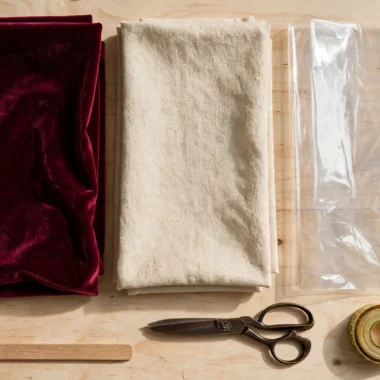
Stretch velvet is the workhorse of the dance wardrobe. Our Premium Velvet Fabric by the Yard is an ultra-soft stretch velvet in a flexible spandex blend, 58 inches wide, in more than 50 vibrant, fade-resistant colours, cut as one continuous piece. The pile catches the light as the dancer turns, so a burgundy leotard looks almost black in shadow and wine-red under the lights — depth no flat fabric can match.
The stretch is what makes velvet practical for dance, not just pretty: the spandex blend gives with every extension, and the fabric recovers its shape after the routine instead of bagging at the knees and elbows. That matters for leotards, unitards and fitted bodices, where a non-stretch velvet would restrict the dancer and split at the seams. Velvet is the right choice for classical ballet variations, lyrical pieces and any costume where the colour itself is the statement. Sew it with a stretch needle and a narrow zigzag, keep the pile direction the same on every panel, and steam it rather than ironing it flat — a hot iron crushes the pile.
Metallic lamé: shine that reads from the back row
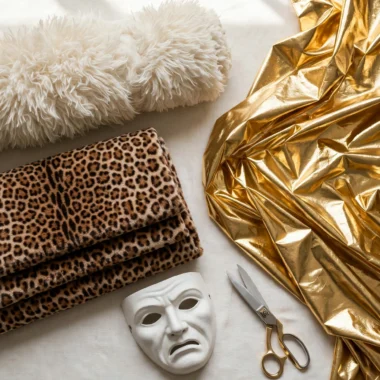
When a costume needs to be seen from the last row of the auditorium, lamé does the work. Our Metallic Foil Fabric by the Yard is a shiny polyester-spandex blend with an all-over foil finish, 2-way to 4-way stretch, 58/60 inches wide, cut as one continuous piece, in seven colours — Black, Fuchsia, Gold, Purple, Red, Royal Blue and Silver. The foil surface throws the light back at the audience, so even a simple leotard reads as a costume.
Lamé is the fabric for jazz, hip-hop, competition dance and show numbers, where the costume has to compete with the lighting rig. Because the foil finish is the feature, handle lamé gently: fold it rather than creasing it hard, avoid pins through the face of the fabric, and sew with a ballpoint needle so the foil does not snag. Lamé is lighter and cooler than velvet, so it works for long competition days when dancers change costumes between numbers. Pair it with mesh for sleeves or a skirt overlay and the shine softens into something elegant rather than loud.
Stretch mesh: the sheer layer that finishes a costume
Mesh is the fabric that makes a costume look finished. Our Micro Stretch Mesh Nude Fabric by the Yard is a very lightweight sheer mesh, 60 inches wide, with 10% stretch on the grain for comfort and ease, sold by the yard and cut to order. It is made for layering into overlays on special-occasion apparel — and on a dance costume it becomes illusion necklines, sheer sleeves, skirt overlays and the panel that makes a backless leotard look modest.
Nude mesh is the colour to buy first, because it disappears against the skin and lets the velvet or lamé underneath do the talking. A nude mesh sleeve on a velvet bodice reads as bare arms from the audience while giving the dancer coverage and a place to hide a seam. It is also the most delicate of the three: cut it with sharp shears, use a fine needle, and finish the edges — mesh frays less than chiffon, but a raw edge on a sleeve will curl. Because it is sheer, always layer it over a solid fabric; on its own it is an overlay, not a costume.
Which fabric for which costume?
For ballet and lyrical, start with stretch velvet: the pile and deep colours suit slow, controlled movement, and the stretch supports every arabesque. For jazz, tap and competition numbers, start with lamé: the shine reads under stage lights and the light weight keeps dancers cool through quick changes. For any sheer element — sleeves, an illusion back, a floating skirt — mesh is the answer, layered over velvet or lamé.
Most stage costumes combine at least two of the three. A velvet bodice with nude mesh sleeves is the classic ballet look. A lamé leotard with a mesh skirt overlay suits a jazz solo. When you combine them, order all three from the same place so the colours sit well together — our Stretch Velvet collection and the full Velvet collection cover the deep colours, while lamé covers the shine. Our costume fabrics guide compares faux fur, velboa and lamé for theatre and fancy dress if your production needs a plush fabric too.
Sewing and care tips for dancewear
Dancewear sewing is all about the stretch. Use a stretch or ballpoint needle for all three fabrics, a narrow zigzag or a serger for the seams, and test your stitch on a scrap first — velvet pile and foil finishes both show a wrong stitch choice. Keep the pile direction of velvet consistent, keep lamé flat while you cut, and let mesh relax before cutting so it does not spring back and shrink your pattern piece.
Care is simple if you are gentle. Hand wash dance costumes in cool water with a mild detergent, never wring velvet or lamé, and lay flat or hang to dry away from direct heat. Mesh dries fastest and needs the least care. Store costumes flat or on padded hangers, and keep lamé away from anything sharp that could scratch the foil. A costume that is looked after will survive a whole season — and our yardage guide helps you measure before you order.
Shop dancewear fabrics by the yard
Shop Premium Velvet — ultra-soft stretch velvet, spandex blend, 58 inches wide, 50+ colours — for ballet and lyrical costumes, Metallic Foil Lamé — shiny polyester-spandex blend, 2-way to 4-way stretch, 58/60 inches wide, seven colours — for jazz and competition shine, and Micro Stretch Mesh Nude — very lightweight sheer mesh, 60 inches wide, 10% stretch — for illusion sleeves, necklines and overlays. Browse the full Velvet collection at ValentinaTextile.com and order by the yard.
Frequently asked questions
Which dancewear fabric is best for a beginner sewer?
Stretch velvet is the most forgiving. It does not slip under the presser foot the way lamé can, and its pile hides a slightly wobbly seam. Use a stretch needle and a narrow zigzag, and test on a scrap first.
Can I use metallic lamé for a whole leotard?
Yes. The 2-way to 4-way stretch and the spandex blend mean lamé moves with the dancer, and the foil finish reads beautifully under stage lights. Pair it with nude mesh sleeves or a mesh overlay if you want to soften the shine.
What is stretch mesh used for in dance costumes?
Mesh is the sheer layer: illusion necklines, sheer sleeves, skirt overlays and modesty panels. Nude mesh disappears against the skin, so it gives coverage without changing the look of the costume. It is very lightweight and breathable, with 10% stretch on the grain.