
Shoppers mix up chiffon and organza more than any other two fabrics. Both are sheer, both look elegant on the hanger, and both are sold by the yard — but they behave completely differently once you start sewing. Choose the wrong one and your project suffers: a veil that collapses instead of floating, or a dress overlay that feels like stiff paper instead of soft silk.
This guide breaks down exactly how chiffon and organza differ — in feel, drape, sheerness, structure, and care — so you can buy the right sheer fabric the first time. Both are available by the yard at ValentinaTextile.com, cut fresh in one continuous piece.
The Quick Verdict: Chiffon vs Organza
Buy chiffon when you want soft, flowing drape — dresses, scarves, and overlays that move with the body. Buy organza when you want crisp structure — veils, bows, and décor that must hold their shape. Still unsure? Order a yard of each and feel the difference side by side.
Feel & Drape
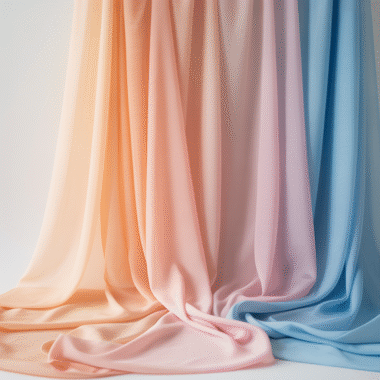
Touch is the fastest way to tell them apart. Soft sheer chiffon is lightweight and airy with a graceful, fluid drape and soft transparency — it pours over the hand like water. It comes 60 inches wide in 60 colors, so matching any palette is easy.
Sheer crystal organza, by contrast, feels crisp and papery with a springy hand. This 100% polyester organza is 58–60 inches wide and comes in 45 colors. It holds a crease, stands away from the body, and keeps its shape instead of collapsing — the opposite personality from chiffon.
Sheerness & Transparency
Both fabrics are sheer, but the quality of that sheerness differs. Chiffon has a soft, hazy transparency that diffuses light gently — flattering for overlays and sleeves. Organza is clearer and more glass-like, with a subtle shimmer that reads as crisp and formal. Neither provides coverage on its own, so plan to layer them or add a lining when modesty matters.
Structure & Body
This is where the two fabrics truly part ways. Chiffon has almost no body: gathers fall softly, ruffles collapse, and hems ripple. Organza has real structure: gathers stay put, ruffles stand upright, and bows keep their loops. At roughly 3 ounces per yard, organza is still lightweight — it just uses that weight to hold a shape instead of flowing.
A quick hand test settles any doubt: scrunch a handful of each fabric in your fist. The chiffon relaxes and falls; the organza springs back and holds its wrinkles. That “memory” is exactly what makes organza the go-to for petticoats, structured sleeves, and gift-wrap bows that must stay crisp for hours at an event.
Best Uses for Each Fabric
Dresses, overlays & scarves: choose chiffon
Anything that should float and move belongs in chiffon: bridesmaid dress overlays, evening gown skirts, airy scarves, and blouse sleeves. Browse the chiffon fabric collection for 60 colors that layer beautifully over satin or crepe linings.
Décor & event styling: choose organza
Chair sashes, table runners, backdrop draping, and gift wrapping all benefit from organza’s body — it holds bows and swags without wilting under event lighting. The tulle and organza collection has the crisp sheers event stylists reach for again and again.
Veils & bridal accents: it depends
Want a structured cathedral veil that floats away from the dress? Organza. Want a soft blusher veil that drapes gently over the face? Chiffon. Many bridal designers layer both: organza for lift, chiffon for softness.
Care & Sewing Tips
Chiffon is the trickier sew: use a sharp microtex needle, hold the fabric taut (but don’t stretch it) as you feed it, and finish seams French-style to tame fraying. A rotary cutter beats scissors for clean edges.
Organza is more beginner-friendly: it cuts cleanly, doesn’t slip as much under the presser foot, and presses well with a low iron. Serge or pink raw edges, since organza frays. Both fabrics arrive as continuous cuts, so pre-wash and press before cutting your pattern pieces.
Chiffon vs Organza at a Glance
| Chiffon | Organza | |
|---|---|---|
| Hand feel | Soft, smooth, fluid | Crisp, papery, springy |
| Drape | Flowing, collapses softly | Structured, holds shape |
| Sheerness | Soft, hazy transparency | Clear, glass-like with shimmer |
| Stretch | None | None (non-stretch) |
| Width | 60 inches | 58–60 inches |
| Fiber | Polyester | 100% polyester |
| Colors | 60 | 45 |
| Best for | Dresses, overlays, scarves | Veils, bows, décor |
Verdict by Use Case
Flowy dress or overlay: chiffon — nothing drapes like it. Structured veil or statement bow: organza — it holds its shape all day. Wedding and event décor: organza — swags and sashes stay crisp. Scarves and soft wraps: chiffon — soft against the skin. Layered bridal looks: both — organza underneath for lift, chiffon on top for softness.
Chiffon vs Organza FAQs
Is organza stiffer than chiffon?
Yes. Organza has a crisp, papery hand that holds its shape, while chiffon is soft and fluid with a graceful drape. That single difference drives almost every use-case decision between the two.
Can I use chiffon and organza together in one project?
Absolutely — they’re a classic pairing. Layer organza under chiffon when you want softness with a bit of lift, such as in bridal skirts and veils. Just remember organza’s crisp edge can show through single-layer chiffon.
Which is easier for beginners to sew?
Organza. It doesn’t slip under the presser foot the way chiffon does, and it presses cleanly with a low iron. Chiffon demands a sharp microtex needle, careful handling, and French seams — worth learning, but start with organza if you’re new to sheers.
Shop Sheer Fabrics
Ready to choose your sheer? Shop chiffon and organza by the yard at ValentinaTextile.com — 60 colors of soft sheer chiffon and 45 colors of crisp crystal organza, all cut fresh in one continuous piece. Order full yards today and feel the difference for yourself.